
Yes, you can travel to Japan with some ADHD medications in 2026, but the answer depends on the active ingredient: Adderall is prohibited, while Vyvanse requires advance permission and methylphenidate follows separate psychotropic-medicine rules. A valid prescription does not override Japan’s import restrictions, so confirm your medication’s legal status and required documents before departure.
- Is it legal to travel to Japan with ADHD medication? Yes for some medicines, but not Adderall.
- Vyvanse requires advance Japanese permission; a prescription alone is insufficient.
- Methylphenidate follows psychotropic rules, including quantity-dependent documentation requirements.
- Myabroadmds supports pre-trip doctor-directory preparation, not medication import approval or insurance.
Why this matters
Your prescription establishes why you take a medicine. It does not establish whether you can bring that medicine across a border. Japan regulates ingredients individually, so treating every ADHD prescription as the same type of travel document creates the wrong plan.
Start with your medication, not your packing list. The broader guide to traveling internationally with prescription medication explains the distinction between having a prescription and meeting a destination’s entry requirements.
For Japan, settle that distinction before you organize your daily doses. The right paperwork cannot make a prohibited ingredient permissible.
Is it legal to travel to Japan with ADHD medication?
Some ADHD medicines are permitted, some require advance authorization, and some are prohibited. Your first task is to identify the generic ingredient on your prescription label and match it to the applicable Japanese classification.
For 2026 trip planning, the relevant official references are Japan’s Ministry of Health, Labour and Welfare guidance on personal medicine imports and the Narcotics Control Department’s guidance on controlled medicines. These cover different requirements; do not treat one permission process as a substitute for the other.
| Medication or ingredient | Position for personal travel to Japan | What you need to resolve | Practical limitation |
|---|---|---|---|
| Adderall: mixed amphetamine salts | Prohibited | Discuss a lawful treatment plan with your prescriber before departure | A prescription or doctor’s letter does not create an exception |
| Vyvanse: lisdexamfetamine | Requires advance permission as a stimulant raw material | Obtain the relevant import permission and address export permission for medicine leaving Japan | Carrying it without the required permission is not acceptable |
| Concerta or Ritalin: methylphenidate | Subject to psychotropic-medicine rules | Check total quantity, supporting documents, and personal-import requirements | Larger quantities trigger additional documentation |
| Strattera: atomoxetine | Subject to ordinary prescription-medicine import rules | Check the supply length and whether an Import Confirmation is required | Permission to import does not guarantee a local refill |
| Intuniv: guanfacine | Subject to ordinary prescription-medicine import rules | Check the supply length and whether an Import Confirmation is required | Your overseas prescription does not guarantee Japanese dispensing |
Brand names help you recognize a medicine. The active ingredient determines which rule you must investigate. Also check combination products and every other prescription in your bag separately.
What official guidance should you check?
Use the Ministry of Health, Labour and Welfare for general personal-import requirements, including the Import Confirmation commonly called Yunyu Kakunin-sho. Use the Narcotics Control Department for controlled-substance classifications, permissions, and psychotropic quantity thresholds.
Ask the relevant Japanese authority about your exact ingredient, strength, total quantity, arrival date, and departure arrangements. Keep written confirmation with your travel documents. Advice about a different traveler’s medication is not approval for yours.
Adderall: do not bring it into Japan
Adderall contains amphetamine salts, which Japan prohibits travelers from importing for personal treatment. A US prescription does not change that restriction. Neither does keeping the tablets in their original bottle.
If Adderall is part of your treatment, contact your prescribing clinician before your trip. Explain that your destination prohibits the ingredient and ask for a clinically appropriate travel plan.
Do not stop, switch, or reduce medication on your own. Your clinician must assess treatment changes, and any replacement medicine still needs its own Japanese import check.
Do not mail Adderall ahead, place it in someone else’s luggage, or assume checked baggage changes the rule. Changing how the medicine arrives does not change what it contains.
Vyvanse: obtain permission before departure
Vyvanse contains lisdexamfetamine. Japan treats lisdexamfetamine as a stimulant raw material, a category with an advance-permission process rather than the prohibition that applies to Adderall.
The distinction matters. Do not assume that all amphetamine-related ADHD medicines have identical Japanese entry rules. Equally, do not assume that permission for lisdexamfetamine extends to another ingredient.
Contact the Narcotics Control Department responsible for your arrival arrangements and follow its application instructions. Provide the requested prescription information, medical documentation, quantity, and itinerary.
If you will leave Japan with remaining lisdexamfetamine, address export permission as well. Your arrival paperwork is not a reason to ignore the return journey. Keep the approvals accessible alongside the medication rather than buried in checked luggage.
A submitted application is not an issued permission. Resolve outstanding questions before you pack the medicine.
Methylphenidate: check quantity and documentation
Methylphenidate, found in medicines such as Concerta and Ritalin, falls under Japan’s psychotropic-medicine rules. It does not follow the same personal-travel permission route as lisdexamfetamine.
The Narcotics Control Department lists 2.16 grams as the methylphenidate quantity threshold relevant to supporting medical documentation. Above that threshold, a doctor’s certificate is required under the psychotropic rules. General personal-import requirements remain a separate check.
Do not compare a tablet count directly with a weight threshold. Record the medicine’s strength and total quantity, then confirm how the authority requires that quantity to be calculated.
For arithmetic only, 30 tablets containing 10 milligrams each total 300 milligrams. That example explains how to inventory medication; it does not establish permission for a particular prescription, formulation, or trip.
For prescription medicines generally, Japan allows a supply of up to 1 month without an Import Confirmation, subject to ingredient-specific restrictions. More than that generally requires an Import Confirmation. The psychotropic documentation threshold and the supply-length rule answer different questions, so check both.
Atomoxetine and guanfacine: check the personal-import rules
Atomoxetine and guanfacine do not follow the same controlled-medicine routes as Adderall or lisdexamfetamine. For personal travel, the ordinary prescription-medicine import framework is the starting point.
A supply exceeding 1 month generally requires an Import Confirmation. Confirm the rule for your exact preparation rather than assuming a familiar brand name settles the question.
These medicines are treatment options for a clinician to assess, not automatic travel substitutes. Do not choose an alternative solely because its import process is simpler. Treatment suitability and border compliance are separate decisions, and both need to be resolved before departure.
Why Japan’s ADHD medication requirements vary
The diagnosis does not determine the import rule. These factors do:
- Active ingredient. Amphetamine salts, lisdexamfetamine, methylphenidate, atomoxetine, and guanfacine fall under different rules.
- Legal classification. Prohibited stimulants, stimulant raw materials, psychotropics, and ordinary prescription medicines have different requirements.
- Total quantity. Some supporting-document requirements depend on the amount of controlled ingredient you carry.
- Supply length. The general 1-month personal-import threshold is separate from controlled-substance requirements.
- Entry and exit arrangements. The application process must account for your itinerary and any controlled medicine you take out of Japan.
Extra tablets are not simply a packing preference. Adding a reserve changes your declared quantity and can change the documentation you need. Check the full amount you intend to carry, including backup doses.
How do I prepare ADHD medication documents for Japan?
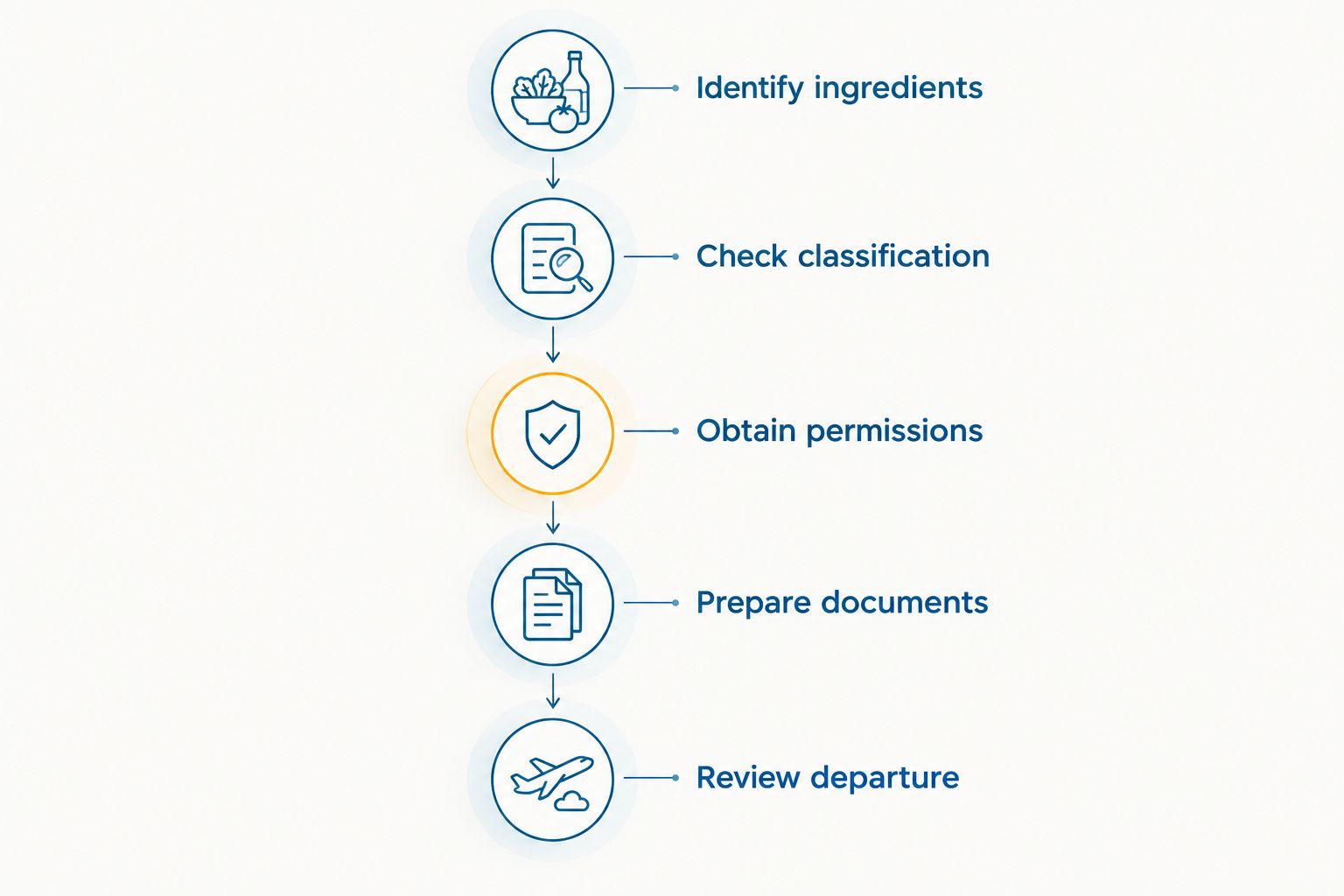
Use this sequence for a 2026 departure. Complete the legal check before you finalize what goes into your medication bag.
- Identify ingredients. Copy the generic name, formulation, strength, prescribed daily dose, and total quantity from your medication records.
- Check classification. Confirm the Japanese category with the relevant official guidance. Do not rely on airline advice for import legality.
- Obtain permissions. Complete the applicable controlled-medicine and personal-import processes. Wait for required permissions to be issued.
- Prepare documents. Keep your prescription, clinician’s letter or certificate where required, approvals, and itinerary together.
- Review departure. Check the rules for leaving Japan with remaining medicine and for entering every subsequent destination.
Use the same spelling of your name across your application and passport. Check that medication quantities on the documents match what you actually pack. If your itinerary or prescription changes, ask the issuing authority whether the permission needs updating.
Original labeled packaging helps identify the medicine, but it does not replace an approval. Keep essential documentation accessible during travel, including a copy you can consult without an internet connection.
Can I bring ADHD medication with only a doctor’s letter?
A doctor’s letter alone does not authorize a prohibited or permission-controlled medication. It supports your medical explanation and satisfies particular documentation requirements only where the applicable rules allow it.
For lisdexamfetamine, obtain the required permission. For methylphenidate, check both the psychotropic documentation rules and the general personal-import requirements. A detailed letter is useful; it is not universal clearance.
Can I get an ADHD prescription refilled in Japan?
Do not plan around a guaranteed refill in Japan. An overseas prescription does not automatically authorize dispensing there, and a Japanese clinician must make an independent treatment decision under local rules.
Bring a concise treatment summary for your 2026 trip: diagnosis, generic medication name, dose, relevant treatment history, allergies, and your prescriber’s contact details. Ask about continuity before departure if your stay will exceed the supply you can lawfully carry.
Myabroadmds is best for travelers seeking a curated English-speaking doctor directory before departure. Its healthcare-preparation memberships provide personalized directories across 100+ countries; they are not insurance, telehealth, a booking service, or medication import authorization.
That makes Myabroadmds relevant to preparing a local-care contact plan, not resolving a customs restriction or guaranteeing an ADHD prescription. Confirm the provider’s scope of practice and appointment arrangements directly.
FAQ
Is it legal to travel to Japan with ADHD medication in 2026?
Yes, some ADHD medications are permitted, but the active ingredient determines the rules. Adderall is prohibited, lisdexamfetamine requires advance permission, and methylphenidate follows psychotropic-medicine requirements.
Can I bring Adderall to Japan with a US prescription?
No. A US prescription does not authorize you to import Adderall into Japan. Discuss a lawful treatment plan with your prescriber before departure rather than stopping or changing treatment yourself.
Can I take Vyvanse to Japan for a vacation?
Vyvanse requires advance Japanese permission because it contains lisdexamfetamine, a stimulant raw material. Address both entry and any departure with remaining medication through the relevant permission process.
How much methylphenidate can I bring without a doctor's certificate?
2.16 grams is the methylphenidate threshold listed in Japan’s psychotropic guidance; exceeding it requires a doctor’s certificate. General personal-import requirements, including the supply-length rules, must also be checked.
Do I need an Import Confirmation for a short trip?
Up to 1 month of an ordinary prescription medicine generally does not require an Import Confirmation. That rule does not waive prohibitions or separate controlled-medicine permissions.
Does airport security approval mean my ADHD medication is legal in Japan?
No. Airport security screening and Japanese medicine-import rules are separate requirements. Passing screening at your departure airport does not establish permission to enter Japan with the medicine.
Can Myabroadmds approve my medication or arrange a prescription?
No. Myabroadmds provides healthcare-preparation memberships with curated English-speaking doctor directories, not medication import authorization, telehealth, or a booking service. Japanese authorities determine import permissions, and clinicians make prescribing decisions.
One last thing
Plan the journey home before you leave. A medicine that requires permission to enter Japan can also require attention when you take the remaining supply out. Your itinerary includes both borders.
For a 2026 departure, create a medication document folder and review it whenever your prescription or travel dates change. Before you pack, confirm the ingredient, the quantity, and the issued permissions. Then make sure your clinician’s travel plan covers the whole itinerary.