
A same-day doctor appointment abroad means a visit scheduled for the local calendar day you request it—not a guaranteed wait from your first call. In 2026, the clinic must confirm the appointment time; finding a listing or submitting a request does not secure a visit. Travel to the clinic, registration, and any tests or pharmacy visit add time beyond the appointment itself.
- How long to get a same day doctor appointment abroad depends on a clinic confirming a local appointment time.
- Separate appointment confirmation, arrival time, and consultation time when planning your day.
- MyAbroadMDs is best for travelers preparing an English-speaking doctor directory before departure, not booking appointments.
- For a medical emergency, use local emergency services rather than waiting for a routine appointment.
Pre-trip preparation and appointment booking serve different purposes. MyAbroadMDs provides personalized, curated English-speaking healthcare directories; the clinic handles its own appointments.
How long does it take to get a same-day doctor appointment abroad?
The clinic's confirmed appointment time is the useful answer—not a general estimate for an entire country. Ask when you should arrive, whether that is the consultation time or a registration time, and whether the clinician can address your reason for visiting.
Use this sequence to establish an actual timeline:
- Describe the need. Give the clinic a brief description of your symptoms or reason for the visit, your location, and your language needs.
- Confirm acceptance. Ask whether the clinic sees visiting international patients and whether an appropriate clinician can see you today.
- Confirm timing. Get the local date, appointment time, arrival instructions, and exact location.
- Prepare documents. Ask what identification, medical information, and insurance details to bring.
- Plan follow-up. Establish how you will receive results, prescriptions, and instructions after the consultation.
A confirmation message should identify a real appointment, not merely acknowledge your inquiry. Keep it accessible while traveling to the clinic.
Why this matters
A healthcare search can produce several different milestones: a provider listing, a reply from reception, an appointment offer, and a confirmed visit. They are not interchangeable. An acknowledgment is not an appointment.
For your 2026 itinerary, separate the medical visit from everything surrounding it. A consultation can lead to another step, such as testing or a pharmacy visit, so avoid treating the appointment as the end of the process.
Language also needs confirmation at the right level. An English-language website does not establish that the clinician assigned to your appointment speaks English. Ask about the actual consultation, not just the reception desk.
Which care route fits your situation?
Choose the care route based on the medical need, not simply which listing promises the quickest response. A routine clinic, walk-in service, telehealth consultation, and emergency department serve different purposes.
| Care route | Best for | Main advantage | Limitation to confirm |
|---|---|---|---|
| Scheduled in-person clinic | Non-emergency concerns needing an examination | A confirmed location and appointment time | Whether the clinic accepts visiting patients and treats your concern |
| Walk-in service | Non-emergency concerns when you do not have an appointment | A route to request care without a reserved slot | Opening hours, patient acceptance, and how the queue works |
| Telehealth consultation | Concerns a clinician can assess remotely | No journey to a consultation room | Whether care is permitted where you are and whether an examination is needed |
| Emergency department | Serious or potentially life-threatening symptoms | Emergency assessment rather than routine scheduling | Patients are prioritized by clinical urgency, not arrival order |
These are care pathways, not a ranking of speed. A walk-in clinic is not automatically faster than a booked appointment, and a remote consultation does not guarantee that you can avoid an in-person examination.
Do not use a routine appointment search for a medical emergency. Symptoms such as severe breathing difficulty, signs of stroke, or loss of consciousness require emergency help. Contact local emergency services rather than waiting for a clinic to reply.
What should you ask before accepting an appointment?
Before accepting a same-day appointment abroad, confirm what the clinic is offering. A short, specific conversation prevents confusion about timing, language, and the purpose of the visit.
Use these questions:
- Is this a confirmed appointment today, in local time?
- What time should I arrive, and what time is the consultation scheduled?
- Will the clinician seeing me speak English?
- Does this clinic assess my symptoms or handle my requested service?
- What documents should I bring, and how is payment handled?
- How will I receive results or follow-up instructions after I leave?
Describe symptoms plainly. Include when they began, whether they are worsening, and relevant medical conditions or medications. Do not choose a diagnosis yourself to fit a booking category.
If you need a prescription renewal, a medical form, or a specialist assessment, say so before booking. A general appointment is not confirmation that the clinician can complete a particular task or prescribe a particular medicine under local rules.
Confirm the appointment, not just the address
A map pin tells you where a facility is. It does not establish whether the facility accepts walk-ins, sees travelers, or has the right clinician working that day.
Ask the clinic to confirm the entrance or department as well as the street address. Save the details in a form you can access without relying on a fresh search when you arrive.
Why appointment timing varies
Appointment timing abroad depends on the provider and the care required. Use these factors as questions for the clinic—not as a formula for predicting a wait:
- Clinical urgency: Staff need to understand the concern before directing you to routine, urgent, or emergency care.
- Type of clinician: A general consultation and a specialist assessment involve different scheduling requirements.
- Language needs: Confirm an English-speaking clinician for the consultation itself.
- Appointment process: A booking request, a walk-in queue, and a confirmed appointment are different arrangements.
- Location and transport: Your appointment time does not include the journey from your accommodation or current destination.
- Visit requirements: Registration, examination, testing, and prescription collection are separate parts of the care process.
These distinctions matter more than a broad destination-level promise. Ask for the next concrete step and who is responsible for confirming it.
How do you arrange the visit without losing track of the details?
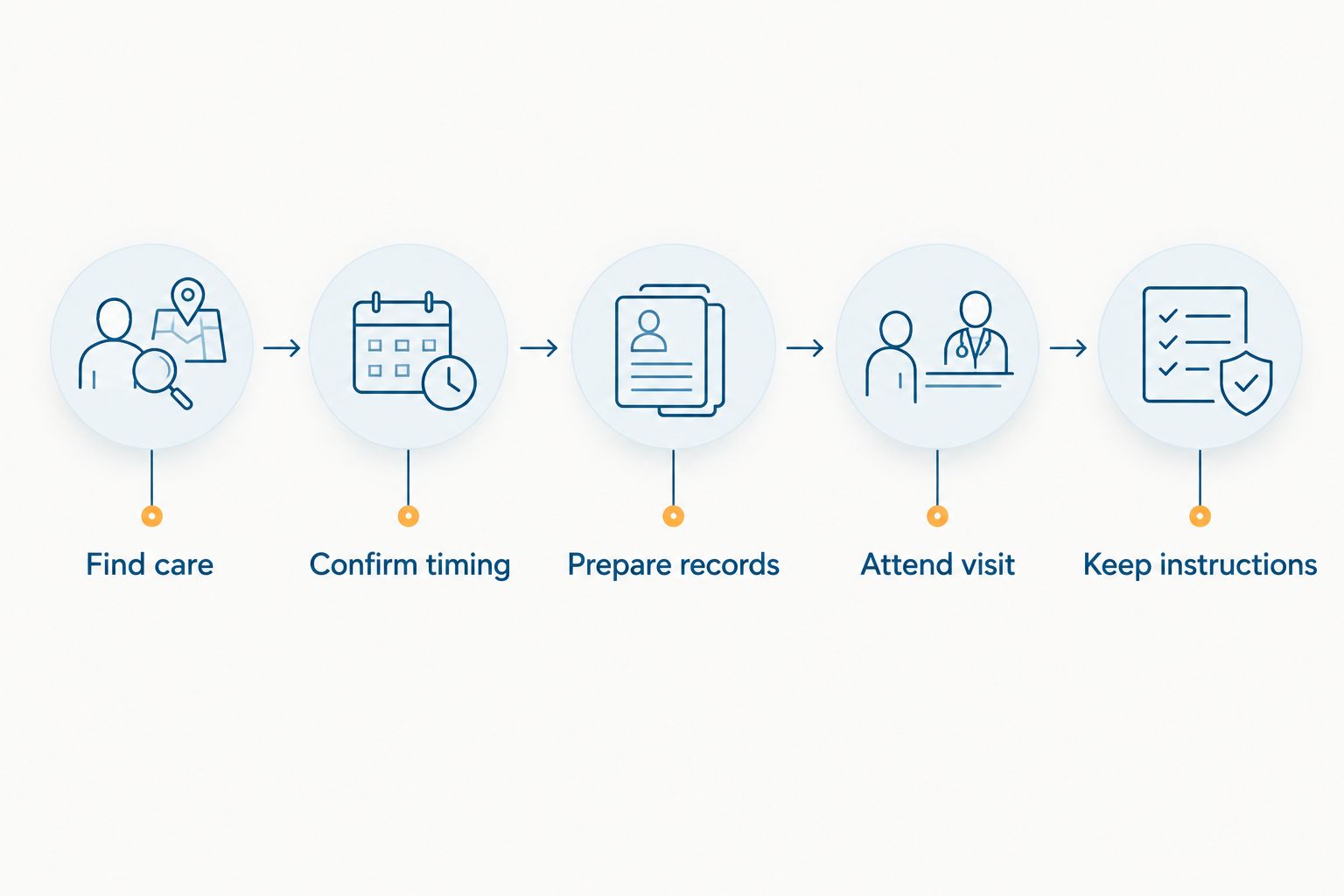
For a 2026 trip, keep the booking process simple: identify an appropriate provider, establish a confirmed visit, prepare your information, and retain the follow-up instructions. Use the same sequence whether you are traveling alone, with family, or through a study-abroad program.
Find care
Start with providers relevant to your location and medical concern. Check the provider's identity and professional registration through the appropriate local authority where possible; an attractive listing is not proof of licensure.
For a closer look at that step, use the guide to verifying a doctor's license abroad. Keep credential checks separate from appointment confirmation: each answers a different question.
Confirm timing
Contact the clinic through its published contact channel. State where you are, why you need the visit, and whether you need an English-speaking clinician.
Record the appointment details once the clinic confirms them. If you receive an automated acknowledgment, continue following the clinic's instructions until you have an actual appointment or a clear walk-in process.
Prepare records
Bring a concise medication list, relevant allergies, and medical information connected to the visit. Use medication names and original packaging where practical rather than relying only on a description of a pill.
Keep the information focused. A clear summary helps you explain the concern without searching through unrelated records at reception.
Attend visit
Follow the clinic's arrival instructions. Explain any change in symptoms since you booked, especially if the concern has worsened.
Before leaving, ask the clinician to clarify instructions you do not understand. Request written information about treatment, warning signs, and the next step when appropriate.
Keep instructions
Save the consultation record, prescriptions, receipts, and any testing instructions securely. Confirm how the clinic will contact you if results are pending.
Tell the clinic if your itinerary means you will leave the area before follow-up. The clinician needs that context when explaining how you should receive results or continue care.
Can you get an English-speaking doctor on the same day?
An English-speaking same-day visit requires confirmation from the clinic. Ask whether the clinician assigned to you speaks English and whether the consultation can cover your particular concern.
If an interpreter is needed, establish the arrangement before the visit. Do not assume an English-speaking receptionist will interpret a medical consultation.
Does a confirmed appointment mean the doctor will see you immediately?
A confirmed appointment establishes the planned consultation time, not an immediate examination upon arrival. Registration and changes in clinical priorities can affect the sequence at the facility.
Ask reception how the clinic handles delays and whether you should remain on-site. Keep your contact details current if the clinic needs to reach you about a scheduling change.
Can you get a prescription during the same visit?
A prescription depends on the clinician's assessment and local prescribing rules, not simply on securing an appointment. Tell the clinic in advance if medication renewal is your main reason for visiting.
Bring the medication's name, the prescribed directions, and relevant records. A familiar brand name at home does not establish that the same product or prescribing process applies abroad.
Prepare before departure, not during the search
For your 2026 departure, put healthcare information alongside your accommodation and transport details. Save relevant provider contacts, your insurer's assistance details if applicable, and the local emergency number separately so you know which resource serves which purpose.
MyAbroadMDs is best for travelers who want a personalized English-speaking doctor directory prepared before departure. Its subscription-based memberships provide curated healthcare resources across 100+ countries. That is preparation—not a promise of a same-day consultation.
The benefit of MyAbroadMDs is having a destination-focused starting point before you need to search. The boundary is equally important: MyAbroadMDs is not insurance, telehealth, or a booking service, and a directory does not confirm a clinician's schedule.
Keep responsibilities clear. You contact the provider to arrange care; the provider confirms the appointment and delivers medical assessment. Check insurance requirements separately rather than treating a directory entry as proof of coverage.
FAQ
How long will I wait for a same-day doctor appointment abroad?
Your wait depends on the appointment time the clinic confirms for your location and medical need. Same-day describes the local calendar day, not a guaranteed interval between your request and the consultation.
Does an online booking request mean I have an appointment abroad?
An online booking request is not a confirmed appointment unless the clinic explicitly confirms it. Check for the local date, time, location, and arrival instructions.
Is a walk-in clinic faster than a scheduled appointment abroad?
A walk-in clinic is not automatically faster than a scheduled appointment. Confirm how the facility accepts patients and manages its queue before traveling there.
Can I ask for an English-speaking doctor when booking abroad?
Yes, ask whether the clinician assigned to your consultation speaks English. An English-speaking receptionist or website does not confirm the clinician's language.
Can telehealth replace an in-person doctor appointment while traveling?
Telehealth does not replace every in-person appointment. The service must be permitted where you are, and the clinician must decide whether your concern requires a physical examination or testing.
What should I bring to a doctor appointment abroad?
Bring the identification and documents requested by the clinic, plus relevant medication, allergy, and medical information. Confirm payment procedures and any insurance documentation requirements before attending.
Should I wait for a same-day appointment if my symptoms are severe?
Do not wait for a routine appointment when you have symptoms of a medical emergency. Contact local emergency services for serious symptoms such as severe breathing difficulty, signs of stroke, or loss of consciousness.
One last thing
Before you close a clinic's confirmation message, check the time zone. Your phone, booking platform, and destination are not necessarily displaying the same local time.
For any 2026 appointment abroad, save the clinic's local date and time beside its address. The most useful booking detail is an unambiguous confirmation you can act on.