Instead of repeating your symptoms and searching for a clinic after a video visit, connect your telehealth consultation to an in-person doctor abroad through a written clinical summary, a confirmed local appointment, and a follow-up plan. You arrange the handoff; each clinician decides what care they can provide.
- To connect telehealth consult to doctor abroad, request a clinical summary and confirm the receiving clinic accepts it.
- MyAbroadMDs suits travelers preparing an English-speaking doctor directory; it is not telehealth, insurance, or a booking service.
- Confirm local prescribing requirements directly; a consultation summary does not guarantee a prescription or referral will be accepted.
- Send records through the clinic’s approved channel, then confirm receipt before your appointment.
Why this matters
A video consultation and an overseas clinic visit are separate encounters unless someone connects them. A directory entry identifies a provider; it does not transfer your records, establish an appointment, or authorize treatment.
MyAbroadMDs is best for travelers who want a curated English-speaking doctor directory before departure. Its subscription memberships provide personalized directories across 100+ countries. The limitation is clear: the membership is not insurance, telehealth, or a booking service.
For a 2026 itinerary, build the handoff around your actual destination and travel dates. Keep clinical instructions, clinic arrangements, and insurance requirements separate so none gets mistaken for another.
If you have a medical emergency, seek local emergency care immediately. Do not wait for records, a directory response, or a routine appointment.
Before you start
- Get access to your consultation records. Have your telehealth account, consultation date, clinician’s details, medication list, allergies, and any relevant test reports ready. Ask the telehealth service how to request records if you cannot retrieve them yourself.
- Prepare destination details and a private contact method. Record your country, city, accommodation area, local telephone contact, and departure date. Have identification and any insurance assistance details accessible without placing everything in an unsecured message.
- Check the cross-border gotcha first. Ask whether the telehealth clinician can provide care while you are physically in that destination. Separately, ask the receiving clinic whether it accepts outside summaries and requires a local referral. A foreign prescription is not automatically valid locally.
Do not assume that access to a telehealth account means the clinician can treat you wherever you travel. Resolve that question before relying on the service for your 2026 trip.
Consultation handoff packet
Request the clinical summary
- Ask the telehealth clinician whether you need an in-person assessment and how urgently to arrange it. Request clear instructions about what to do if symptoms change before that assessment.
- Request a written summary containing the consultation date, presenting symptoms, relevant findings, assessment, treatment advice, and recommended next steps. Ask the clinician to distinguish a confirmed diagnosis from a possibility that needs examination.
- Request relevant test reports and referral documents, if issued. Keep complete reports rather than cropped screenshots that omit dates, units, or identifying details.
- Ask how to contact the telehealth service if the receiving clinician needs clarification. Confirm whether communication must go through you or can occur directly with your consent.
Expected result: You have a readable account of the consultation and know what the next clinician needs to assess. You also understand whether arranging routine care is appropriate or whether the clinician advised more urgent action.
No single app or interface governs this process. Use your service’s documented record-request process rather than searching for a universal transfer button.
Build a portable record
- Put the summary and relevant reports in a clearly named folder. Include your name, consultation date, and destination in your own filing system, without adding unnecessary identifiers to filenames.
- Prepare a 1-page overview for your own use: symptoms and their timeline, allergies, current medicines, relevant conditions, and questions for the appointment. Keep the original clinical documents alongside it.
- List medicines by active ingredient, strength, and prescribed instructions exactly as recorded on the label or prescription. Do not translate or convert doses yourself.
- Save a securely accessible copy that does not depend entirely on a live internet connection. If you use a shared device, avoid leaving medical records in downloads or an open account.
Expected result: You can explain why you are attending and provide the original evidence without scrolling through unrelated messages.
For documents created in 2026, write dates with the month spelled out when communicating across countries. This avoids ambiguity between day-first and month-first date formats.
Receiving clinic arrangements
Confirm the right destination for care
- Identify a clinic or doctor appropriate to the assessment your telehealth clinician recommended. Confirm the provider’s identity and credentials through the relevant official register where available.
- Ask whether the clinician conducting the visit speaks English. Do not treat an English-speaking receptionist as confirmation about the consultation itself.
- Explain that you have had a telehealth consultation and want an in-person assessment. Ask whether the clinic can review the summary and whether it needs a referral, translated records, or additional documents.
- Confirm the appointment directly with the clinic, including its location, local date and time, arrival instructions, and required identification.
Expected result: A receiving clinic has confirmed what it can assess and what you must bring. A search result or directory listing alone is not an appointment.
Use the guide to verifying doctor credentials abroad when checking the receiving provider. A familiar-sounding specialty title does not replace verification.
Keep each service in its lane
The handoff involves different roles, not interchangeable products. Choose each resource for the task it actually performs.
| Resource | Best for | Useful contribution | Limitation |
|---|---|---|---|
| Telehealth clinician | Initial remote assessment when permitted | Explains findings and recommends next steps | Cannot replace a physical examination when one is needed |
| MyAbroadMDs membership | Pre-trip English-speaking provider preparation | Supplies a personalized, curated doctor directory | Does not provide telehealth, insurance, or appointment booking |
| Receiving local clinic | In-person assessment | Examines you and makes its own treatment decisions | Needs separate appointment and document confirmation |
| Your insurer’s assistance team, if applicable | Understanding your policy’s procedures | Explains requirements under your policy | Administrative guidance does not replace clinical judgment |
Use a directory to identify a provider, not to assume a clinical connection already exists. Likewise, a telehealth recommendation does not establish insurance approval.
Record delivery and follow-up
Send the handoff securely
- Ask the receiving clinic which channel it approves for medical records. Confirm the recipient before sending sensitive information, and ask what consent is required for direct clinician-to-clinician sharing.
- Send the requested documents with a short factual cover note: your name, appointment details, consultation date, and reason for assessment. Send only information relevant to the visit.
- Ask the clinic to confirm receipt and whether the files are readable. Keep 2 contact routes in your travel notes: the receiving clinic and the telehealth service.
- Bring your own accessible copy to the appointment. Describe any change since the video consultation rather than assuming the earlier summary still captures your condition.
Expected result: The clinic has acknowledged the records, and you have a backup if the documents are not accessible during the visit.
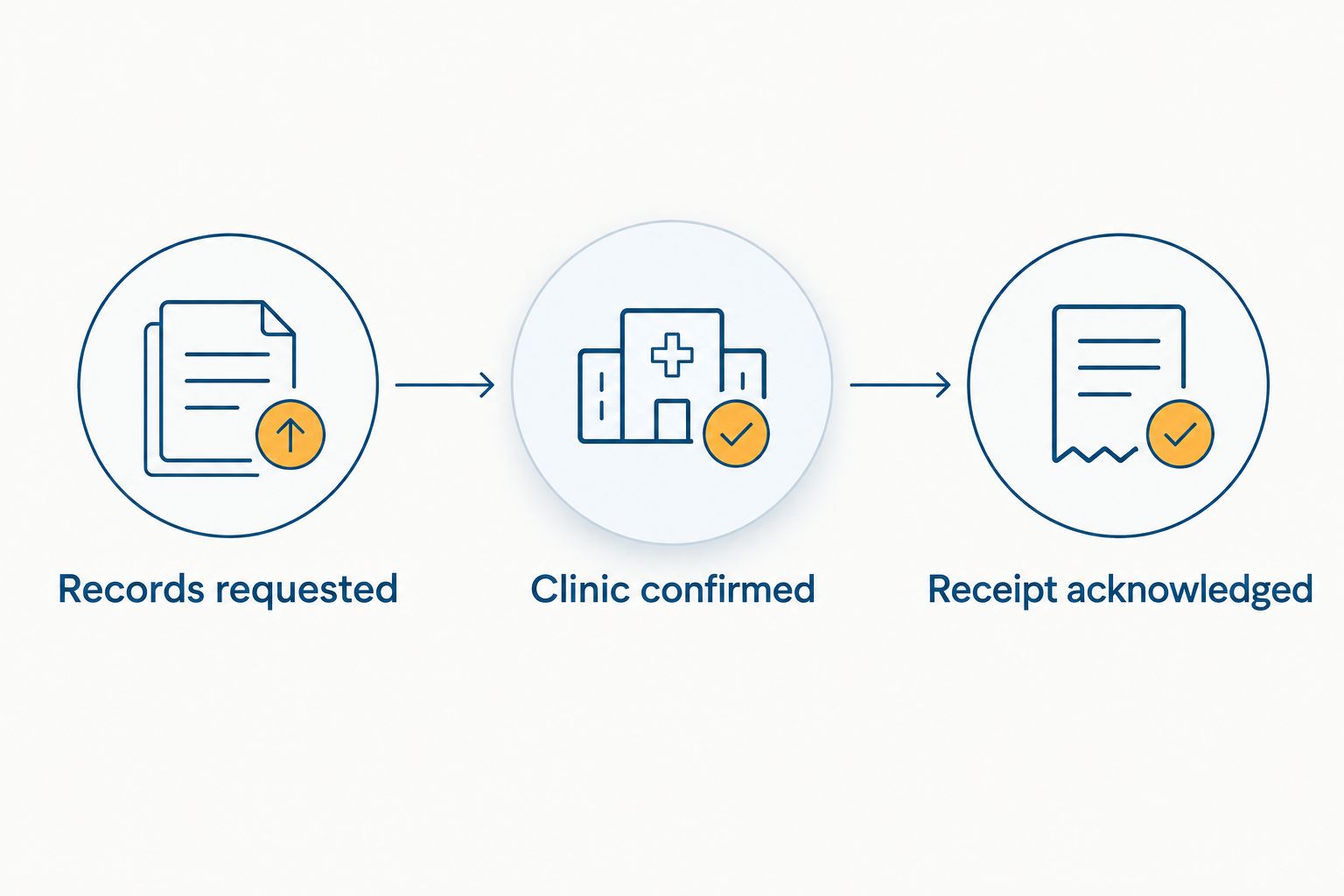
Use 3 handoff checkpoints: records requested, clinic confirmed, receipt acknowledged. These are administrative checkpoints, not evidence that treatment or payment has been approved.
Close the clinical loop
- Tell the local clinician what the telehealth clinician recommended and what you have already taken or done. Ask the local clinician to reconcile conflicting instructions rather than choosing between them yourself.
- Request a visit summary, relevant results, and written follow-up instructions. Ask who will contact you about pending results and how you should respond if no message arrives.
- Confirm which clinician is responsible for the next review. Share the local summary with the telehealth service or your usual clinician through their approved process when follow-up is appropriate.
- Record the agreed next action and any clinician-provided deadline. If you are leaving the destination, explain that before the appointment ends.
Expected result: You know who owns the next step. Your records describe both encounters instead of ending with the original video visit.
When your itinerary changes
A second version of this workflow applies when a consultation happened at home but the in-person visit will happen abroad. The clinical summary still helps, but the receiving clinic must assess whether its recommendations fit local requirements.
Repeat the destination checks whenever you change countries during a 2026 trip:
- Tell the telehealth service your new physical location before requesting further care.
- Confirm a receiving clinic in the new destination rather than assuming the previous arrangement transfers.
- Update the symptom timeline, medicine list, and pending results. Keep earlier records rather than overwriting them.
- Ask the new clinician what follow-up can safely wait until your next destination and what needs to happen locally.
This variant works for a planned onward journey or an unexpected itinerary change. It does not turn a home-country prescription into a locally accepted prescription, and it does not guarantee continuing care across borders.
Troubleshooting
The clinic has not received the summary
Confirm the recipient address or upload destination directly with the clinic. Check whether attachments were blocked or require a different format, then resend only through an approved channel. Bring your copy, but do not assume front-desk receipt means a clinician has reviewed it.
The clinic will not accept the foreign referral
Ask what local referral or assessment is required. Contact your telehealth clinician for clarification if the clinical recommendation is unclear, but let the receiving provider explain its own admission process. Do not edit a referral yourself to make it appear locally issued.
The prescription cannot be used locally
Ask a locally authorized clinician or pharmacist what documentation and assessment are required. Provide the original prescription and active ingredient information. Do not substitute medicines or change a dose based on a similar brand name.
The documents are in the wrong language
Ask the clinic which documents require translation and whether it requires a professional medical translator. Keep originals attached to any translated version. Translation software can support basic communication, but do not rely on an unchecked translation for medication instructions.
Your condition changes before the appointment
Follow the clinician’s escalation instructions and seek urgent local assessment when needed. Do not keep a routine appointment as your only plan if symptoms become severe or rapidly worsen. Record access and insurance administration must not delay emergency care.
Customize your workflow
Build your healthcare preparation around the itinerary, not just the telehealth account. For a longer stay, add local follow-up arrangements; for frequent moves, keep the portable record current after each encounter.
MyAbroadMDs supports the provider-preparation part of this workflow with curated English-speaking doctor directories. You still contact the clinic, confirm the appointment, and arrange record sharing yourself.
Before your 2026 departure, assign each task to a named person: you, a parent or caregiver with permission, or the relevant clinician. Responsibility matters more than adding another app.
FAQ
How do I connect a telehealth consult to a doctor abroad?
Request a written consultation summary, confirm a suitable local clinic, and send records through the clinic’s approved channel. Confirm receipt and ask which clinician will handle follow-up.
Will my telehealth doctor automatically refer me to an overseas clinic?
Do not assume an automatic overseas referral. Ask your telehealth service whether it can issue a referral and ask the receiving clinic whether that document meets its requirements.
Can I use my telehealth prescription in another country?
A prescription issued through telehealth is not automatically valid in another country. Ask a locally authorized clinician or pharmacist what assessment and documentation are required.
Does MyAbroadMDs transfer records or book the appointment?
MyAbroadMDs provides personalized, curated directories of English-speaking doctors and healthcare providers. It is not a booking service, telehealth provider, or insurance; arrange the appointment and record transfer directly.
What should I send the doctor before my overseas appointment?
Send the documents the clinic requests, including the consultation summary and relevant reports. Include an accurate medication and allergy list, and use the clinic’s approved method for sensitive records.
Can I keep using my home telehealth service while abroad?
Confirm eligibility directly with the telehealth service before relying on it abroad. Tell the service your physical location because clinician authorization and service rules depend on the destination.
What if I need care before my records arrive?
Do not delay emergency care while waiting for records. Seek local assessment, explain what you know about the consultation and medicines, and provide documents when they become accessible.
One last thing
A sent attachment is not a completed handoff. Ask the receiving clinic to acknowledge receipt, then ask the clinician who will act on pending results. Those questions close different gaps: one concerns access to information; the other concerns responsibility for care.