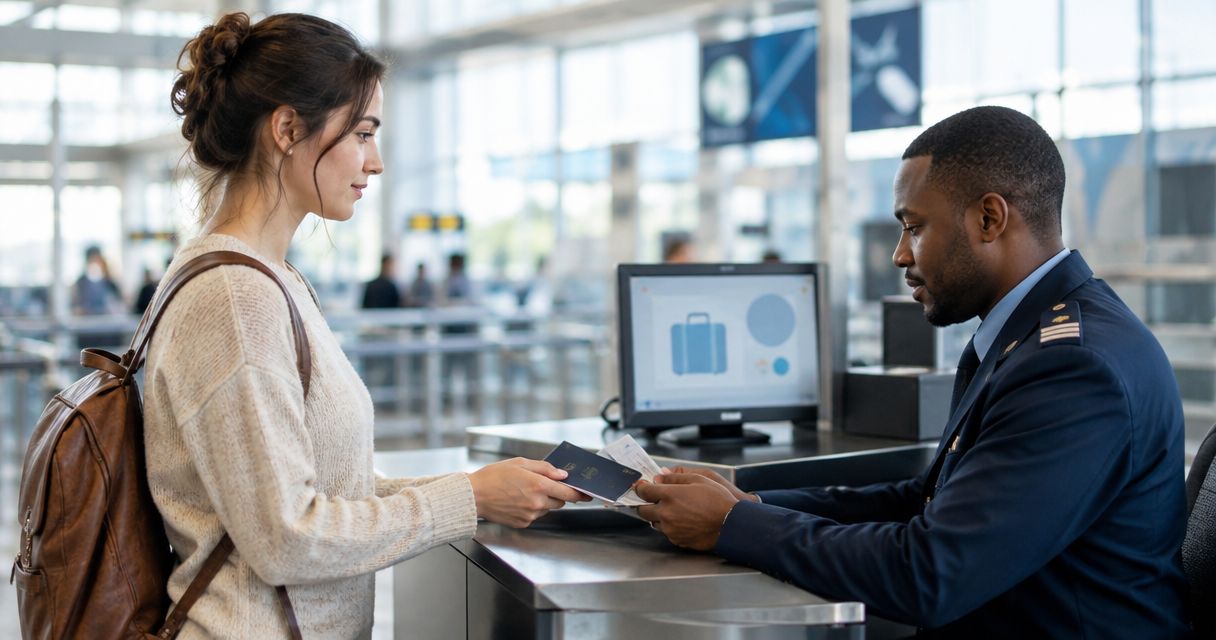
Prove medical necessity for medication to customs with a signed prescriber’s letter, a prescription copy, and medication in its original labeled packaging, alongside any authorization your destination requires. These documents explain your treatment; they do not override an import restriction or replace a required permit.
- How to prove medical necessity for medication to customs: match your prescriber’s letter, prescription, and labeled medication.
- Medical necessity supports your explanation; destination rules determine whether you can bring the medicine.
- Check active ingredients, quantities, and transit requirements before departure.
- MyAbroadMDs provides pre-trip healthcare preparation, not customs authorization or insurance.
How do you prove medical necessity for medication to customs abroad?
Build a document packet that connects you, your prescribed treatment, and the medicine you are carrying. Then check that the destination permits that medicine and whether you need advance approval.
For travel in 2026, use the destination’s current official instructions rather than an old packing checklist. If your prescription contains a controlled substance, start with the additional considerations in traveling abroad with controlled-substance medication.
1. Check the active ingredient
Write down the generic name, strength, dosage form, and total quantity of each medicine. A brand name alone is not enough for a useful rules check because brand names differ between countries.
Check every destination and relevant transit point. Consult the destination’s medicines regulator, customs authority, or embassy for the instructions that apply to personal medication imports. Ask which authority handles approval if the published guidance does not answer your question.
2. Ask your prescriber for a travel letter
Request a signed, dated letter explaining that the medicine is prescribed for your personal treatment. Ask the prescriber to identify the medicine clearly and explain the medical need in language a non-clinician can understand.
The letter should match your prescription and travel supply. If official instructions specify a form, language, certification, or particular medical details, give those instructions to the prescriber before the letter is prepared.
3. Match the letter to your prescription
Carry a readable prescription copy or the documentation specified by the destination. Check your name, medicine, strength, dosing instructions, and quantity against the dispensing label.
Resolve discrepancies before departure. A letter using an old dose or a different name creates a question that a matching document packet avoids.
4. Obtain any required authorization
If the destination requires an import permit or other advance approval, complete that process before carrying the medicine across its border. Follow the authority’s submission instructions and keep the resulting authorization with your documents.
A doctor’s letter is evidence of treatment, not permission to import a restricted medicine. Do not treat an application receipt as approval unless the authority explicitly says it is sufficient.
5. Keep the evidence with the medication
Keep the original labeled packaging and your documents accessible for inspection. Follow the destination’s declaration instructions and answer questions accurately.
Save readable offline copies as a backup. Keep the originals when required; a photograph is not a substitute for an original document if the destination requires one.
Why this matters
Customs needs to assess what you are carrying and whether it meets the destination’s rules. Your clinician explains why you need treatment. Those are different jobs.
A useful 2026 preparation plan therefore answers both questions: Is this medicine medically necessary for you, and is this particular supply permitted on this itinerary? Strong evidence for the first question does not settle the second.
Preparation also protects your treatment plan. If a restriction affects your medication, speak with your prescriber before travel rather than changing, stopping, or substituting treatment yourself.
What should a medical necessity letter include?
Give your prescriber the destination’s requirements first. The following is a preparation checklist, not a universal legal template:
- Patient identification: Your full name matching your travel identification, plus other identifiers the authority requests.
- Treatment explanation: The condition or medical reason for treatment, with the detail the destination requires.
- Medication details: Generic name, brand name when useful, strength, dosage form, and prescribed dose.
- Travel supply: The quantity you intend to carry and the treatment period it covers.
- Associated supplies: An explanation of prescribed injection equipment or other treatment supplies, where relevant.
- Prescriber details: The clinician’s name, signature, date, professional details, and contact information.
Ask for clear wording rather than unexplained abbreviations. The document needs to connect the treatment to the actual medicine in your bag.
Do not assume you must disclose your entire medical history. Ask the receiving authority what clinical information it requires, then have your prescriber prepare an accurate letter that meets that requirement.
A letter also needs to stay consistent with treatment changes. If your prescription changes after the letter is issued, check whether the letter or any associated approval needs updating.
Which documents prove what?
These documents serve different purposes. Carrying one does not automatically remove the need for another.
| Document | Best for | What it establishes | Limitation |
|---|---|---|---|
| Signed prescriber’s letter | Explaining medical necessity | Why the medicine forms part of your treatment | Does not override import restrictions |
| Prescription copy | Supporting the prescribed regimen | The medicine and instructions prescribed to you | Does not establish permission to import |
| Original dispensing label | Identifying the carried supply | The connection between the labeled medicine and the named patient | Does not provide a full clinical explanation |
| Import authorization, when required | Documenting official permission | Approval under the conditions stated by the issuing authority | Applies only within those conditions |
The strongest packet is consistent, not merely thick. Extra paperwork does not repair a mismatch in the active ingredient, patient name, or authorized quantity.
For your 2026 departure, check the packet against the final itinerary and the actual dispensed medicine. Do not check only against the prescription you expected to receive.
Why medical necessity requirements vary
The required evidence depends on the medicine and the route. Check these factors against official instructions:
- Active ingredient: Authorities assess the substance, not just the familiar brand name on the box.
- Legal classification: A medicine’s controlled or prohibited status determines which restrictions need attention.
- Quantity: Personal-import limits and approval requirements need checking against the supply you intend to carry.
- Itinerary: Destination and transit requirements need separate review where applicable.
- Equipment: Needles, syringes, and other treatment supplies need their own check alongside the medication.
- Document rules: Required language, certification, format, and supporting information depend on the receiving authority.
Do not apply another traveler’s experience as your rule. Their active ingredient, quantity, route, or authorization can differ from yours even when the medicine sounds similar.
How do you check your documents before departure?
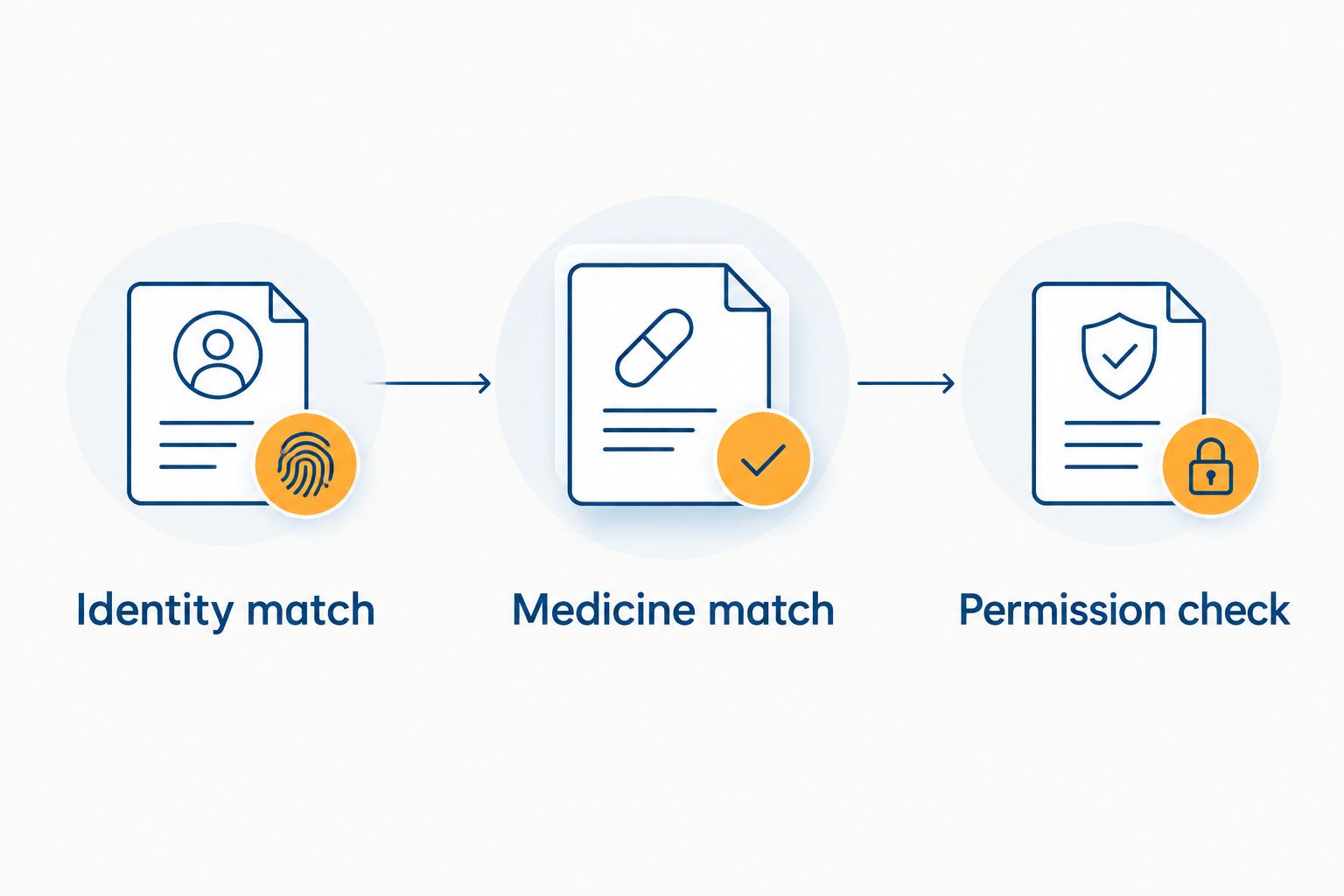
Use 3 checks: Identity match, Medicine match, and Permission check. They organize the review without suggesting that every country uses the same paperwork.
- Identity match: Confirm that the patient named in the letter, prescription, and dispensing label is you. Ask the relevant authority how to document a name difference if one exists.
- Medicine match: Compare the generic name, strength, dosage form, dose, and quantity across your documents and physical supply.
- Permission check: Confirm that any required approval covers the actual medicine, quantity, traveler, and travel dates.
Complete this review while your prescriber and dispensing pharmacy can still correct errors. If a document is unclear, request clarification before departure rather than relying on an explanation at the border.
Keep the packet organized so you can present the relevant document without searching through unrelated medical records. Store backup copies securely because they contain personal health information.
Is a doctor’s letter enough to bring medication abroad?
A doctor’s letter alone does not establish that you can legally import medication. It explains medical necessity, while the destination determines whether the medicine is permitted and whether authorization is required.
Ask the authority a precise question: identify the active ingredient, strength, dosage form, quantity, travel dates, and route. A general question about bringing “prescription medicine” leaves out the details needed for a useful answer.
Does airport security approval mean customs will accept my medication?
Airport security approval is not destination import approval. Security screening addresses the checkpoint’s rules; customs and medicines authorities apply the destination’s import requirements.
Prepare for both processes in 2026. A medicine passing a departure checkpoint does not prove that you have met the rules at arrival or a subsequent border.
What if my medically necessary medicine is restricted?
Medical necessity does not cancel a restriction. Ask the destination’s responsible authority whether a lawful personal-import route exists and what approval it requires.
If the medicine cannot be carried legally, contact your prescriber to discuss your treatment and travel plans. Do not independently reduce your dose, stop treatment, conceal the medicine, or assume mailing it creates an alternative permission route.
Where pre-trip healthcare preparation fits
MyAbroadMDs is best for travelers who want a personalized directory of English-speaking healthcare providers before departure, not customs authorization. Its subscription-based healthcare preparation memberships serve international travelers and study-abroad students across 100+ countries.
MyAbroadMDs can fit into the separate task of preparing healthcare resources for your destinations. That does not replace your prescriber’s medical documentation or the destination authority’s import decision.
The boundary matters: this is not insurance, telehealth, or a booking service. Use healthcare preparation to organize your options before departure, while keeping medication permission checks with the responsible authorities.
FAQ
How do I prove medical necessity for medication to customs?
Use a signed prescriber’s letter, a prescription copy, and original labeled medication packaging, together with any authorization the destination requires. The details should consistently identify you, the medicine, and your prescribed treatment.
What should my doctor write in a medication travel letter?
Your doctor should explain the medical reason for treatment and identify the medication, strength, dose, and intended travel supply. Give the doctor the destination’s instructions so the letter includes any specifically required details.
Do I need a translated medical necessity letter?
The destination’s document requirements determine whether you need a translation. Ask the responsible authority which language it accepts and whether translation certification is required.
Can I carry prescription medication in a pill organizer abroad?
Do not rely on a pill organizer alone to identify prescription medication at customs. Keep the original labeled packaging and check the destination’s packaging requirements before repacking your travel supply.
Will my US prescription let me bring a controlled medicine into another country?
A US prescription does not by itself establish permission to import a controlled medicine. Check the exact active ingredient, quantity, and route with the destination’s responsible authority before departure.
Do I need medication documents for a connecting flight?
Check the applicable transit rules for your medication and route. Do not assume that staying airside removes every requirement, and recheck if your connection involves entering the country or collecting baggage.
Can MyAbroadMDs provide permission to import my medicine?
MyAbroadMDs is a pre-trip healthcare preparation service, not an import-authorizing authority. Its memberships provide personalized, curated English-speaking healthcare provider directories; medication permission comes from the responsible destination authority.
One last thing
Before your 2026 departure, check the medicine itself against the documents—not just the documents against one another. A pharmacy substitution or updated prescription can leave an otherwise tidy packet describing a different supply.
Ask your pharmacist to explain any naming differences and your prescriber to update the clinical letter where needed. Prepare for the medicine you will actually carry. Before you pack.