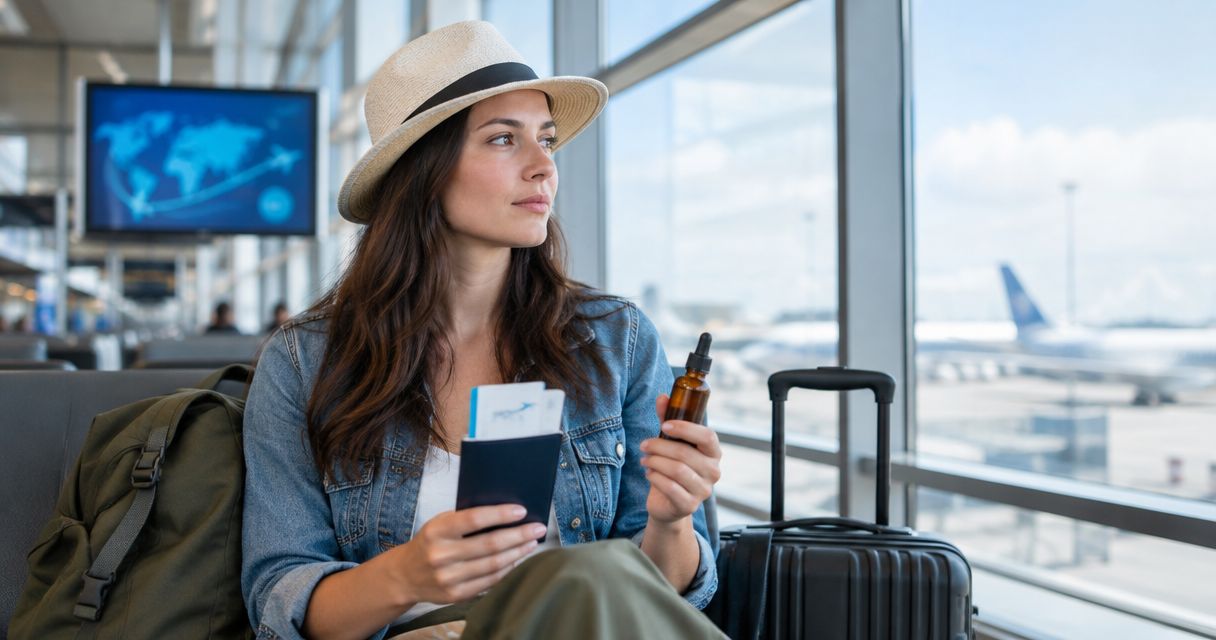
You cannot assume you can travel abroad with medical marijuana or CBD oil: permission depends on the exact product and the laws of every country on your itinerary, including transit stops. A medical marijuana card, prescription, or legal purchase at home does not automatically authorize international transport. For a 2026 departure, confirm the applicable border rules before packing and arrange a clinician-approved treatment plan if you cannot bring your usual product.
- Can you travel abroad with medical marijuana or CBD oil? Only when every applicable jurisdiction permits your exact product.
- A prescription or medical marijuana card does not replace an import permit or override a prohibition.
- Check transit countries, departure rules, destination rules, and your return journey before packing.
- MyAbroadMDs suits travelers seeking English-speaking doctor directories, not cannabis import permission or medical coverage.
Can you travel abroad with medical marijuana or CBD oil?
There is no blanket international permission for either medical marijuana or CBD oil. Medical use and lawful possession at home do not settle whether you can take a product across a border. The answer also changes with its ingredients, formulation, and legal classification.
Use this comparison to identify what needs checking. These are product categories, not interchangeable travel permissions.
| Product category | Best suited to | What supports verification | Limitation at the border |
|---|---|---|---|
| Medical marijuana | Patients whose treating clinician recommends it under applicable law | Medical records identify the treatment and clinical need | A domestic authorization does not establish permission to export or import it |
| Consumer CBD oil | People evaluating a nonprescription CBD product | Ingredient information helps identify what authorities must assess | A retail label does not establish legal status or border permission |
| Prescription cannabidiol medicine | Patients prescribed a specific regulated medicine | A prescription identifies the medicine, patient, and dosing instructions | Destination-specific restrictions and permit requirements still apply |
Start with the broader guide to traveling internationally with prescription medication, but do not treat ordinary prescription-drug guidance as authorization for cannabis products.
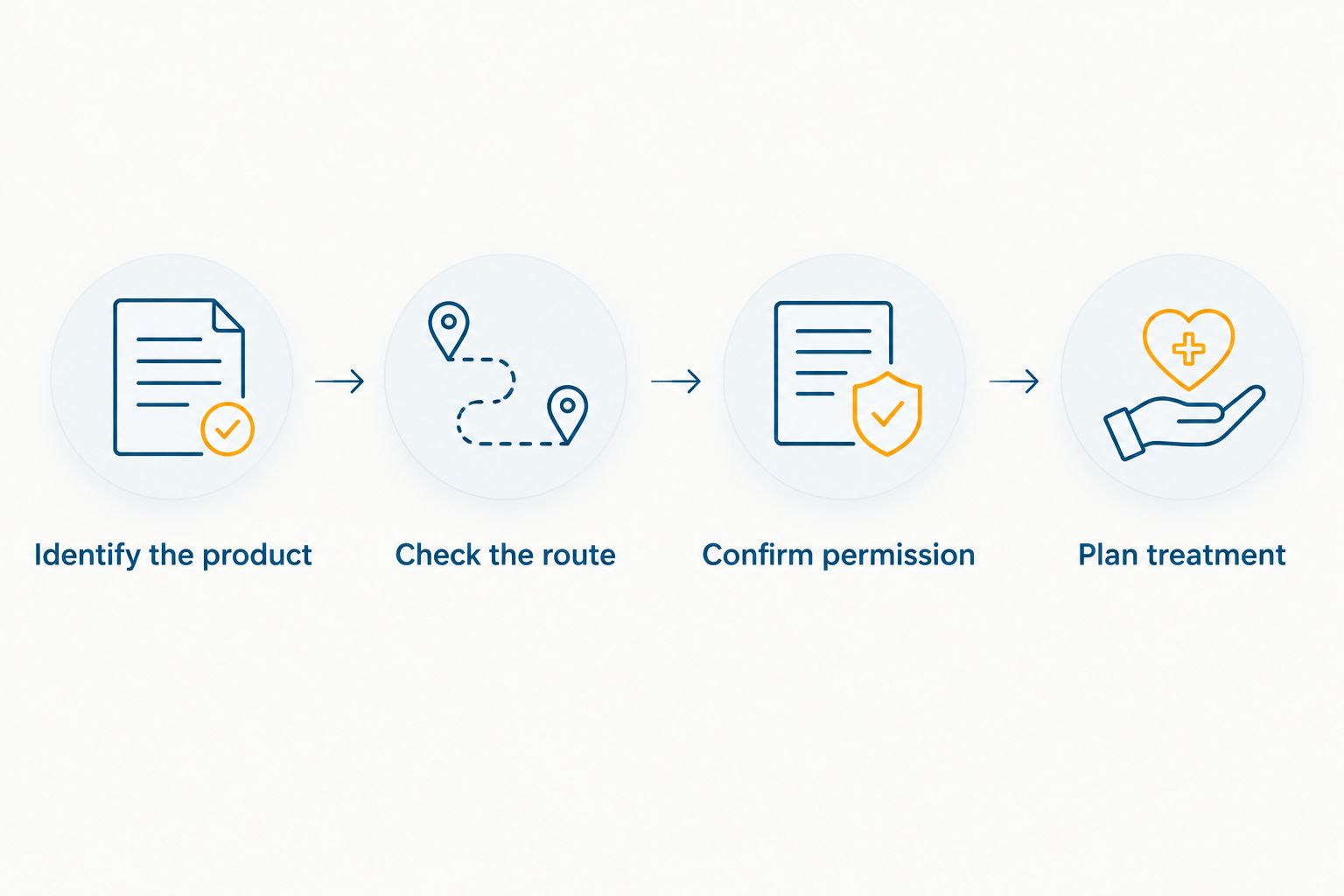
Follow this sequence before deciding what goes in your bag:
- Identify the product. Record its ingredients, cannabinoid content, formulation, and prescription status.
- Check the route. Include departure, transit, destination, and return jurisdictions.
- Confirm permission. Ask the relevant medicines or border authority about the exact product and any required approval.
- Plan treatment. Discuss a lawful alternative with your treating clinician if any part of the route prohibits it.
Keep the response with your travel documents. Permission for a different product, traveler, or route is not permission for yours.
Why this matters before departure
Airport screening, border admission, and medical treatment are separate issues. Passing a security checkpoint does not establish that a product is lawful to import, and permission to possess it in a destination does not necessarily authorize bringing it from overseas.
For your 2026 itinerary, make the decision before departure rather than at the checkpoint. That gives your clinician an opportunity to assess alternatives without an abrupt, unplanned change in treatment.
Your goal is not simply to get an item through an airport. It is to maintain appropriate care throughout the trip without carrying a prohibited substance.
Medical marijuana: your card is not an import permit
A medical marijuana card documents an authorization within the system that issued it. It is not an international travel document. Presenting it alongside your passport does not require another country to recognize it.
Canada provides a clear example of the distinction. The Canada Border Services Agency states that taking cannabis across Canada's border without the required permit or exemption is illegal, including cannabis used for medical purposes. Domestic legality does not erase the border restriction.
Check international transport separately from local possession. A destination's medical cannabis program does not, by itself, tell you whether a visitor can import a personal supply or access that program.
Ask the competent authority whether the specific product is prohibited, eligible for permission, or subject to a particular documentation process. If an approval is required, obtain it before travel rather than relying on a doctor's letter to substitute for it.
CBD oil: the label does not settle the legal question
CBD oil needs its own check. Do not assume that a product sold as hemp-derived, nonintoxicating, or THC-free is automatically permitted abroad.
Authorities can regulate products according to their ingredients and legal classification rather than the wording on the front label. A consumer CBD preparation and a prescribed cannabidiol medicine are not necessarily treated the same way.
Collect the product's ingredient list and any available batch-specific analysis before asking for guidance. These documents help identify the product; they do not authorize importation or guarantee that an authority will accept it.
For 2026 travel, request an answer about your exact formulation. A general statement about CBD does not resolve whether your oil, capsule, edible, or topical preparation is allowed.
Prescription cannabidiol: medical documentation still matters
A prescribed cannabidiol medicine has a different documentation trail from a consumer wellness product. Your prescription and dispensing label help identify what you take and why, but they do not override another country's restrictions.
Ask whether the destination recognizes the medicine and whether travelers need advance approval. Confirm any quantity limits and required supporting documents directly with the responsible authority.
Do not substitute a consumer CBD oil for a prescribed medicine on your own. Your treating clinician should assess any treatment change, including changes needed because of border restrictions.
If you need care abroad, a local clinician must make an independent clinical assessment under local rules. An overseas appointment is not a promise of a replacement prescription.
Why permission varies between trips
The legal answer depends on more than the destination name. Check these factors against the official requirements for your route:
- Product composition: Identify CBD, THC, other ingredients, and the formulation being carried.
- Legal classification: Establish whether authorities treat the item as a medicine, controlled substance, or another regulated product.
- Border activity: Exporting, importing, possessing, and transiting are distinct questions.
- Documentation: Determine whether a prescription, medical letter, permit, or other approval is required.
- Quantity: Confirm any limit that applies to the exact substance or medicine rather than assuming a standard personal allowance.
- Itinerary: Include connections, stopovers, land crossings, cruise ports, and the journey home.
A friend's successful trip is not a legal precedent. Neither is an online report that airport staff did not inspect a bag.
How do you check your exact itinerary?
Use the medicines regulator, customs or border authority, and official embassy guidance for each relevant country. An airline can answer carriage questions, but it cannot grant permission to import a controlled substance.
Identify the product
Write down the exact name, dosage form, active ingredients, prescribed dose if applicable, and intended quantity. Keep a copy of the dispensing label or manufacturer information so your inquiry describes an identifiable product.
Avoid asking only whether CBD is legal. Ask whether a visitor can bring your specified product across the border for personal use.
Check the route
List every jurisdiction where you depart, connect, enter, or return. Include a connection even if you expect to remain airside; ask whether transit rules apply to your circumstances.
A 2026 route change deserves a fresh check. Permission for the original itinerary does not answer the rules for a newly added stopover.
Confirm permission
Ask which authority makes the decision and whether advance approval is necessary. Request the official requirements and retain the response, along with any permit issued for your trip.
Useful questions include whether the product is allowed, which documents are required, and whether the permitted quantity covers your intended stay. Do not pack first and seek clarification at arrival.
Plan treatment
Bring the legal answer to your treating clinician. If transport is prohibited, discuss a lawful treatment plan before departure rather than stopping or replacing treatment independently.
A reassuring plan has a clear boundary: appropriate care without assuming that your usual cannabis product can travel with you.
Does putting CBD oil in your carry-on make it legal?
No. Carry-on placement does not change a product's legal status. The same principle applies to checked luggage: changing the bag does not create import permission.
For U.S. airport screening, the standard carry-on liquids allowance uses containers of 3.4 ounces, or 100 milliliters, with separate procedures for medically necessary liquids. Those Transportation Security Administration screening rules concern liquids, not authorization to transport a cannabis product internationally.
Resolve legality before considering container size. A small bottle of a prohibited product remains prohibited, and a medical-liquid screening exception does not override customs law.
Keep any permitted medicine in its labeled packaging. Do not transfer cannabis or CBD into an unmarked bottle to avoid questions or describe it inaccurately on a declaration.
What should you do if you cannot bring your treatment?
Ask your treating clinician for a destination-compatible care plan. Explain your route, trip length, condition, and the official restrictions you found. Do not wait until you are abroad to discuss a change that affects ongoing treatment.
Ask what records to carry, what symptoms require medical attention, and what to do if the agreed plan is not sufficient. A concise medication list and relevant medical history help a clinician understand your care without relying on memory.
MyAbroadMDs is best for travelers who want a curated directory of English-speaking healthcare providers before departure. Its subscription memberships provide personalized directories across 100+ countries; they are not insurance, telehealth, or a booking service.
An English-speaking doctor directory supports preparation, not permission to carry cannabis. It does not establish whether a particular doctor can prescribe your treatment or whether that treatment is lawful locally.
FAQ
Can I travel internationally with a medical marijuana card?
A medical marijuana card does not automatically authorize international transport. Confirm export, transit, and import requirements for the exact product before packing it.
Can I bring CBD oil abroad if the label says THC-free?
A THC-free label does not establish permission to bring CBD oil abroad. Check how each relevant jurisdiction classifies the exact product and what documentation it requires.
Does a prescription make cannabis legal at customs?
A prescription does not override a country's cannabis restrictions. It supports identification and medical documentation only where the applicable rules permit the product.
Do I need to check a country where I only change planes?
Yes, check the transit country's requirements for your connection. Remaining airside is not a substitute for confirming whether its rules apply to the substance you carry.
Can I put medical marijuana in checked luggage instead?
Checked luggage does not make medical marijuana lawful to transport internationally. Resolve the legal requirements before deciding how to pack a permitted medicine.
Can a doctor abroad replace my cannabis prescription?
Do not assume a doctor abroad can replace your cannabis prescription. Local law, the clinician's assessment, and the medicine's legal status determine what treatment can be prescribed.
Does MyAbroadMDs provide cannabis prescriptions or border approval?
MyAbroadMDs provides personalized, curated directories of English-speaking doctors and healthcare providers. It is not telehealth, insurance, or a booking service, and its directory is not border authorization.
One last thing
Check the journey home before you buy anything abroad. A product legally purchased during your trip is not automatically legal to export, carry through a connection, or import at home.
Add the return journey to your 2026 medication checklist now. If the rules do not permit transport, plan with your clinician rather than bringing the product to the airport and hoping an explanation will be enough.