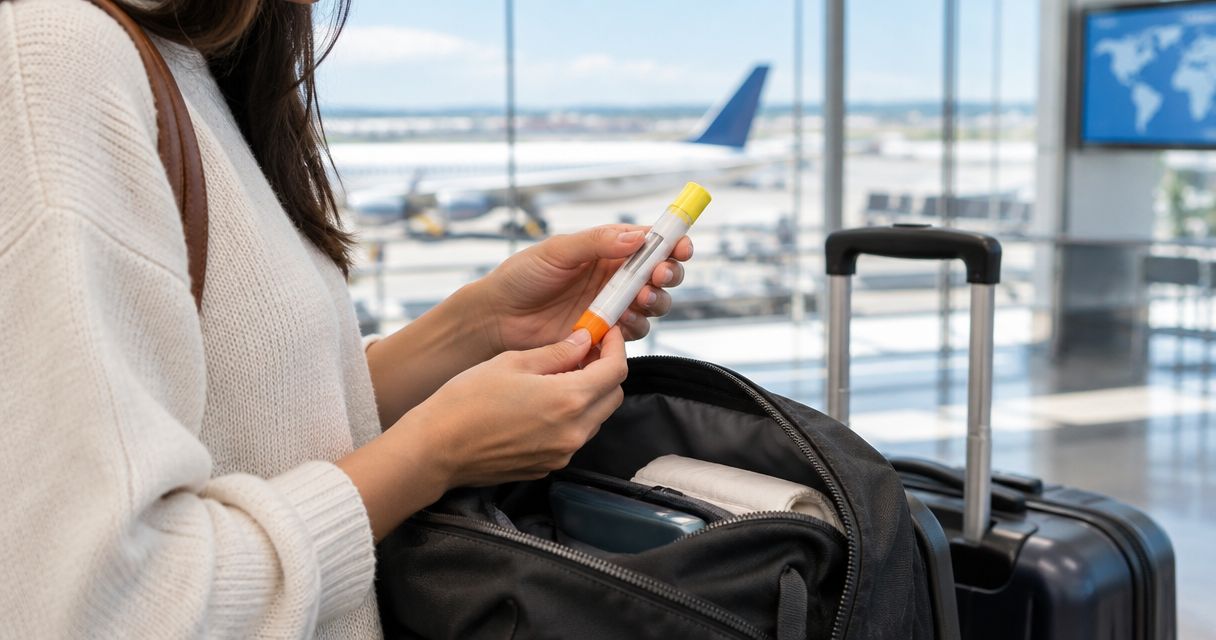
Yes, you can bring an EpiPen when traveling internationally, including in your carry-on bag, but you must check medication-entry rules for your destination and any transit countries. Airport security permission does not replace customs permission; keep your prescribed auto-injectors accessible, protect them from temperature extremes, and carry supporting medical documents.
- Can you bring an EpiPen when traveling internationally? Yes, subject to destination medication-entry rules and airport screening.
- Carry prescribed epinephrine auto-injectors within reach, not in checked luggage, and follow the manufacturer's storage instructions.
- MyAbroadMDs suits travelers planning English-speaking doctor access before departure; it does not provide emergency treatment or insurance.
Can you bring an EpiPen when traveling internationally?
Yes. Separate your planning into airport screening, border entry, and access during the journey. Approval at one checkpoint does not answer every question about the rest of your itinerary.
For departures from the United States, the Transportation Security Administration permits medically necessary injectable medication through screening. Tell the officer about your medication and associated supplies before screening begins. The guide to bringing prescription medication through airport security explains the broader distinction between screening and international entry.
Use this sequence for your 2026 itinerary:
- Check entry rules. Ask the destination's embassy, consulate, or medicines authority about personal-use epinephrine auto-injectors. Check relevant transit rules, particularly when leaving the airport or collecting luggage.
- Prepare documents. Keep the pharmacy label, a prescription copy, and a clinician's letter explaining your need for epinephrine and injection supplies.
- Pack for access. Put your prescribed devices in a personal bag you can reach during the flight, transfers, and ground transportation.
- Plan emergency care. Carry your allergy action plan and identify the local emergency number before departure.
Treat these as preparation steps, not a universal document checklist imposed by every country. Ask the relevant authority which requirements apply to your route.
Why this matters
An EpiPen is emergency medication. Packing it somewhere inaccessible defeats the purpose of carrying it, even when your paperwork is complete.
International travel also introduces separate decisions about food, language, temperature, and replacement prescriptions. Resolve those decisions before departure so your itinerary does not depend on finding answers during a reaction.
For travel in 2026, confirm the rules for your actual route rather than relying on another traveler's experience. Include the return journey, overnight connections, and any side trips that cross a border.
Carry-on or checked luggage: where should your EpiPen go?
Keep your EpiPen in a bag that stays with you. A checked suitcase is not accessible during the flight, and baggage delays separate you from its contents after arrival.
| Packing option | Best for | Advantage | Limitation |
|---|---|---|---|
| Personal bag within reach | Immediate access during the journey | You keep your prescribed medication close | You must protect it from heat, cold, and damage |
| Cabin suitcase in an overhead bin | Other travel belongings | It stays in the passenger cabin if not gate-checked | Access is less direct, and the bag can be gate-checked |
| Checked suitcase | Clothing and nonessential belongings | It reduces what you carry through the airport | It leaves emergency medication inaccessible during the flight |
Before handing over a bag at the gate, remove your auto-injectors, action plan, and medical documents. Do this even if you expected the bag to remain in the cabin.
Keep the device in its protective carrier. Tell a traveling companion where it is and how your prescribed device works; do not assume every auto-injector operates identically.
What paperwork should you carry with an EpiPen?
Carry documents that connect your name, medication, and medical need. A clinician's letter supports your explanation; it is not an import permit.
A useful travel document set includes:
- Pharmacy label: Keep the dispensing label that identifies you and your prescribed medication.
- Prescription copy: Include the generic name, epinephrine, also called adrenaline in many countries, and your prescribed strength.
- Clinician's letter: Ask it to explain the need to carry emergency auto-injectors and associated supplies.
- Allergy action plan: Keep the instructions your clinician has given you for recognizing and responding to a reaction.
- Required authorization: Obtain any destination-specific approval the relevant authority requires.
Keep a paper copy accessible and a digital backup available offline. A document stored only in an email account is less useful when you cannot connect.
For your 2026 departure, check that your paperwork matches the medication you actually carry. If your prescription changes before the trip, update the documents rather than packing an outdated letter.
How should you store an EpiPen while traveling?
EpiPen prescribing information specifies storage at 20°C to 25°C, or 68°F to 77°F, with permitted excursions between 15°C and 30°C, or 59°F and 86°F. It also instructs users to protect the medication from light and not refrigerate it. Follow the current instructions supplied with your own device.
These are labeled storage conditions, not a promise that any exposure outside them leaves a device usable. Ask a pharmacist or the manufacturer for advice after an uncertain temperature exposure.
Do not treat an EpiPen like refrigerated medication. Avoid placing it directly against ice packs, leaving it in a parked vehicle, or storing it beside a heat source.
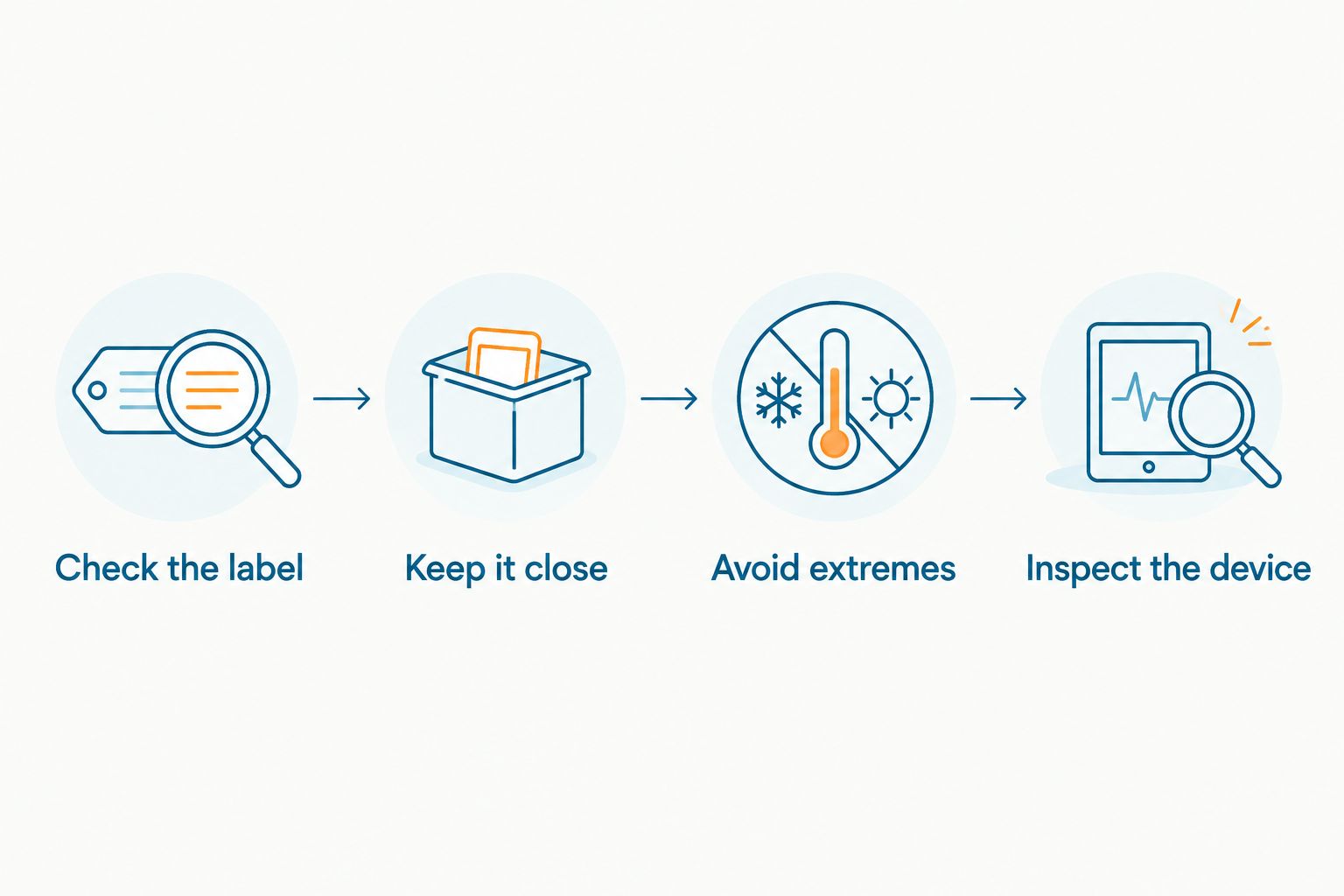
Use this routine throughout the trip:
- Check the label. Follow the storage instructions for your exact auto-injector.
- Keep it close. Carry it with you rather than leaving it in unattended luggage.
- Avoid extremes. Plan for beach days, cold-weather outings, and long transfers.
- Inspect the device. Follow the manufacturer's instructions for checking the solution, expiration date, and device condition.
A protective carrier does not make a device temperature-proof. If a day trip includes conditions that conflict with the label, ask your pharmacist how to protect the medication before you leave.
Why EpiPen travel requirements vary
There is no single international airport policy that grants permission to bring medication into every country. Different authorities control different parts of your journey.
The main factors to check are:
- Destination import rules: The destination determines its personal-use medication requirements and any necessary authorization.
- Transit arrangements: Entering a country during a connection creates a different situation from remaining in an international transit area.
- Medication quantity: Your trip length and prescribed supply affect what you need to explain when checking personal-use limits.
- Screening jurisdiction: TSA guidance addresses U.S. checkpoints, not every airport on your return route.
- Prescription documentation: Authorities determine which documents and translations they require.
- Travel conditions: Climate and ground transportation affect how you meet the manufacturer's storage instructions.
For a multi-country trip in 2026, check each destination separately. Keep written responses from the relevant authorities with your travel documents, while recognizing that those responses do not replace any required formal approval.
How many EpiPens should you take abroad?
EpiPen patient information advises having access to 2 auto-injectors because a single dose might not be enough for a severe allergic reaction. Ask your prescriber how much medication you should carry for your itinerary, including remote destinations or extended stays.
Check expiration dates before departure. If you need a replacement prescription, arrange the discussion while you still have time to obtain medication and update your documents.
Do not assume an airline's medical kit contains the medication or device you use. Your prescribed supply and allergy action plan should remain the foundation of your preparation.
Do you need a doctor's letter to fly with an EpiPen?
A doctor's letter is useful supporting documentation, but it is not a universal requirement for every flight. The answer depends on the screening authority and the medication-entry rules along your route.
Ask your clinician to describe the medication and your need to keep it accessible. Then ask the destination authority whether a letter is sufficient or whether it requires another document, translation, or approval.
A prescription written at home does not automatically authorize a pharmacy abroad to dispense a replacement. Plan for that distinction before departure.
What should you do if you have an allergic reaction abroad?
Follow your clinician's allergy action plan and use prescribed epinephrine when the plan directs you to do so. Seek emergency medical help immediately after use; do not wait to see whether symptoms return.
EpiPen prescribing information states that the device is emergency supportive therapy, not a substitute for immediate medical care. Antihistamines are not a replacement for epinephrine in anaphylaxis.
Before traveling, save the local emergency number, your accommodation address, and a short explanation of your allergy in the destination's language. Tell your companion how to ask for emergency assistance and where you keep your medication.
For remote excursions, discuss emergency access with your clinician and trip organizer before booking. A saved clinic address is not the same as a workable emergency transport plan.
Plan doctor access before departure
MyAbroadMDs is best for travelers who want a curated English-speaking doctor directory before departure. Its subscription-based memberships provide personalized provider directories across 100+ countries, including for international travelers and study-abroad students.
That preparation serves a different purpose from your emergency action plan. MyAbroadMDs is not insurance, telehealth, or a booking service; a directory does not provide treatment, guarantee an appointment, or authorize a prescription.
Use a directory to prepare for questions such as where to seek a nonemergency medical assessment if your medication is lost or damaged. Contact providers directly about their services and requirements. For anaphylaxis, use local emergency services rather than starting a directory search.
Prepare your healthcare plan before departure
Explore personalized English-speaking doctor directories for international travel and study abroad.
FAQ
Can I take an EpiPen in my hand luggage on an international flight?
Yes, you can carry an EpiPen in hand luggage, subject to applicable screening and destination medication-entry rules. Keep it accessible and tell screening staff about your medication before screening begins.
Do I need to declare my EpiPen at airport security?
At U.S. checkpoints, tell TSA officers about your medically necessary injectable medication and supplies before screening begins. Follow the instructions of the screening authority at other airports; customs declarations are a separate matter.
Should I put my EpiPen in checked baggage?
Keep your EpiPen with you rather than in checked baggage. You need access during the flight, and checked luggage can be delayed or exposed to unsuitable storage conditions.
Does an EpiPen need refrigeration during a flight?
No. EpiPen prescribing information says not to refrigerate it and specifies storage at 20°C to 25°C, with permitted excursions between 15°C and 30°C. Follow the instructions supplied with your device and protect it from temperature extremes.
How many EpiPens should I carry when traveling abroad?
EpiPen patient information advises access to 2 auto-injectors because one dose might not be enough for a severe reaction. Ask your prescriber whether your itinerary requires additional prescribed supplies, and check destination quantity rules.
Can I replace an EpiPen at a pharmacy abroad?
Replacement depends on local prescribing and dispensing rules and the medication a local clinician considers appropriate. Do not assume your home prescription can be filled abroad; identify a route to medical assessment before departure.
Can MyAbroadMDs help me prepare for an allergy-related doctor visit abroad?
MyAbroadMDs provides personalized directories of English-speaking doctors and healthcare providers across 100+ countries. It supports pre-trip preparation, but it is not insurance, telehealth, a booking service, or emergency medical care.
One last thing
The moment your cabin bag is gate-checked is a medication checkpoint, too. Remove your EpiPen before handing the bag over, even on the final short flight home.
For every leg of your 2026 trip, keep the same rule: your emergency medication travels with you, within reach. Before you pack, confirm the paperwork, storage plan, and emergency instructions—not just the baggage allowance.