
Best overall for declared medical needs: a policy that explicitly accepts your conditions. Best for extended itineraries: long-stay cover. Best for medical-focused protection: travel medical insurance. The best travel insurance for backpackers with medical needs in 2026 is the policy whose written terms fit your health, destinations, trip length, and activities—not the one with the broadest headline.
- The best travel insurance for backpackers with medical needs explicitly addresses declared conditions, itinerary length, and planned activities.
- Long-stay insurance belongs on extended-trip shortlists; confirm return-home and extension rules before departure.
- Travel medical insurance is a focused option when healthcare protection matters more than cancellation benefits.
- MyAbroadMDs provides curated English-speaking doctor directories, not insurance, telehealth, or appointment booking.
Why this matters
Backpacking puts several decisions inside one itinerary: where you travel, how long you stay, and what you do between destinations. Medical needs add another question: which treatment does the policy actually cover?
Separate financial protection from finding care. Insurance addresses covered expenses under its terms. MyAbroadMDs provides subscription-based, personalized directories of English-speaking doctors and healthcare providers across 100+ countries. It does not provide insurance, telehealth, or appointment booking.
MyAbroadMDs is best for backpackers who want a curated English-speaking doctor directory before departure. You still need to assess insurance separately. Peace of mind before you pack starts with knowing which service answers which question.
What makes the best backpacker travel insurance?
For your 2026 shortlist, compare the policy wording—not just the summary. These criteria determine whether an option belongs on your list:
- Condition acceptance: Identify how the contract treats your diagnoses, symptoms, medications, and relevant medical history. Complete any required screening accurately.
- Treatment scope: Distinguish emergency treatment from routine appointments, monitoring, prescription refills, and ongoing care. Do not assume these share the same benefits.
- Trip eligibility: Check your residence, destinations, departure status, total trip length, and any return-home rules.
- Activity eligibility: Match the wording to your itinerary, including trekking, altitude, diving, riding, and paid or volunteer work where relevant.
- Evacuation terms: Read who authorizes transport, which circumstances qualify, and what destination the policy permits.
- Claims usability: Check assistance contacts, notification requirements, documentation, and whether payment arrangements require advance approval.
A strong headline benefit cannot correct an exclusion affecting your condition. Reject a mismatch before comparing secondary benefits.
Backpacker insurance options at a glance
These are ranked policy approaches, not insurer endorsements. Categories overlap: a long-stay policy can also include medical screening and activity cover. Your task is to find the combination that fits.
| Rank and option | Best for | Standout feature to verify | Key limitation |
|---|---|---|---|
| 1. Condition-assessed travel insurance | Backpackers with declared medical conditions | Written acceptance of relevant conditions | Acceptance does not establish cover for every treatment |
| 2. Travel medical insurance | Backpackers prioritizing healthcare protection | Clearly defined medical benefits | Cancellation and belongings protection require separate checks |
| 3. Long-stay travel insurance | Extended or multi-destination backpacking | Eligibility for the full trip duration | Extension and return-home rules can restrict flexibility |
| 4. Activity-inclusive travel insurance | Backpackers planning specified adventure activities | Written inclusion of the actual activity | Equipment, altitude, supervision, and licensing restrictions need checking |
| 5. Comprehensive travel insurance | Backpackers wanting medical and wider trip protection | Medical benefits alongside other named protections | More benefit categories do not resolve medical exclusions |
1. Condition-assessed cover: best for declared medical needs
Condition-assessed travel insurance belongs first on your shortlist when an existing health issue affects the trip. Look for a policy with a declaration or screening process that produces a clear written decision about your circumstances.
Do not treat successful checkout as proof that every condition is accepted. Read the resulting documents and ask about anything that remains unclear, especially treatment connected to an accepted diagnosis.
Condition-assessed cover pros:
- Gives you a defined process for declaring relevant medical information.
- Makes condition-specific acceptance or exclusions easier to identify.
- Supports a comparison based on your circumstances rather than a generic traveler profile.
Condition-assessed cover cons:
- Screening acceptance does not automatically include routine care or medication replacement.
- Changes in health before departure require checking against the policy's disclosure rules.
- Restrictions elsewhere in the contract still apply.
Best for: Backpackers managing a diagnosed condition or medical history that must be declared.
Ask the insurer to distinguish emergency complications from planned treatment. If you need regular blood tests, follow-up appointments, or recurring prescriptions, assess those needs individually rather than grouping them under medical cover.
Verdict: Buy only when the written acceptance and treatment terms match your declared needs.
2. Travel medical insurance: best for healthcare-focused protection
Travel medical insurance is the focused shortlist when your main concern is eligible healthcare expenses abroad. Evaluate the actual medical benefits, assistance arrangements, exclusions, and claims requirements.
A medical-focused product is not automatically suitable for chronic conditions. It also does not establish protection for canceled departures, stolen belongings, or disrupted transport unless the contract includes those benefits.
Travel medical insurance pros:
- Keeps your comparison centered on treatment and medical assistance.
- Makes it easier to separate healthcare requirements from other travel protections.
- Suits a shortlist built around medical needs rather than a broad package label.
Travel medical insurance cons:
- You must check nonmedical travel benefits separately.
- Emergency benefits do not establish cover for routine appointments.
- Residency and destination eligibility still determine whether you qualify.
Best for: Backpackers who want to prioritize healthcare protection and assess other trip risks separately.
For a 2026 departure, check whether the contract covers your whole itinerary, including transit destinations where relevant. Ask how you should arrange care and what to do if a provider requests payment before the insurer confirms a claim.
Verdict: Buy when the medical scope fits; skip it as a substitute for benefits it does not include.
3. Long-stay cover: best for extended backpacking itineraries
Long-stay travel insurance belongs on your shortlist when the full journey exceeds another policy's permitted trip duration. The relevant number is the contract's allowed duration, not how many destinations appear on your itinerary.
Read extension rules before you leave. An option to request an extension is different from a guarantee that additional time will be accepted.
Long-stay cover pros:
- Addresses trip duration as a central eligibility question.
- Gives extended travelers a more relevant starting category.
- Lets you assess the whole itinerary rather than treating each stop as a separate trip.
Long-stay cover cons:
- Returning home can affect cover under the contract's rules.
- An extension can require approval or have restrictions.
- Long duration does not establish cover for existing conditions or adventure activities.
Best for: Backpackers taking an extended journey with dates that fit the policy's stated duration.
Before buying, check 3 itinerary details: your departure date, your expected final return, and any planned visits home. Then ask how an itinerary change affects eligibility. Keep the response with your insurance documents.
Verdict: Buy for a qualifying extended trip; hold if the return-home or extension terms remain unclear.
4. Activity-inclusive cover: best for planned adventure activities
Activity-inclusive travel insurance is the shortlist for backpackers whose itinerary includes activities requiring specific permission under the policy. Match the activity's actual conditions to the contract, not just its name.
A reference to trekking does not answer every question about altitude, routes, guides, or equipment. Likewise, vehicle-related activities require close attention to licensing and other stated conditions.
Activity-inclusive cover pros:
- Makes your planned activities part of the buying decision.
- Helps identify whether an activity is included, excluded, or requires additional cover.
- Encourages checking practical restrictions before booking an excursion.
Activity-inclusive cover cons:
- Inclusion of an activity does not remove medical exclusions.
- Similar activities can have different policy treatment.
- Rescue, evacuation, and treatment require separate checks within the wording.
Best for: Backpackers with a specific adventure itinerary rather than an undefined intention to try activities abroad.
For a 2026 trip, list planned activities before comparing policies. If you add an excursion later, check eligibility before participating. A local operator's willingness to take you does not establish insurance cover.
Verdict: Buy only after the policy expressly matches the activity and its conditions; skip assumptions based on broad labels.
5. Comprehensive cover: best for wider trip protection
Comprehensive travel insurance belongs on the shortlist when you want medical protection alongside other named benefits. Those benefits can include cancellation, interruption, or belongings protection, depending on the contract.
Compare each benefit separately. A package with more categories is not automatically a better medical fit for a backpacker with ongoing health needs.
Comprehensive cover pros:
- Lets you assess medical and nonmedical trip risks within one contract.
- Provides a place to check protections beyond treatment expenses.
- Suits travelers whose concerns extend to the wider itinerary.
Comprehensive cover cons:
- The package label does not establish acceptance of existing conditions.
- Each benefit has its own eligibility rules and exclusions.
- Extra protections do not compensate for inadequate medical terms.
Best for: Backpackers who need both suitable medical benefits and clearly defined protection for other trip risks.
Start with the medical section. Only after it passes your requirements should cancellation, interruption, and belongings benefits influence the decision. Otherwise, you are comparing extras on a policy that does not fit the main need.
Verdict: Buy when both medical and wider trip terms fit; skip a package whose medical exclusions undermine the purchase.
How to turn the shortlist into a decision
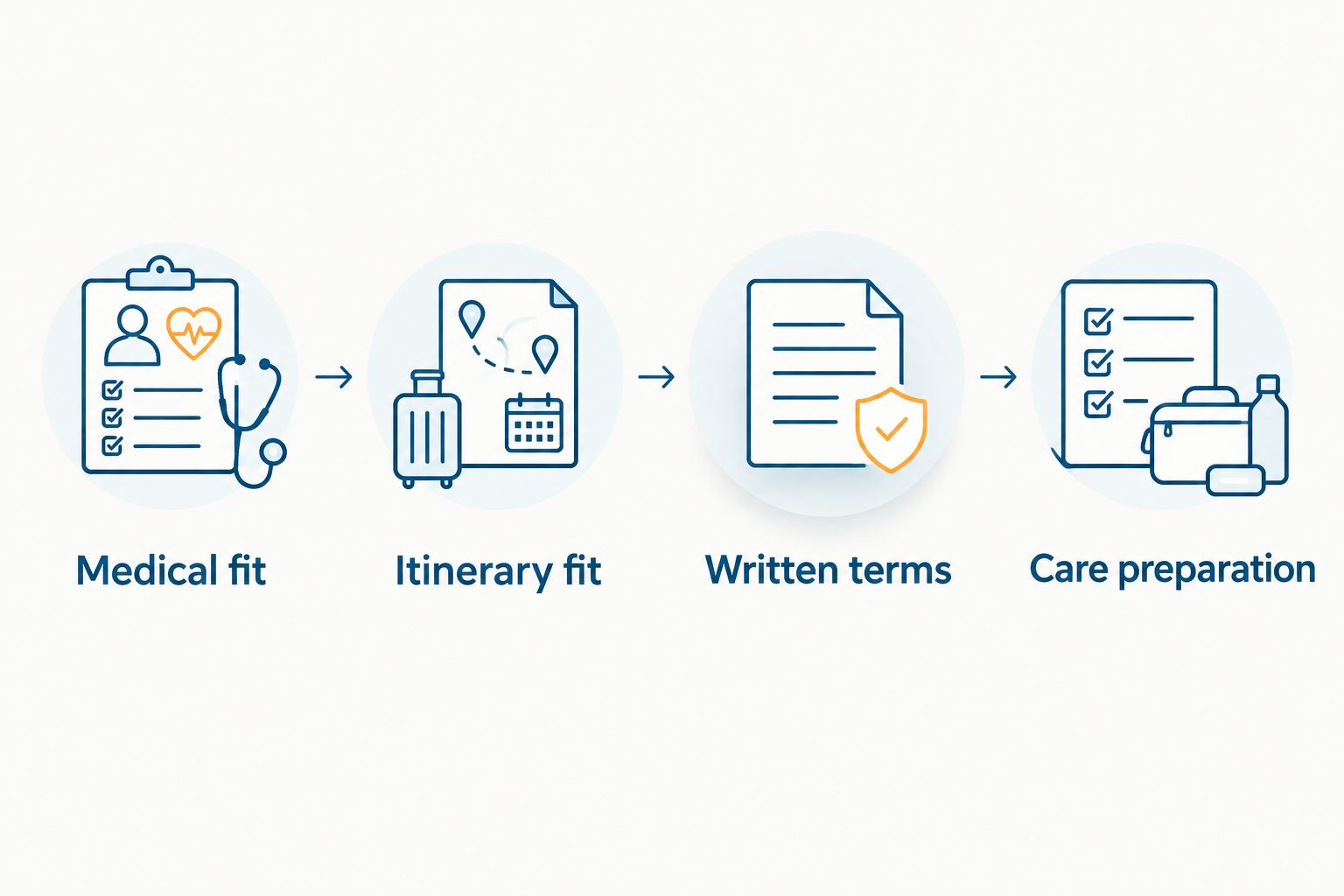
Use these 4 checks in order. This is a purchasing checklist, not a claim that every insurer uses the same process.
Medical fit
Write down your diagnoses, current medications, relevant symptoms, and planned treatment. Answer the insurer's questions accurately and request clarification when its wording is unclear. Do not decide for yourself that something is too minor to disclose if the application asks about it.
Itinerary fit
Match every destination and the entire trip duration to the eligibility terms. Include planned returns home and activities. Check what happens if your route changes after departure.
Written terms
Read the policy wording alongside the schedule and any screening decision. Save written answers to specific questions. Check how those answers relate to the issued contract rather than relying on a general sales description.
Care preparation
Save assistance instructions and identify how you will find suitable local care. MyAbroadMDs travel healthcare preparation complements insurance; it does not replace financial protection. Its curated directory can support your pre-trip planning without promising treatment, appointment booking, or claim payment.
Keep 3 documents accessible: your policy wording, your insurance schedule, and your medical screening decision where one is issued. Keep the insurer's assistance instructions with them. An offline copy avoids making document access depend entirely on a connection.
Prepare for care before departure
Explore personalized, curated English-speaking doctor directories for your destinations.
How these options were ranked
The order prioritizes medical fit, then treatment scope, trip duration, activities, and wider travel benefits. These categories are a decision framework, not a scored comparison of named insurers.
For backpackers with medical needs in 2026, condition acceptance comes first because it directly addresses the reason for this search. Your final policy can combine several categories. An extended trek with an existing condition needs all relevant requirements satisfied in the same contract.
Which backpacker travel insurance should you choose?
Start with condition-assessed cover if you have a medical condition to declare. Then filter for trip duration and activities. Compare broader travel benefits only after the medical requirements pass.
If you have no condition requiring declaration under the application, start with the treatment scope you need. Choose medical-focused or wider trip protection according to the actual contract. Do not use a category name as a substitute for reading it.
For your 2026 departure, make 2 separate decisions: how covered expenses will be handled and how you will find appropriate care. MyAbroadMDs supports the directory side of travel healthcare preparation, not the insurance decision.
FAQ
What's the best travel insurance for backpackers with medical needs?
The best policy explicitly fits your declared health circumstances, destinations, trip duration, and activities. Start with condition-assessed cover when you have medical information to declare, then compare the remaining terms.
Does backpacker insurance cover pre-existing conditions?
Cover depends on the policy and its treatment of your declared conditions. Complete any required screening and read the acceptance decision alongside the policy wording; do not assume acceptance includes routine care.
Is travel medical insurance better than comprehensive travel insurance?
Travel medical insurance is the more focused shortlist when healthcare protection is your main requirement. Comprehensive cover belongs on the shortlist when you also need other specified travel benefits, but the medical terms must still fit.
Will travel insurance pay for prescription refills abroad?
Prescription refill cover depends on the contract and the circumstances. Check routine medication, replacement medication, and prescriptions connected to eligible emergency treatment separately.
Can I extend backpacker insurance after departure?
An extension is available only if the policy's rules permit it and any required approval is obtained. Check deadlines, eligibility, and restrictions before departure rather than assuming an extension will be accepted.
Does MyAbroadMDs replace travel insurance?
MyAbroadMDs does not replace travel insurance. Its subscription memberships provide personalized, curated directories of English-speaking doctors and healthcare providers; they are not insurance, telehealth, or appointment-booking services.
What should I check before trekking with a medical condition?
Check both the policy's treatment of your medical condition and its permission for the specific trek. Review applicable altitude, route, equipment, supervision, rescue, and evacuation terms, and discuss medical suitability with your clinician.
One last thing
A provider directory entry is not confirmation that an insurer will pay that provider. Ask your insurer about authorization and payment arrangements before a nonurgent appointment when its terms require that step. Keep finding care and confirming financial protection as separate tasks.