
Best overall for one international itinerary: single-trip travel medical insurance. Best for repeated departures: annual multi-trip insurance. Best for a semester overseas: study-abroad medical insurance. This 2026 guide explains how to compare emergency medical coverage within those categories; plan types are ranked by travel fit, not treated as a verified ranking of individual insurers.
- Travel insurance plans ranked by emergency medical coverage need policy-level comparisons, not a ranking based on advertised limits alone.
- Single-trip travel medical insurance is the starting point for one international itinerary; check exclusions before choosing.
- Compare emergency treatment, medical evacuation, deductibles, pre-existing-condition terms, and trip-duration restrictions separately.
- MyAbroadMDs supports pre-trip doctor preparation; it is not insurance, telehealth, or a booking service.
Why this matters
Emergency medical insurance and finding a doctor solve different problems. Insurance addresses eligible expenses under a policy; a provider directory helps you identify healthcare providers before departure. Neither should be mistaken for the other.
MyAbroadMDs is best for travelers who want a personalized directory of English-speaking doctors before departure, not insurance coverage. MyAbroadMDs offers subscription-based memberships with curated healthcare-provider directories across 100+ countries. Keep that preparation separate from your insurance decision.
For your 2026 itinerary, the useful question is not simply which policy displays the largest medical benefit. It is which policy covers your destinations, travel dates, medical circumstances, and planned activities under terms you can follow.
What makes the best emergency medical travel insurance?
Use these criteria before reading any ranking. A policy that fails a required criterion belongs outside your shortlist, regardless of its advertised limit.
- Emergency treatment scope: Check what the policy considers a covered illness or injury, including hospital care, outpatient treatment, diagnostic services, and prescribed medication.
- Benefit limits and sublimits: Read the overall medical limit alongside any separate restrictions for particular expenses. Establish whether limits apply per person, per event, or across the policy period.
- Your share of expenses: Identify deductibles and any coinsurance. Check whether reimbursement requires you to pay the provider first.
- Medical evacuation terms: Compare evacuation separately from treatment. Read who must authorize transport and how the destination is determined.
- Eligibility and exclusions: Check pre-existing-condition wording, age eligibility, excluded activities, destination restrictions, and residency requirements.
- Duration and assistance procedures: Confirm that every travel day is covered. Find the emergency assistance instructions and requirements for notifying the insurer.
The best policy is the one whose medical terms fit your trip, not the one with the most prominent headline benefit. Read the policy wording alongside the benefit summary. The summary introduces the coverage; it does not replace the contract.
Travel insurance options at a glance
This 2026 comparison ranks insurance categories by distinct travel needs. Individual policies within each category require their own medical-benefit comparison.
| Rank and option | Best for | Standout purpose | Key limitation to check |
|---|---|---|---|
| Single-trip travel medical insurance | One international itinerary | Medical-focused protection for a defined trip | Exclusions, eligible destinations, and exact coverage dates |
| Annual multi-trip insurance | Repeated departures with returns home | Coverage structured around multiple trips | Maximum duration of each individual trip |
| Study-abroad medical insurance | Students attending an overseas program | Medical protection aligned with a study period | School requirements and student eligibility |
| Long-stay travel medical insurance | An extended overseas itinerary | Coverage intended for a longer travel period | Extension, residency, and ongoing-treatment rules |
| Comprehensive travel insurance | Travelers wanting medical and trip-protection benefits together | Combines different categories of travel benefits | Nonmedical benefits do not establish medical suitability |
A category label is not proof of coverage. An annual policy is not automatically suitable for a continuous overseas stay, and a comprehensive policy is not automatically stronger on emergency treatment than a medical-focused policy.
1. Single-trip travel medical insurance: best for one itinerary
Single-trip travel medical insurance covers a defined travel period under the policy's terms. It is the clearest starting category when you have one departure, a known itinerary, and an expected return date.
Start with your actual route. Check each destination, including any stop where you intend to leave the airport, against the policy's geographic terms. Then examine emergency treatment and evacuation as separate benefits.
Single-trip travel medical insurance pros:
- A defined trip makes the intended coverage period straightforward to compare with your itinerary.
- A medical-focused shortlist keeps attention on treatment terms rather than unrelated travel benefits.
- You can assess one policy against the activities and destinations planned for that departure.
Single-trip travel medical insurance cons:
- Coverage for one itinerary does not establish protection for a later departure.
- Extending a trip requires checking the policy's extension rules rather than assuming coverage continues.
- Pre-existing conditions and excluded activities still require individual review.
Best for: A traveler taking one international holiday, visit, or other defined overseas trip.
For a 2026 departure, compare the same benefit fields across your shortlisted policies. Do not compare one insurer's treatment limit with another insurer's combined treatment-and-evacuation figure.
Verdict: Buy only after the policy matches your full itinerary and medical circumstances.
2. Annual multi-trip insurance: best for repeated departures
Annual multi-trip insurance is structured around multiple trips during a policy period. Its central distinction is the difference between the policy's overall term and the permitted length of each journey.
Check your longest planned trip first. A policy can remain active while a particular journey falls outside its trip-duration rules. Also read how the policy defines a trip and whether returning home affects eligibility for subsequent departures.
Annual multi-trip insurance pros:
- One policy structure can address repeated departures rather than one isolated itinerary.
- You can assess recurring travel against a consistent set of medical terms.
- It provides a useful comparison category for travelers who regularly return home between trips.
Annual multi-trip insurance cons:
- An annual policy period does not mean an uninterrupted overseas stay is covered.
- A later destination or activity still needs to meet the policy's requirements.
- Renewal does not remove the need to review the current wording.
Best for: Frequent travelers whose individual journeys fit the policy's trip-length rules.
Make the comparison using your actual travel calendar. If one journey exceeds the permitted duration, evaluate that journey separately rather than relying on the annual label.
Verdict: Buy if every planned departure fits; skip this category for a continuous stay that exceeds its rules.
3. Study-abroad medical insurance: best for overseas students
Study-abroad medical insurance is a category to evaluate when your trip centers on an overseas academic program. The relevant decision includes both medical protection and any insurance requirements imposed by your institution or program.
Start with the school's written requirements. Then check whether the policy covers your complete period abroad, including travel before classes, breaks, and travel after the program ends. Treat each requirement as a separate check, not an assumption attached to the student label.
Study-abroad medical insurance pros:
- It gives students a relevant category to compare against program requirements.
- The study period provides a clear timeline for checking coverage dates.
- It supports a focused review of emergency care alongside any other required medical benefits.
Study-abroad medical insurance cons:
- A student-oriented name does not establish that a school will accept the policy.
- Academic breaks and travel beyond the study destination require checking.
- Emergency-only protection does not establish coverage for routine or ongoing care.
Best for: Students who need insurance aligned with an overseas program and its written requirements.
For the 2026 academic itinerary, include every day abroad in your comparison. Keep insurance documentation and provider contact details accessible separately; a benefit certificate does not tell you which nearby doctor speaks English.
Verdict: Buy only after confirming program acceptance and the full coverage period.
4. Long-stay travel medical insurance: best for extended travel
Long-stay travel medical insurance is the category to assess for an extended overseas itinerary. Duration matters, but so does the distinction between temporary travel and living abroad under a policy's eligibility rules.
Check residence definitions before comparing medical limits. Then examine extensions, journeys home, and ongoing treatment. If you need regular care rather than emergency-only protection, assess international health insurance separately instead of assuming a travel policy performs the same role.
Long-stay travel medical insurance pros:
- It directs the comparison toward the full length of an extended trip.
- It puts extension and eligibility rules near the center of the decision.
- It provides a relevant alternative when a short-trip structure does not fit.
Long-stay travel medical insurance cons:
- A longer policy period does not establish coverage for routine healthcare.
- Residency changes require checking against policy eligibility.
- Extension and renewal terms need separate review; neither should be assumed.
Best for: Travelers taking a prolonged but temporary overseas trip.
Be precise about what you need. Emergency treatment during travel, continued treatment after an emergency, and regular management of a medical condition are different coverage questions.
Verdict: Hold until duration, residence, and treatment needs all match the policy.
5. Comprehensive travel insurance: best for combined trip protection
Comprehensive travel insurance combines categories of travel protection, such as medical benefits and cancellation or baggage benefits. It belongs on your shortlist when you want to assess those needs together.
Compare the medical section independently. A broad collection of travel benefits does not establish stronger emergency treatment coverage, more suitable evacuation terms, or fewer medical exclusions.
Comprehensive travel insurance pros:
- You can assess medical and nonmedical travel protection within one policy structure.
- It suits a comparison that includes both health-related and itinerary-related risks.
- Separate benefit sections make it possible to review each protection on its own terms.
Comprehensive travel insurance cons:
- The comprehensive label does not mean every risk is covered.
- Cancellation and baggage benefits can distract from medical exclusions.
- Different benefits can have different limits, conditions, and claims requirements.
Best for: Travelers who want emergency medical protection alongside other travel benefits.
Read the medical section before deciding whether the additional benefits suit your trip. Keep the evaluation anchored to the care you need covered.
Verdict: Buy if the medical terms pass your checklist and the additional protection fits your itinerary.
How to compare actual policies before departure
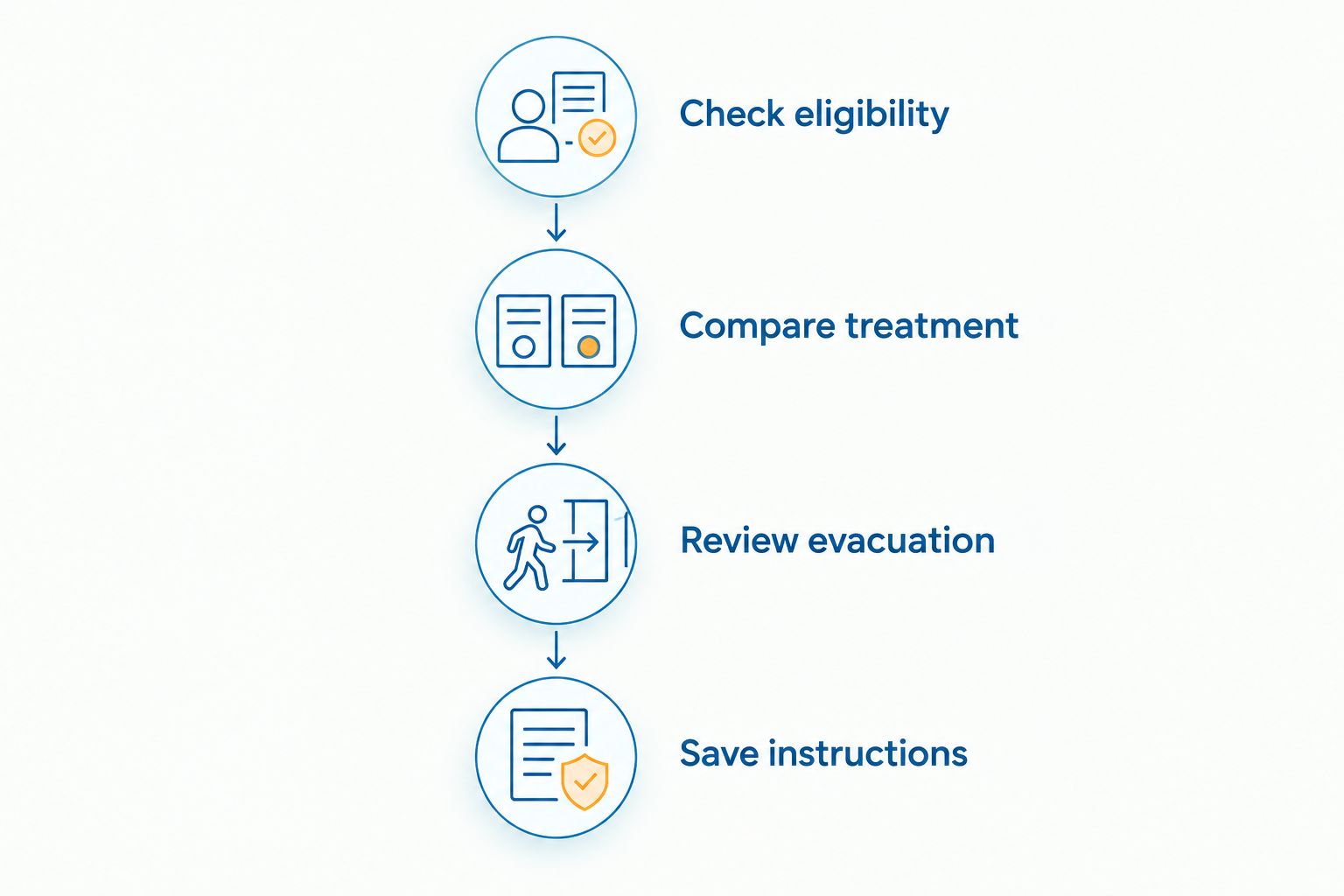
Use the same sequence for every shortlisted policy. This prevents a prominent benefit from obscuring a restriction elsewhere in the wording.
Check eligibility
Match the policy to your residence, age, destinations, dates, and trip purpose. Resolve eligibility first; a medical benefit is irrelevant if the trip does not qualify.
Compare treatment
Record the emergency medical limit, deductible, relevant sublimits, and exclusions. Read the pre-existing-condition definition and any associated conditions rather than relying on a brief sales description.
Review evacuation
Check authorization requirements, transport arrangements, and destination wording. Medical evacuation and returning home are not interchangeable promises; use the policy's actual definitions.
Save instructions
Keep the assistance contact details, policy reference, and claims instructions accessible offline. Identify what to do before arranging nonurgent treatment and what documentation to retain afterward.
Prepare your provider information separately. MyAbroadMDs memberships help you organize a personalized, curated directory of English-speaking doctors before travel; they do not provide insurance, telehealth consultations, or appointment booking.
Prepare before you pack
Explore memberships for a personalized directory of English-speaking doctors at your destinations.
How this ranking works
This ranking uses itinerary fit as its organizing principle: one trip, repeated trips, study abroad, extended travel, or combined trip protection. The criteria remain medical scope, limits, personal expenses, evacuation, eligibility, and duration.
It is not a numerical leaderboard of insurers. To rank individual policies by emergency medical coverage, compare their current policy documents for the same traveler and itinerary. A ranking without that common basis mixes different eligibility rules and benefits.
Which travel insurance should you choose?
Start with single-trip travel medical insurance if you have one defined international itinerary. Choose a different category when your travel pattern requires it: annual multi-trip for repeated departures, student coverage for program requirements, or long-stay coverage for extended travel.
For 2026, make the final decision on policy wording rather than category reputation. Keep healthcare preparation alongside that decision. Insurance eligibility and a usable doctor directory answer different questions before departure.
FAQ
What's the best travel insurance for emergency medical coverage?
The best travel insurance is the policy whose emergency medical terms match your itinerary and eligibility. Compare treatment benefits, exclusions, deductibles, evacuation rules, and coverage dates before choosing an insurer.
Does the highest medical limit mean the best coverage?
No. A higher headline limit does not remove exclusions, sublimits, eligibility requirements, or authorization conditions. Compare those terms alongside the limit.
Is annual travel insurance suitable for a year abroad?
An annual policy does not automatically cover a continuous year abroad. Check the maximum duration of each trip and the policy's residence and return-home requirements.
Is emergency medical evacuation the same as hospital coverage?
No. Evacuation concerns transport under the policy's terms, while hospital coverage concerns eligible treatment expenses. Check each benefit separately, including authorization requirements.
What should study-abroad students check first?
Study-abroad students should check their program's written insurance requirements first. Then verify eligibility, the full overseas period, and the required medical benefits.
Does travel insurance cover pre-existing medical conditions?
Coverage for pre-existing medical conditions depends on the policy's definition and conditions. Read the relevant wording and obtain clarification from the insurer before relying on coverage.
Is MyAbroadMDs a travel insurance provider?
MyAbroadMDs provides subscription-based memberships with personalized, curated directories of English-speaking healthcare providers across 100+ countries. It is not insurance, telehealth, or a booking service and does not replace a medical insurance policy.
One last thing
Before you pack, distinguish between the assistance number and the doctor's contact details. The insurer's assistance service handles the policy's procedures; the provider is where you seek care. Save both, and know which instructions govern your coverage.
For your 2026 departure, prepare for that distinction while you still have time to read. A policy document and a doctor directory belong in the same travel preparation folder, but they do different jobs.