
Best starting point for existing members: Teladoc Health; best for U.S.-based visits during your itinerary: Doctor On Demand; best for checking an employer-linked care option: MDLIVE. For the best telehealth apps for international travelers in 2026, eligibility at your destination decides the winner—not the app’s download location.
- Teladoc Health is the first option to check if you already have access; confirm destination eligibility before departure.
- Doctor On Demand fits U.S.-based virtual care, not an assumed worldwide treatment plan.
- MDLIVE belongs on your shortlist when your employer or health plan provides access.
- MyAbroadMDs complements telehealth with curated English-speaking doctor directories across 100+ countries; it does not provide virtual consultations.
Why this matters
You can install an app at home and still lack access to a clinician when you travel. Account access, clinician authorization, insurance benefits, and prescription rules are separate checks. A working login proves only that you can open the account.
MyAbroadMDs is best for international travelers who want a curated English-speaking doctor directory before departure. Its pre-trip healthcare preparation memberships complement a telehealth plan; they are not insurance, telehealth, or a booking service.
This guide compares 4 options with different jobs. The first three provide virtual care; the fourth supports preparation for finding local healthcare. None should replace your destination’s emergency services.
What makes the best telehealth apps for international travelers?
For your 2026 itinerary, rank practical access above interface design. A polished app cannot overcome a location restriction.
- Destination eligibility: Confirm that the service can treat you while you are physically in each country on your itinerary.
- Clinical fit: Check whether the service handles the type of appointment you need. General medical advice, mental health care, and specialist care are different services.
- Existing access: Identify whether you enter through an individual account, employer benefit, or health plan. Do not assume those routes offer identical services.
- Prescription practicality: Ask whether a clinician can prescribe for your location and whether a local pharmacy can accept that prescription.
- Escalation route: Know what happens when the clinician recommends an examination, testing, or local treatment.
- Travel usability: Confirm language support, communication requirements, and account access before departure. Keep a local-care backup outside the app.
Use these criteria in order. Destination eligibility is a gate, not a bonus feature you trade against convenience.
International traveler options at a glance
| Option | Best for | Standout function | Key limitation |
|---|---|---|---|
| Teladoc Health | Checking an existing virtual-care membership | Virtual medical and mental health services | Your particular service and destination still require confirmation |
| Doctor On Demand | Virtual care while physically in the United States | Video-based medical and mental health appointments | A U.S. care option is not proof of treatment access abroad |
| MDLIVE | Checking care supplied through an employer or health plan | Virtual care accessed through participating benefits or individual enrollment | Account eligibility does not establish destination eligibility |
| MyAbroadMDs | Preparing a local-care backup before international travel | Personalized, curated English-speaking provider directories across 100+ countries | Not telehealth, insurance, or appointment booking |
Choose the option that passes your location check, not the one with the longest service menu. If no telehealth service confirms treatment access, prepare a local-care route instead of treating an app as your safety net.
1. Teladoc Health: best for checking an existing membership
Teladoc Health provides virtual medical and mental health services. If you already receive access through a benefit or membership, start with that account rather than opening another one before your trip.
The travel question is narrower than whether Teladoc operates internationally. You need to know whether your specific account and service can arrange an appointment while you are physically at your destination. A company’s international presence does not establish your personal eligibility.
Teladoc Health pros:
- An existing account gives you a clear starting point for checking benefits.
- Medical and mental health services support different appointment needs.
- You can ask about your exact membership rather than compare generic app descriptions.
Teladoc Health cons:
- International company operations do not guarantee international access through your account.
- A virtual appointment cannot provide every physical examination or diagnostic test.
- Prescription use abroad needs a separate check from consultation access.
For a 2026 trip, give support your destination, travel dates, and intended service. Ask for a clear answer about treatment while physically abroad; an answer about logging in is not enough.
Best for: Travelers who already have Teladoc Health access and want to verify whether that benefit fits their itinerary.
Verdict: Hold until Teladoc Health confirms your destination and service eligibility.
2. Doctor On Demand: best for U.S.-based visits during your itinerary
Doctor On Demand provides virtual medical and mental health care in the United States. It belongs on your shortlist when the appointment will take place while you are physically in the U.S., including before departure or after returning.
That is a useful role, but it is not the same as worldwide travel support. Confirm the appointment type and your physical location before you rely on Doctor On Demand for any leg of an international itinerary.
Doctor On Demand pros:
- Video appointments offer a remote route for suitable medical concerns.
- Medical and mental health care address distinct needs.
- U.S.-based visits can fit around departure and return without becoming your overseas care plan.
Doctor On Demand cons:
- U.S.-focused care should not be treated as confirmed access from another country.
- Video cannot replace hands-on assessment when an examination is necessary.
- An appointment before departure does not establish a prescription pathway at your destination.
Separate a routine appointment from travel-specific preparation. Ask whether the clinician handles your intended concern rather than assuming every general medical visit includes destination advice, travel vaccines, or specialist guidance.
Best for: Travelers seeking an appropriate virtual visit while physically in the United States.
Verdict: Hold for U.S.-based care; skip Doctor On Demand as an unverified overseas backup.
3. MDLIVE: best for checking an employer-linked care option
MDLIVE provides virtual healthcare through participating health plans, employers, and individual access routes. If your benefits materials name MDLIVE, check that route before choosing a separate service.
Start with the account connected to your benefit. Then ask about the destination. Employer access answers who can enroll; it does not, by itself, answer where a clinician can treat you.
MDLIVE pros:
- Employer or health-plan access provides a specific benefit to investigate.
- Virtual care offers a remote option for concerns suited to that format.
- Checking an existing benefit helps you avoid comparing services you already have access to.
MDLIVE cons:
- Benefits and services depend on the access arrangement.
- Successful enrollment does not prove treatment eligibility abroad.
- Local examination, testing, or treatment still requires another care route.
For your 2026 departure, use the benefit name shown in your own materials when contacting support. Ask about the actual service you intend to use, not simply whether MDLIVE works overseas. Keep the response with your travel documents.
Best for: Travelers whose employer or health plan identifies MDLIVE as a virtual-care benefit.
Verdict: Hold until MDLIVE confirms both your benefit access and destination eligibility.
4. MyAbroadMDs: best for preparing a local-care backup
MyAbroadMDs sells subscription-based memberships that provide personalized, curated directories of English-speaking doctors and healthcare providers across 100+ countries. It belongs beside telehealth in your preparation plan, not in place of a virtual consultation.
The distinction matters. A directory helps you identify providers to contact. It does not conduct an appointment, book one for you, or provide medical or financial coverage.
MyAbroadMDs pros:
- English-speaking provider directories address a specific international-travel need.
- Personalized curation supports preparation around your destinations.
- Coverage across 100+ countries serves travelers and study-abroad students preparing international itineraries.
MyAbroadMDs cons:
- Membership does not include telehealth treatment.
- Directory access does not book an appointment or guarantee a provider can see you.
- Membership is not insurance and does not cover medical expenses.
Use the directory to build a contact plan before departure. When you contact a provider, confirm the location, language, relevant service, and appointment process directly. A provider name is the beginning of that check, not its completion.
Best for: International travelers and study-abroad students who want to prepare an English-speaking local-care route.
Verdict: Buy for directory-based preparation; skip if you need a telehealth consultation, insurance, or booking service.
How we ranked these options
The ranking follows the criteria above: destination eligibility first, then clinical fit, existing access, prescription practicality, escalation, and usability. The positions represent distinct decision paths, not a claim that one service treats travelers everywhere.
Teladoc Health starts the list for existing members. Doctor On Demand fills the U.S.-based visit slot. MDLIVE fills the employer-benefit check. The directory option fills the local-care preparation gap that virtual consultations do not solve.
Build your care plan before departure
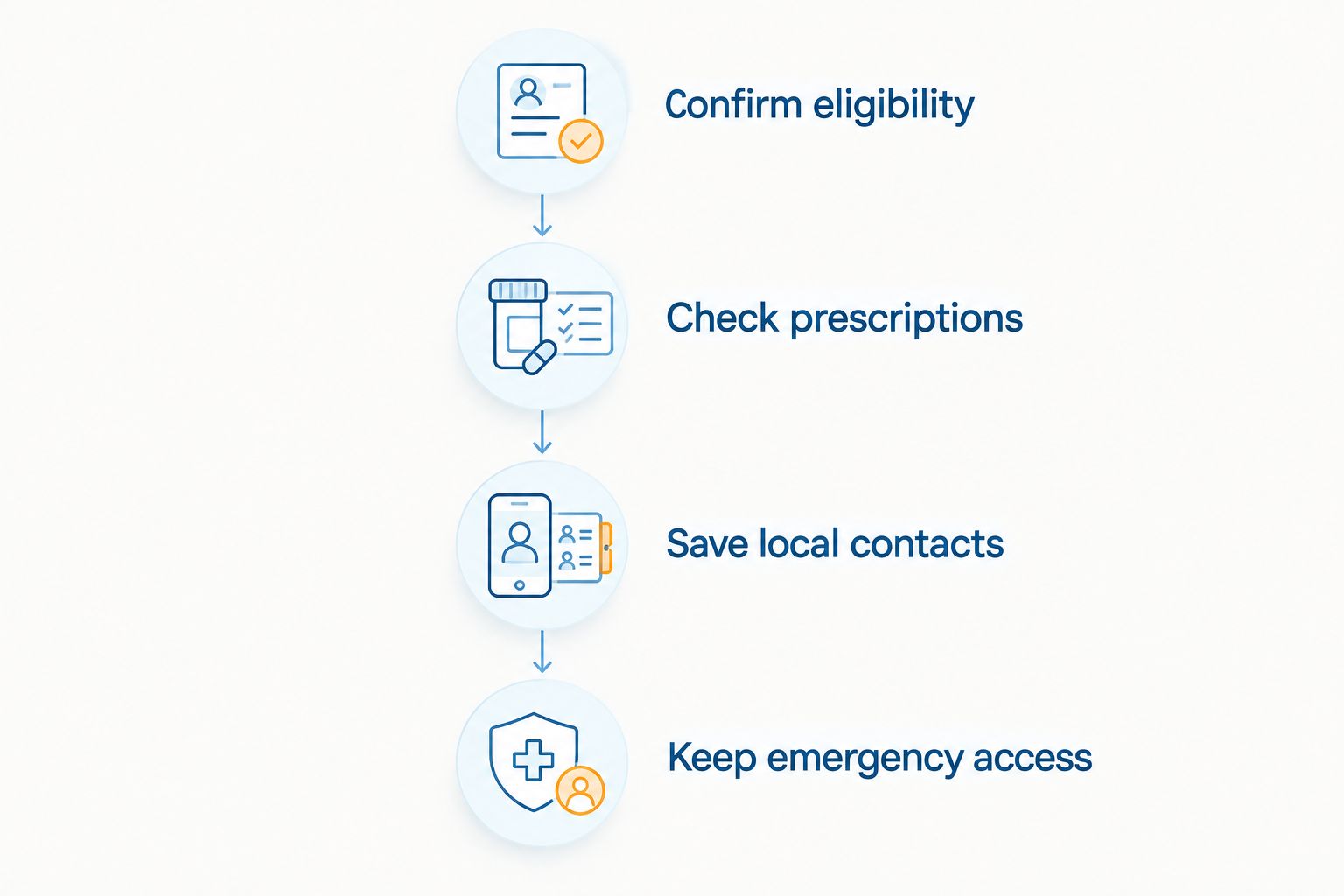
A useful 2026 travel-health plan separates remote advice from local treatment. Work through the sequence below before you pack.
Confirm eligibility
List each country where you will physically be when using telehealth. Ask the service to confirm treatment eligibility for your account, appointment type, and destination. Check transit stops too if you expect to use care there.
Check prescriptions
Ask how prescribing works for the destination and intended medicine. Confirm acceptance with a local pharmacy when relevant. Do not treat a clinician’s ability to write a prescription as proof that a pharmacy abroad can dispense it.
Save local contacts
Save 2 contacts: your telehealth support route and a suitable local provider. Keep the provider’s address alongside the contact details. An offline copy prevents account access from becoming the only way to find help.
Keep emergency access
Identify the destination’s emergency contact route separately. Telehealth and provider directories are not emergency dispatch. If you need immediate medical attention, use local emergency services rather than waiting for a remote appointment.
If you are studying abroad, also check the care instructions supplied by your program. Keep program contacts separate from the app. Each contact should have a clear job rather than an assumed responsibility.
Prepare your local-care backup
Explore memberships for curated English-speaking healthcare provider directories before departure.
Which option should you choose?
Start with your existing virtual-care benefit and require destination confirmation. Teladoc Health or MDLIVE belongs first when your account already provides access; Doctor On Demand fits the U.S.-based appointment slot.
For the overseas portion of your 2026 itinerary, keep local care separate. MyAbroadMDs supports that preparation through provider directories, not virtual treatment. If an app cannot confirm your location eligibility, do not build the trip’s care plan around it.
FAQ
What are the best telehealth apps for international travelers in 2026?
The best telehealth app is one that confirms treatment eligibility for your physical destination and account. Check Teladoc Health or MDLIVE if you already have access; consider Doctor On Demand for U.S.-based visits. No app name alone establishes worldwide access.
Can I use my U.S. telehealth app while traveling abroad?
You need confirmation from the service before relying on a U.S. telehealth account abroad. App access, benefit eligibility, and a clinician’s authority to treat you in that location are separate questions.
Is Teladoc Health better than MDLIVE for international travel?
Neither is a universal winner for international travel. Choose the service that confirms your destination, intended appointment type, and account eligibility rather than comparing general feature lists.
Does Doctor On Demand replace a local doctor abroad?
No, Doctor On Demand should not replace your local-care plan abroad. Its U.S.-focused virtual care does not establish overseas treatment access, and some concerns require physical examination or testing.
Is MyAbroadMDs a telehealth app?
No, MyAbroadMDs provides subscription-based access to personalized, curated English-speaking healthcare provider directories across 100+ countries. It is not telehealth, insurance, or a booking service.
Can a telehealth doctor send a prescription to a pharmacy overseas?
Prescription use overseas depends on the destination’s rules, the clinician’s prescribing authority, and pharmacy acceptance. Confirm the prescription route separately from your ability to attend a virtual appointment.
What should I save before leaving for an international trip?
Save your confirmed telehealth support details, a suitable local provider’s contact information and address, and the destination’s emergency contact route. Keep an offline copy so your plan does not depend entirely on logging into an app.
One last thing
Ask about treatment, not connectivity. Can I log in from abroad? and Can a clinician treat me while I am there? are different questions. Before departure, get an answer to the second one.