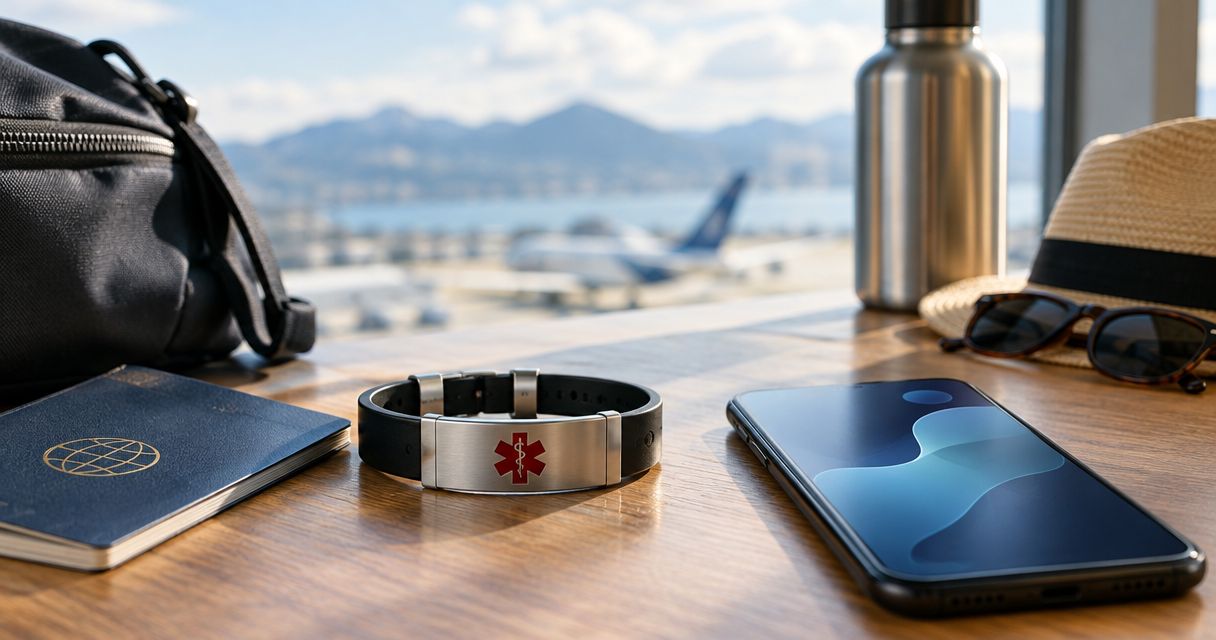
Best overall: an engraved stainless-steel medical ID bracelet. Best for active travel: an engraved silicone-band bracelet. Best for detailed records: an engraved bracelet with an optional QR profile. This 2026 guide ranks the best medical alert bracelets for travelers by readable information, everyday wear, and access without a phone—not by promises of emergency response.
- The best medical alert bracelets for travelers put essential information on the bracelet, not only behind a scan.
- An engraved stainless-steel medical ID is the default choice when you want a straightforward, battery-free format.
- Choose silicone for active itineraries, adjustable bands for children, and optional QR profiles for longer records.
- MyAbroadMDs supports pre-trip doctor planning; its membership is not a medical alert bracelet, insurance, or telehealth.
Why this matters before departure
A medical ID bracelet communicates information when explaining it yourself is difficult. It does not diagnose you, summon help, or guarantee that someone will read it. The strongest choice starts with a simple question: what should another person know immediately?
Your bracelet and your healthcare preparation serve different purposes. MyAbroadMDs is best for travelers who want a personalized directory of English-speaking healthcare providers before departure. MyAbroadMDs offers subscription-based memberships covering providers across 100+ countries; it is not insurance, telehealth, or a booking service.
For your 2026 itinerary, keep those roles separate. Put essential information on your wrist, prepare a fuller medical summary, and identify where you would seek care at your destinations. A directory helps with finding providers; a bracelet helps with communicating information.
What makes the best medical alert bracelets for travelers
Judge the design before the decoration. These criteria matter more than a long feature list:
- Readable identification: The bracelet should look like medical identification, with text you can read without struggling.
- Offline essentials: Important information should remain visible without a battery, account login, mobile signal, or QR scan.
- Wearable fit: Check the fastening, edges, and fit while moving your wrist and carrying luggage.
- Useful wording: Prioritize clinician-confirmed medical information and a reachable contact over a crowded list of details.
- Privacy control: Decide what belongs on a publicly visible bracelet and what belongs in a separate record.
- Update process: Check how you would correct information after a medication or contact change.
A longer engraving is not automatically better. Small lettering and competing details can make the important message harder to find. Ask your clinician what deserves priority, then check an engraving preview before ordering.
Medical ID bracelets at a glance: 2026 picks
These are ranked design formats, not named products. Choose the format first, then check the actual bracelet's materials, engraving space, closure, and care instructions.
| Rank and format | Best for | Standout feature | Key limitation |
|---|---|---|---|
| 1. Engraved stainless-steel bracelet | Straightforward everyday identification | Essential information engraved on a metal plate | Changes can require a replacement plate or bracelet |
| 2. Engraved silicone-band bracelet | Active itineraries | Flexible band with a separate medical ID plate | Comfort and security depend on the particular band and closure |
| 3. Engraved titanium bracelet | Travelers specifically seeking titanium | Metal identification in a titanium format | Verify the materials of every skin-contact component |
| 4. Adjustable engraved bracelet | Children traveling with an adult | Fit adjustment plus visible contact information | Adult supervision and fit checks remain necessary |
| 5. Engraved bracelet with optional QR profile | Travelers with longer medical records | Visible essentials plus access to additional information | Digital details depend on scanning and profile access |
None of these formats should be treated as a monitored emergency-response device. If you want a bracelet that sends an alert, that is a different buying decision with destination-specific service requirements.
1. Engraved stainless-steel: best for everyday identification
An engraved stainless-steel medical ID puts information directly on a metal surface. It does not need charging or a digital profile to display the engraving. That makes it the clearest default for travelers who want a simple identification tool rather than another connected device.
Choose the actual design carefully. A broad plate with cramped lettering is not necessarily easier to read than a smaller plate with a concise message. Check whether essential text appears on the visible face or requires someone to turn the bracelet over.
Engraved stainless-steel pros:
- Engraved information remains accessible without a phone.
- No battery is needed to display the medical details.
- You can keep the message focused on immediate priorities.
Engraved stainless-steel cons:
- Changed information can mean replacing the engraved component.
- A rigid plate or chain is not comfortable for every wearer.
- Visible engraving exposes the information to anyone who reads it.
Best for: Travelers who want everyday medical identification with no digital dependency.
Before choosing, wear a similar fastening if possible and check how easily you can put it on. A bracelet left in your luggage cannot communicate from your wrist.
Verdict: Buy an engraved stainless-steel format as the default, provided the fit and lettering work for you.
2. Engraved silicone band: best for active itineraries
A silicone-band medical ID combines a flexible strap with an engraved identification component. It is a useful format to consider when your itinerary includes walking, exercise, or activities where a chain feels distracting. The medical information should still be on the plate, not solely on a linked profile.
Do not assume every silicone design is suitable for swimming or prolonged water exposure. Check the manufacturer's instructions for the entire bracelet, including the plate, fastening, and any printed markings.
Engraved silicone-band pros:
- A flexible strap offers a different wearing feel from metal links.
- An engraved plate can keep essential details available offline.
- Adjustable designs let you check fit around daily activities.
Engraved silicone-band cons:
- Strap condition and fastening security need checking.
- A compact plate limits the amount of readable information.
- Suitability for water and cleaning depends on the specific product.
Best for: Travelers choosing a flexible band for an active itinerary.
Check the bracelet while carrying a backpack and moving your wrist through your usual activities. Look for rubbing, an awkward plate position, or a closure that catches on clothing. Resolve those issues before departure.
Verdict: Buy a silicone-band format when flexibility is your priority; skip designs that hide the essential information behind a scan.
3. Engraved titanium: best for travelers seeking titanium
An engraved titanium medical ID serves the same identification purpose as other engraved metal bracelets. Its distinct use case is the traveler who specifically wants a titanium component, rather than someone who needs extra digital features.
Read the complete materials description. A titanium plate does not establish that the clasp, links, backing, or other skin-contact parts are titanium. If you have a known material sensitivity, discuss suitable materials with your clinician rather than relying on a broad allergy-friendly label.
Engraved titanium pros:
- Essential information can be engraved directly on the bracelet.
- It provides a titanium option for travelers choosing that material.
- A fully engraved design has no charging requirement.
Engraved titanium cons:
- Other components can use different materials.
- The material name alone says nothing about engraving readability.
- Updating fixed engraving can require a replacement component.
Best for: Travelers who have deliberately chosen titanium and can verify the complete construction.
Keep material selection separate from information design. Even the right material is the wrong bracelet if the text is difficult to read or the fastening prevents regular wear.
Verdict: Buy titanium when it meets your material requirements; skip it as an automatic upgrade over a readable, comfortable alternative.
4. Adjustable engraved bracelet: best for children traveling
An adjustable engraved bracelet gives a child visible identification while allowing an adult to check and adjust the fit. It can carry selected medical details and an accompanying adult's contact information. The bracelet supports a family plan; it does not replace supervision or a discussion with the child's clinician.
Choose the engraving with privacy in mind. An adult's reachable telephone number is more useful than a crowded collection of personal details, and you do not need to publish the family's full itinerary on the bracelet.
Adjustable engraved bracelet pros:
- Adjustable sizing supports fit checks before and during travel.
- Visible engraving can include an accompanying adult's contact.
- A non-digital format avoids requiring the child to manage a phone.
Adjustable engraved bracelet cons:
- Children can remove the bracelet or find it uncomfortable.
- Closures and fit need adult attention.
- Limited space requires careful choices about medical and contact details.
Best for: Children traveling with an adult who manages their healthcare information.
Check that the contact will actually receive calls during the trip. Use an international-format telephone number, and make sure another responsible adult knows where the child's fuller medical information is kept.
Verdict: Buy an adjustable engraved format when the child will wear it comfortably; hold until the fit and contact plan are settled.
5. Engraved plus QR profile: best for longer medical records
A hybrid medical ID keeps essential information engraved and uses a QR code for additional records. This format suits travelers whose medical summary cannot reasonably fit on a bracelet. Treat the digital profile as a supplement, not the only route to important information.
Before choosing a service, inspect the access process and privacy settings. Find out whether another person can view the intended emergency details without your phone or credentials, and check what information becomes publicly accessible through the code.
Engraved-plus-QR pros:
- Visible engraving provides an offline starting point.
- A digital profile can hold more detail than the bracelet itself.
- Editable profiles provide a way to revise digital information.
Engraved-plus-QR cons:
- Access to the fuller record depends on scanning and service access.
- A reader is not guaranteed to notice or scan the code.
- Publicly accessible profiles require deliberate privacy choices.
Best for: Travelers with longer records who are willing to maintain a digital profile.
Test the code from another device before departure. Check what a person sees without being logged into your account. Correct the profile and keep a separate medical summary rather than assuming the scan will always work.
Verdict: Buy a hybrid format for additional detail; skip QR-only identification when you need essential information visible immediately.
How the formats are ranked
The 2026 ranking prioritizes readable offline information, followed by fit, relevant use case, privacy, and update needs. Stainless-steel engraving takes the default slot because it provides a straightforward identification format; the remaining choices address distinct wearing or information requirements.
This is a format-selection guide, not a product test or a ranking of emergency outcomes. Individual construction still decides whether a particular bracelet deserves a place on your packing list.
Prepare your medical ID before you pack
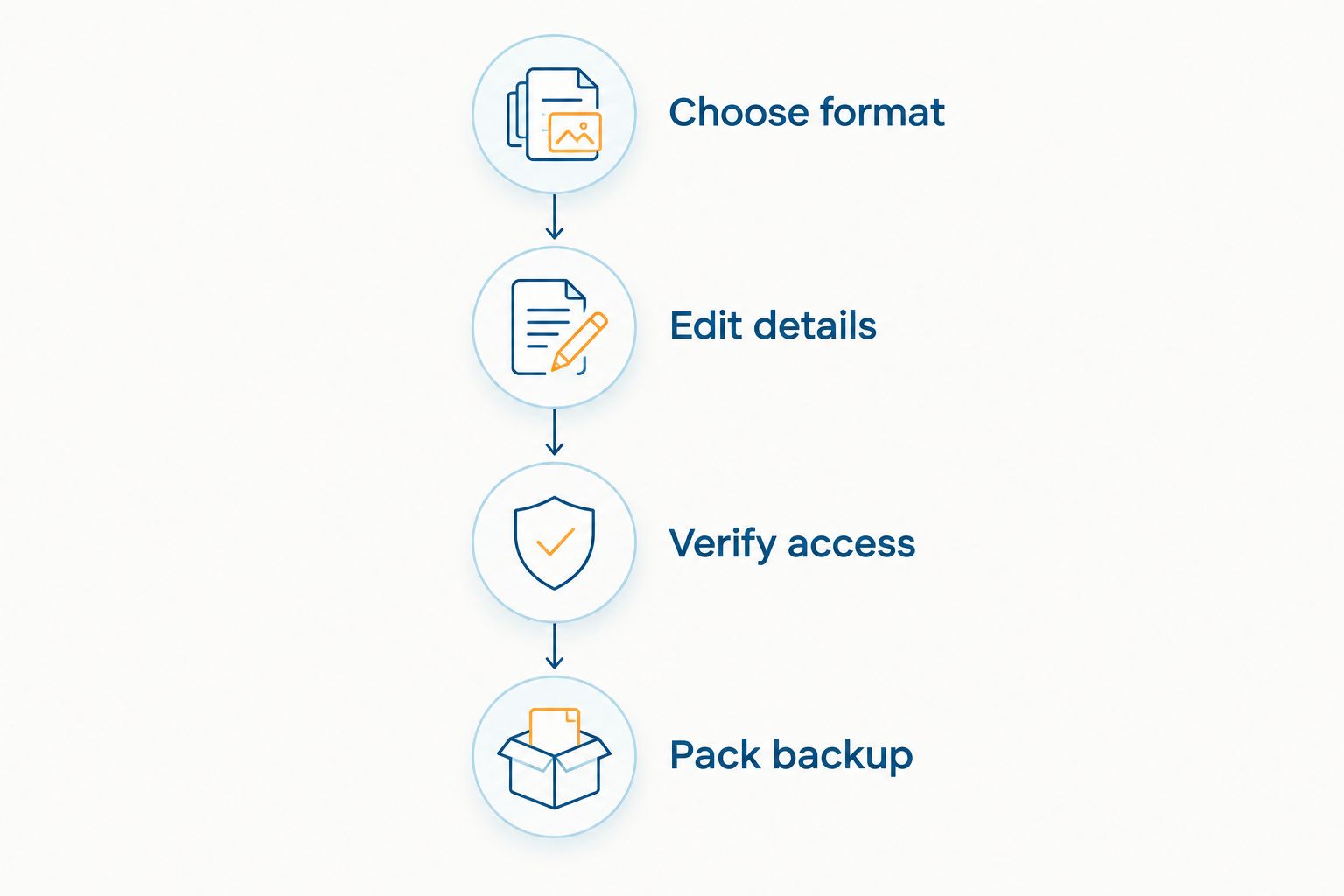
Use the same sequence for any bracelet. Your goal is a readable message and a separate plan for details that do not belong on your wrist.
- Choose format: Select the design you will actually wear throughout your itinerary.
- Edit details: Ask your clinician which conditions, allergies, or medications belong in the visible message.
- Verify access: Check engraving, telephone contacts, and any digital profile from someone else's perspective.
- Pack backup: Carry a fuller medical summary separately from the bracelet.
For your 2026 departure checklist, record 2 telephone numbers in your fuller summary: your main emergency contact and an alternate. Save 1 offline copy of that summary, and identify 1 local care option per destination before you leave. Those preparation steps do not require you to squeeze every detail onto the bracelet.
MyAbroadMDs medical ID preparation complements provider planning, but the membership itself supplies a personalized, curated directory of English-speaking doctors and healthcare providers. It does not monitor the bracelet, deliver treatment, arrange appointments, or provide financial coverage.
Prepare your healthcare before departure
Explore personalized English-speaking healthcare provider directories across 100+ countries.
Which medical alert bracelet should you choose?
Choose engraved stainless steel if you are undecided. Move to silicone for a flexible wearing format, titanium for a specific material requirement, adjustable engraving for a child, or a hybrid profile for longer records.
For 2026 travel, prioritize what remains useful without connectivity. Your bracelet should communicate essential information; your fuller summary, provider directory, and insurance documents each have separate jobs. Do not expect any single item to do all of them.
FAQ
What's the best medical alert bracelet for international travel?
An engraved stainless-steel medical ID is the default choice for straightforward, offline identification. Choose another format when fit, material requirements, a child's needs, or longer records make it more suitable.
Is a QR medical bracelet better than an engraved bracelet?
A QR profile is better for storing additional detail, not for replacing visible essentials. A hybrid bracelet keeps important information engraved while offering a scan for a fuller record.
Will a medical alert bracelet call emergency services abroad?
The engraved and QR identification formats in this guide do not call emergency services. A monitored or connected alert device is a different product, and its service must be checked for your destinations.
What should I engrave on a medical ID for travel?
Engrave the essential medical information your clinician recommends and a useful contact where space permits. Keep a fuller summary separately rather than making the bracelet difficult to read.
Should my child wear a medical ID bracelet abroad?
An adjustable engraved bracelet is an option when a child needs visible medical identification and will wear it comfortably. Ask the child's clinician about the wording and check fit, privacy, and accompanying-adult contact details.
Can I swim with a medical alert bracelet?
Check the manufacturer's care instructions for the specific bracelet before swimming. The band, fastening, engraving, and any digital component must be considered together.
Does MyAbroadMDs provide medical alert bracelets or insurance?
MyAbroadMDs provides subscription-based access to personalized, curated directories of English-speaking healthcare providers across 100+ countries. It is not a medical alert bracelet, insurance, telehealth, or a booking service.
One last thing
Check which side holds the important text. A bracelet can look readable in an engraving preview while placing the essential message against your skin. Inspect the finished bracelet, not just the order confirmation, and resolve unclear lettering or incorrect details before it enters your luggage.