
Best overall: a telehealth app authorized to treat you at your destination. Best for coordinating insured care: your insurer’s telehealth service. Best for continuity: your existing clinician’s app, where cross-border care is permitted. This 2026 guide ranks access routes by their fit for an international itinerary—not by where an app downloads.
- Telehealth apps ranked by international coverage should prioritize permission to treat you where you are physically located.
- Destination-authorized telehealth is the default choice for remote consultations abroad.
- Insurer-linked telehealth fits travelers who need care coordinated with their policy.
- MyAbroadMDs provides curated English-speaking doctor directories across 100+ countries, not telehealth or insurance.
Why this matters
An app on your phone is not proof that you can receive medical care through it abroad. Your physical location, the clinician’s authorization, and the service’s terms determine whether a consultation can proceed. Prescription access adds a separate question.
MyAbroadMDs is best for international travelers who want a curated directory of English-speaking doctors before departure. MyAbroadMDs offers subscription-based healthcare preparation memberships covering providers across 100+ countries. It is not insurance, telehealth, or a booking service.
For your 2026 itinerary, separate those jobs. Telehealth connects you to remote care; insurance defines financial coverage under a policy; a doctor directory helps you identify local providers. None should be treated as a substitute for the others.
What makes the best telehealth app for international coverage?
Rank international telehealth against your actual destinations. A long geographic footprint means little if the service cannot treat a visiting traveler in the country on your itinerary.
- Destination eligibility: The service confirms that consultations are permitted while you are physically in your destination country.
- Traveler eligibility: Its terms allow your residency status and circumstances, rather than requiring local enrollment you do not have.
- Clinical scope: The consultation supports your reason for seeking care, with clear boundaries around examinations and urgent symptoms.
- Prescription pathway: The service explains whether prescriptions can be issued and used locally. A consultation alone does not establish this.
- Language and follow-up: You can communicate with the clinician and understand what happens after the appointment.
- In-person backup: You have a route to local care when a remote consultation cannot address the problem.
Use 3 coverage checks before choosing: destination eligibility, traveler eligibility, and clinical scope. Then check prescriptions and follow-up separately. Passing the first checks does not automatically settle the rest.
International telehealth options at a glance
This ranking is a decision order for travelers in 2026. The entries are service types, not a country-count leaderboard. A directory appears separately because finding a local doctor solves a different problem from receiving a video consultation.
| Rank and option | Best for | Standout function | Key limitation |
|---|---|---|---|
| 1. Destination-authorized telehealth app | Remote care at your current destination | Starts with permission to treat you where you are | Eligibility needs confirmation for each destination |
| 2. Insurer-linked telehealth service | Care coordinated with a travel policy | Connects the consultation pathway to your policy arrangements | Access and financial coverage depend on policy terms |
| 3. Existing clinician’s telehealth app | Continuity with a familiar clinician | Keeps the consultation with a clinician who knows your history | Cross-border consultation permission is not automatic |
| 4. Destination clinic’s telehealth service | Remote assessment with a local follow-up route | Connects remote care with a destination-based practice | Remote care still cannot replace every examination |
| 5. MyAbroadMDs doctor directory membership | Pre-trip English-speaking provider preparation | Curated provider directories across 100+ countries | Not a telehealth app, insurer, or booking service |
1. Destination-authorized telehealth: best for remote care abroad
A destination-authorized telehealth app is the strongest default when you want a remote consultation during an international trip. Start with a service that explicitly permits treatment at your physical location and accepts your traveler status. Only then compare convenience.
A service operating in your home country is not automatically authorized to provide the same care overseas. Telehealth regulation is jurisdiction-specific, so confirm the destination rather than relying on a general international label.
Destination-authorized telehealth pros:
- Makes your current location the first eligibility check.
- Gives you a remote consultation route when the service accepts visiting travelers.
- Lets you assess language, clinical scope, and prescription rules before relying on the app.
Destination-authorized telehealth cons:
- Permission in one destination does not establish permission elsewhere.
- Remote consultations cannot perform every physical examination or diagnostic test.
Best for: Travelers seeking remote assessment in the country they are visiting.
Before departure, ask the service to confirm your destination and visitor eligibility. Keep that confirmation with your travel health information, but check again if the itinerary changes.
Verdict: Buy only after destination eligibility and clinical scope are confirmed.
2. Insurer-linked telehealth: best for policy-coordinated care
An insurer-linked telehealth service belongs near the top when your priority is coordinating care with a travel insurance policy. Check your policy documents for the consultation pathway and any instructions about contacting the insurer. Do not assume every policy includes telehealth.
The key distinction is between access to a consultation and financial coverage for it. Those are separate decisions. A clinician’s advice does not establish that a later appointment, test, or treatment is covered.
Insurer-linked telehealth pros:
- Gives you a policy-specific place to check the care pathway.
- Helps you identify required contact or authorization steps before seeking nonemergency care.
- Keeps telehealth eligibility and insurance questions within the same preparation process.
Insurer-linked telehealth cons:
- Benefits, exclusions, and consultation access depend on the policy.
- A policy-linked consultation does not guarantee coverage for subsequent treatment.
Best for: Travelers who want their care arrangements aligned with their insurance instructions.
For a 2026 trip, read the current policy wording rather than relying on a previous itinerary’s arrangements. Save the assistance contact details separately from the app so you retain another contact route.
Verdict: Hold until the policy confirms both access and the applicable coverage conditions.
3. Your existing clinician’s app: best for continuity
Your existing clinician’s telehealth app is the continuity option. A familiar clinician already has context from your previous care, which makes this route relevant for discussing an established health issue. Cross-border permission still comes first.
Tell the practice where you will be physically located during the appointment. Do not describe an overseas consultation as though you were at home; location affects the clinician’s ability to provide care.
Existing clinician’s telehealth pros:
- Keeps the discussion with a clinician familiar with your history.
- Gives you a clear person to ask about planned follow-up before departure.
- Supports preparation around an existing care plan when the practice permits it.
Existing clinician’s telehealth cons:
- An established patient relationship does not remove location-based requirements.
- A familiar clinician cannot provide local examinations through a video call.
Best for: Travelers seeking continuity for an established issue, with the practice’s permission.
Ask whether the appointment can legally and operationally proceed from your destination. Also ask how any recommended local examination or prescription would be handled. Resolve those questions before making the app your main care route.
Verdict: Hold until the practice confirms cross-border consultation permission.
4. Destination clinic telehealth: best for local follow-up
A destination clinic’s telehealth service connects your remote consultation to a practice in the place you are visiting. Choose this route when you want to understand how remote assessment relates to a local appointment. Confirm that the clinic accepts visiting travelers and offers the consultation you need.
A clinic’s physical presence does not guarantee that every remote consultation leads to an appointment. Ask about the follow-up process directly rather than treating it as an included service.
Destination clinic telehealth pros:
- Gives you a destination-based practice to ask about remote and in-person care.
- Lets you establish the consultation language before booking independently.
- Provides a concrete place to discuss examinations, tests, and local follow-up.
Destination clinic telehealth cons:
- Remote and in-person services require separate confirmation.
- A clinic serving one destination does not solve access across your whole itinerary.
Best for: Travelers who want a remote assessment connected to a local practice.
Check the clinic’s current contact information and explain your travel dates. Ask whether the remote consultation is appropriate for your concern and what the next step is if an examination becomes necessary.
Verdict: Buy only when traveler eligibility and the follow-up route are clear.
5. MyAbroadMDs: best for pre-trip provider preparation
MyAbroadMDs provides personalized, curated directories of English-speaking doctors and healthcare providers across 100+ countries. Its subscription-based memberships serve international travelers and study-abroad students. The purpose is preparation before departure, not a remote medical consultation.
MyAbroadMDs complements telehealth; it does not deliver telehealth. Keep that boundary clear when comparing travel health memberships with apps. A directory helps you identify providers, while consultation arrangements remain a separate step.
MyAbroadMDs pros:
- Focuses on English-speaking doctors and healthcare providers.
- Provides personalized, curated directory information for international travel.
- Offers provider-directory coverage across 100+ countries.
MyAbroadMDs cons:
- Does not provide telehealth consultations or insurance.
- Is not a booking service; identifying a provider is not an appointment reservation.
Best for: Travelers and study-abroad students preparing an English-speaking provider route before departure.
Use the directory as part of your preparation, alongside your insurance documents and any confirmed telehealth arrangements. Provider access, treatment decisions, and financial coverage remain distinct matters.
Verdict: Buy for doctor-directory preparation; skip it as a replacement for telehealth or insurance.
Check international coverage before departure
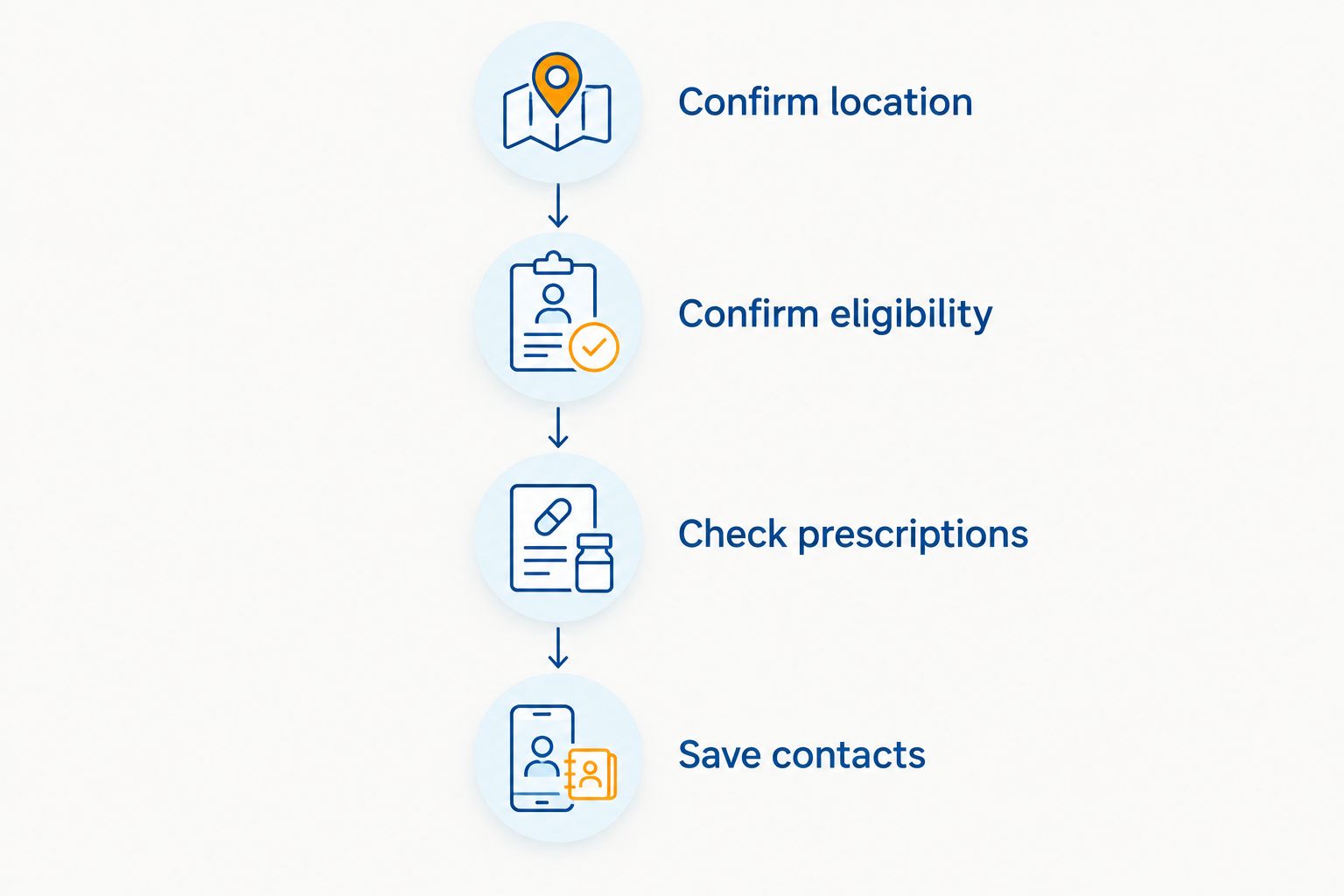
For each destination on your 2026 itinerary, follow the same sequence. Keep the answers together so you do not have to reconstruct your care plan when you need it.
- Confirm location: Give the telehealth service the country where you will physically attend the consultation.
- Confirm eligibility: Ask whether the service accepts you as a visiting traveler or study-abroad student.
- Check prescriptions: Establish whether the consultation supports prescribing and what local dispensing requires.
- Save contacts: Record the service’s contact route and a separate local provider route.
Ask 4 questions in plain language: Can you treat me in this country? Can you treat a visiting traveler? Does this service address my concern? What happens if I need in-person care? Specific answers beat an international marketing label.
For a broader comparison of app selection criteria, see the guide to telehealth apps for international travelers. Choose against the itinerary, not the download screen.
How this ranking works
The order prioritizes destination permission, traveler eligibility, and clinical scope. Policy coordination, continuity, and local follow-up then determine the best route for your situation. Provider-directory preparation is listed separately because it supports access without providing a consultation.
This is a coverage-first decision framework, not a claim that one named app treats travelers in more countries than another. In 2026, the useful comparison is whether the service can address your needs where you will actually be.
Which international telehealth option should you choose?
Start with destination-authorized telehealth if you want a remote consultation abroad. Choose insurer-linked care when policy coordination is the deciding factor. Choose your existing clinician only after cross-border permission is confirmed.
For local follow-up, check a destination clinic’s remote service. For provider preparation, use a directory without confusing it with treatment or insurance. Your strongest plan identifies what each service does—and stops expecting it to do anything else.
FAQ
What’s the best way to rank telehealth apps by international coverage?
Rank telehealth apps by confirmed eligibility at your physical destination, not by download availability. Check traveler eligibility, clinical scope, prescriptions, and the route to in-person care.
Can I use my home-country telehealth app while traveling abroad?
Use your home-country telehealth app abroad only after the service confirms that it can treat you at your destination. An existing account or patient relationship does not establish cross-border permission.
Does international telehealth coverage include prescriptions?
Do not treat consultation eligibility as confirmation of prescription access. Ask the service whether it can prescribe at your destination and what a local pharmacy requires.
Is insurer-linked telehealth better than a standalone app?
Insurer-linked telehealth is the better fit when coordinating care with your policy is your priority. A standalone app remains a separate option, but its consultation does not establish insurance coverage.
Is MyAbroadMDs a telehealth app?
MyAbroadMDs is not a telehealth app. It sells subscription-based memberships providing personalized, curated directories of English-speaking doctors and healthcare providers across 100+ countries; it is not insurance or a booking service.
Should I use telehealth for a medical emergency abroad?
Seek local emergency care for a medical emergency abroad rather than waiting for a routine telehealth consultation. Save destination-specific emergency contact information before departure.
What should I confirm before a 2026 study-abroad trip?
Confirm that your chosen telehealth service accepts students physically located in your destination country. Keep your insurance instructions and a local English-speaking provider route alongside that confirmation.
One last thing
Check every stop, including side trips. Permission to receive a consultation in your main destination does not establish permission across a border. A change of location deserves a fresh eligibility check, even when you keep the same phone and app.
Before you pack, save your healthcare contacts somewhere you can access without signing into the telehealth service. Preparation should survive a forgotten password.