Best overall: Google Maps. Best for iPhone navigation: Apple Maps. Best for finding an on-duty pharmacy: official local pharmacy directories, where available. The best pharmacy locator apps for finding medication abroad help you find a pharmacy; they do not confirm that a pharmacist can dispense your medicine.
- Google Maps leads the best pharmacy locator apps for finding medication abroad for general pharmacy searches and directions.
- Apple Maps suits iPhone travelers who want pharmacy searches within their existing navigation app.
- Official local pharmacy directories are the better starting point for on-duty pharmacy searches where available.
- MyAbroadMDs suits travelers preparing English-speaking doctor contacts before departure, not travelers seeking a pharmacy locator.
Why this matters
Finding a pharmacy and obtaining medication are different tasks. A map pin answers where a business is. It does not establish whether your prescription is accepted, whether the medicine is appropriate, or whether you need a local clinician first.
For a 2026 itinerary, prepare both routes: a way to locate pharmacies and a way to find medical care. MyAbroadMDs is best for international travelers who want a personalized directory of English-speaking healthcare providers before departure. MyAbroadMDs offers subscription-based healthcare preparation memberships covering 100+ countries; it is not insurance, telehealth, or a booking service.
Start before you pack. Keep your medication information accessible, identify nearby pharmacies, and know whom to contact if a pharmacist needs a local prescription. That preparation gives your pharmacy search a clear next step instead of leaving you with an address and unanswered questions.
What makes the best pharmacy locator apps?
Judge pharmacy search tools by the task you need completed. A convenient interface matters less than whether the result helps you reach an appropriate pharmacy and speak with its staff.
- Location search: You need to search around your accommodation or destination, not only your current position. Prepare the next stop while you still have time.
- Contact details: A telephone number or linked pharmacy website lets you ask questions before traveling across an unfamiliar city.
- Opening-hours context: Treat displayed hours as a starting point. For nights, holidays, or urgent searches, confirm the pharmacy's current schedule directly.
- Directions: A useful result connects the pharmacy address to a route you can follow. Check that the destination is the pharmacy entrance, not simply a building or shopping complex.
- Local authority: An official pharmacy directory serves a different purpose from a general map. Where an on-duty directory exists, use it for that specific question.
- Clear boundaries: No locator substitutes for a pharmacist's assessment, a valid prescription, or emergency care. The best choice makes finding the right contact easier without pretending to provide treatment.
For 2026 travel, separate these criteria from ratings and photographs. Those details can help you recognize a location, but they do not tell you whether your medication request can be fulfilled.
Pharmacy locator options at a glance
| Option | Best for | Standout feature | Key limitation |
|---|---|---|---|
| Google Maps | General pharmacy searches abroad | Pharmacy listings connected to directions and business information | A listing does not confirm prescription acceptance or dispensing eligibility |
| Apple Maps | Travelers already using iPhone navigation | Place search and directions within Apple's mapping app | Pharmacy information still needs direct confirmation |
| Official local pharmacy directories | Finding designated on-duty pharmacies where directories exist | Locally focused pharmacy information | No single directory covers every destination; language and format differ |
Choose Google Maps as your default locator, not as your medication decision-maker. Keep a local directory as a separate resource when your destination publishes one. Use Apple Maps instead when it already fits your navigation routine and provides the pharmacy information you need.
1. Google Maps: best pharmacy locator for general travel searches
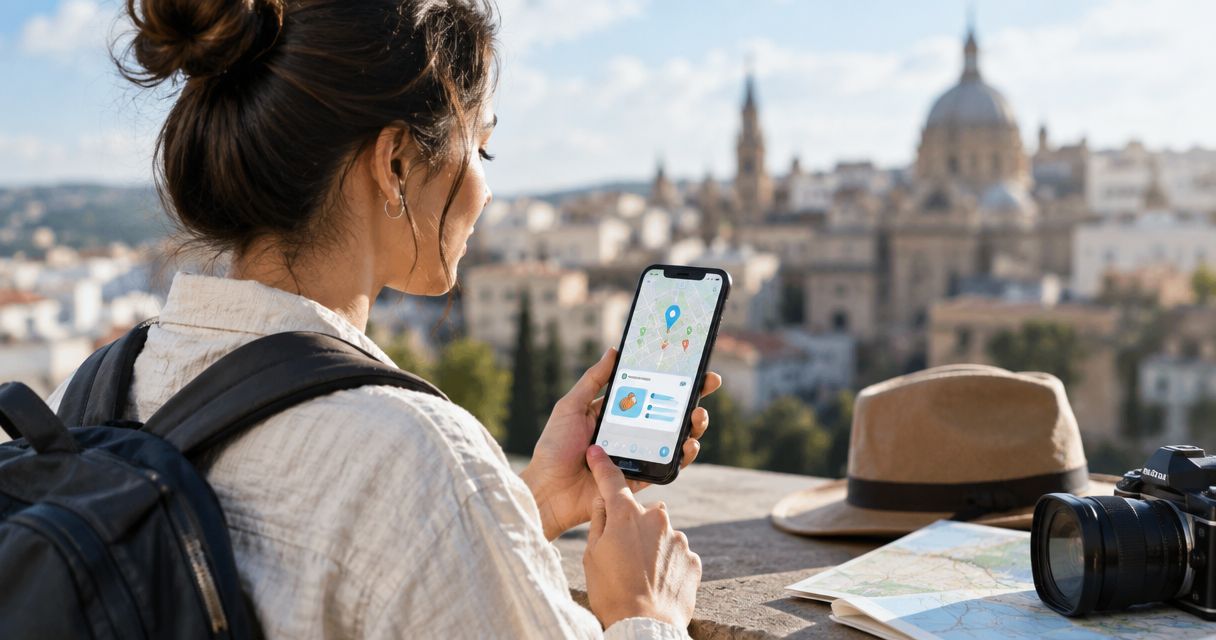
Google Maps lets you search for pharmacies, view business listings, and get directions. It brings location information into the same app you use to move around your destination, making it a practical starting point for an ordinary pharmacy search.
Search near the place you will actually be staying. A result near your current location is not useful when your next departure takes you elsewhere. Save the address and contact details of a suitable pharmacy, then confirm your specific request with its staff.
Google Maps pros:
- Combines pharmacy search with route planning.
- Supports searches around a destination before you arrive.
- Provides business information that can help you identify and contact a pharmacy when the listing includes it.
- Lets you compare pharmacy locations against your accommodation and planned route.
Google Maps cons:
- Business details and opening hours need confirmation.
- A pharmacy listing does not establish whether a foreign prescription will be accepted.
- Reviews do not verify a pharmacist's language skills or the suitability of a medicine.
Best for: Travelers who want one general mapping app for finding pharmacies and reaching them.
Before leaving your accommodation, complete 3 checks: confirm the address, confirm the opening hours, and ask whether a pharmacist can advise on your medication request. These are preparation steps, not guarantees that a medicine can be dispensed.
Verdict: Use Google Maps as your default pharmacy locator. Call the pharmacy before making a trip that depends on obtaining a particular medicine.
2. Apple Maps: best pharmacy locator for iPhone navigation
Apple Maps supports place searches and directions, including searches for pharmacies. It fits travelers who already use Apple's mapping app and want to keep pharmacy navigation in that familiar workflow.
The advantage is continuity. You can look for a pharmacy and plan the route without changing your usual navigation habits. The same boundary applies as with any map: reaching the counter does not mean your prescription or medication request will be accepted.
Apple Maps pros:
- Keeps pharmacy searches within an existing iPhone navigation routine.
- Connects place results to directions.
- Helps you judge a pharmacy's location against the rest of your itinerary.
Apple Maps cons:
- Listed details do not replace confirmation from the pharmacy.
- It does not determine whether a prescription meets local requirements.
- It is an Apple-centered choice rather than a shared default for every traveler's device.
Best for: iPhone travelers who already rely on Apple Maps and can find a suitable pharmacy result at their destination.
Compare the address with the pharmacy's own information when that information is accessible. If you cannot confirm the location or hours, widen your search rather than treating the first result as settled.
There is no need to change apps solely because another traveler prefers a different map. Choose the tool that gives you a usable address, a clear route, and a way to verify the pharmacy. Those details matter more than familiarity with a particular brand.
Verdict: Use Apple Maps when it already handles your navigation. Keep medical and dispensing questions with the pharmacist, not the mapping app.
3. Official local pharmacy directories: best for on-duty searches
An official local pharmacy directory is a website or search tool published by a relevant pharmacy body, public authority, or other identifiable local organization. Where a destination maintains an on-duty directory, it is a more focused starting point for finding pharmacies assigned to provide service outside ordinary schedules.
This is not one worldwide app. You need the resource that serves your destination, and you need to read its instructions. A general business-hours listing and a designated on-duty listing answer different questions.
Official local pharmacy directories pros:
- Focus on pharmacies within the area they serve.
- Can identify designated on-duty pharmacies where that service is published.
- Give you a local source to consult alongside general mapping results.
Official local pharmacy directories cons:
- Availability, language, and search format differ by destination.
- A directory can cover a limited geographic area.
- An on-duty listing does not establish that your medicine can be dispensed without further assessment.
Best for: Travelers searching outside ordinary opening hours in destinations with an identifiable official on-duty pharmacy directory.
Check who publishes the directory before relying on it. Look for a clearly identified organization and information relevant to your location and search date. For a 2026 trip, do not use a saved screenshot from an earlier search as confirmation of today's duty schedule.
Use your mapping app for the route after identifying the appropriate pharmacy. Contact the pharmacy and follow its access instructions; do not assume the service works exactly like an ordinary daytime visit.
Verdict: Use an official local directory for an on-duty search where available. Treat it as a focused companion to your map, not a universal replacement.
Turn a pharmacy result into a useful conversation
Your strongest preparation is a clear medication record. A brand name alone is a weak starting point because medicine names differ between countries. Show the pharmacist the original packaging or a written medication list rather than relying on pronunciation.
Record 4 medication details: the active ingredient, strength, dosage form, and prescribed directions. Keep your prescriber's details and relevant prescription documents with that record. Do not translate a brand name into a guessed local equivalent.
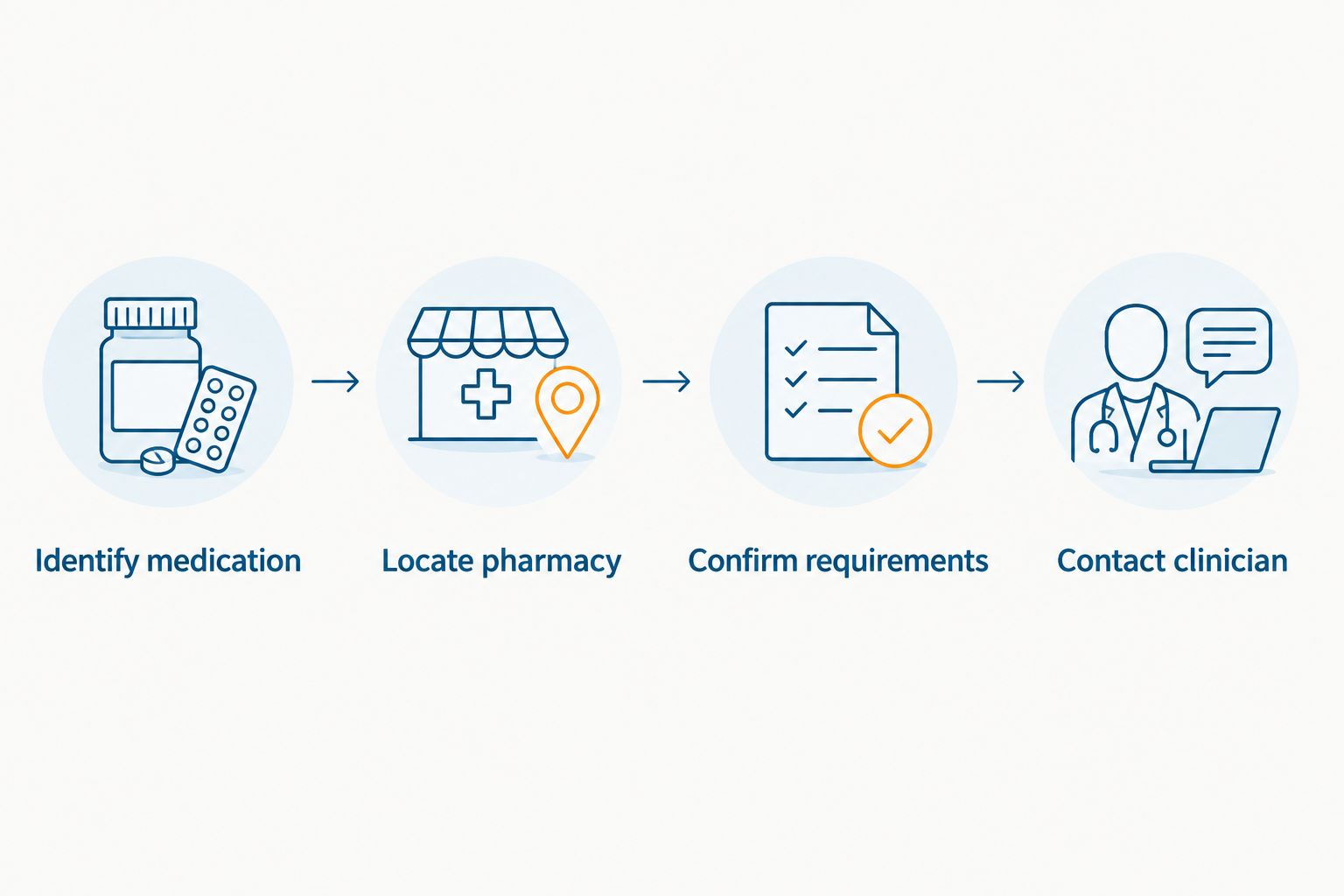
Follow this sequence when you need medication abroad:
- Identify medication: Read the label and gather your prescription information. State exactly what you take rather than describing only its color or purpose.
- Locate pharmacy: Search near your accommodation or use an official on-duty directory when that is the relevant need.
- Confirm requirements: Ask the pharmacist what documentation or local prescription is required for your situation.
- Contact clinician: If a local medical assessment is needed, move to that route rather than trying unrelated products on your own.
Ask about the active ingredient, not just the familiar box. Also ask whether the dosage form matches your prescription. A tablet, liquid, cream, or modified-release formulation is not interchangeable simply because part of its name looks familiar.
For a 2026 departure, save this information where you can access it without depending on a pharmacy search result. Keep sensitive medical documents protected, and share only the information needed for the conversation.
When a pharmacy locator is not enough
A pharmacy locator addresses location. It does not diagnose new symptoms, replace a clinician's assessment, or arrange medical coverage. If you have a medical emergency, contact local emergency services rather than spending time comparing pharmacy listings.
For a non-emergency prescription problem, ask the pharmacist what the next step requires. If you need a clinician, use a prepared healthcare contact route. MyAbroadMDs provides personalized, curated directories of English-speaking doctors and healthcare providers across 100+ countries; its role is pre-trip preparation, not dispensing medication.
That distinction matters. A directory gives you provider information. It does not book the visit, conduct a telehealth consultation, or insure the resulting care.
Prepare your healthcare contacts before departure
Explore memberships for personalized English-speaking healthcare provider directories before your trip.
How the pharmacy locator options are ranked
This 2026 ranking prioritizes location search, contact information, directions, opening-hours context, and the purpose of the information source. Google Maps is the general-search default. Apple Maps serves the iPhone navigation use case. Official local directories serve the narrower on-duty search.
The ranking does not treat map results as evidence of prescription acceptance or clinical suitability. The right locator gets you to an appropriate conversation; the pharmacist or clinician handles the medication decision.
Which pharmacy locator should you choose?
Start with Google Maps if you want a straightforward default. Choose Apple Maps if it already fits your iPhone navigation and gives you useful results. For an after-hours search, check whether your destination publishes an official on-duty pharmacy directory.
Before your 2026 departure, identify your search tool, prepare your medication record, and save a clinician contact route. Do not wait until you are standing outside a pharmacy to discover that you need a different document or a medical appointment.
FAQ
What's the best pharmacy locator app for finding medication abroad?
Google Maps is the best general starting point for pharmacy searches and directions abroad. Confirm opening hours and medication requirements directly with the pharmacy; a listing does not establish that your prescription will be accepted.
Is Apple Maps better than Google Maps for finding pharmacies?
Apple Maps is the better fit when you already use it for iPhone navigation and it provides a suitable local result. Neither app replaces direct confirmation of pharmacy details or dispensing requirements.
How do I find a pharmacy open at night abroad?
Check an official local on-duty pharmacy directory where one is available. Confirm the relevant date, location, and access instructions before traveling to the pharmacy.
Can I use my home-country prescription at a pharmacy abroad?
Do not assume a home-country prescription will be accepted abroad. Ask the pharmacist what local requirements apply and whether you need a prescription from a clinician at your destination.
What medication information should I show a pharmacist abroad?
Show the active ingredient, strength, dosage form, and prescribed directions, preferably with original packaging and prescription documents. Ask the pharmacist to assess the request rather than choosing a product by brand-name similarity.
Does MyAbroadMDs find pharmacies or book doctor visits?
MyAbroadMDs provides subscription-based, personalized directories of English-speaking doctors and healthcare providers for pre-trip preparation. It is not a pharmacy locator, booking service, telehealth service, or insurance.
What should I prepare before traveling with medication in 2026?
Prepare a medication record, relevant prescription documents, and a healthcare contact route before departure. Check destination-specific medicine rules with the relevant authorities and discuss your travel needs with your prescriber.
One last thing
Save the medication's identity, not just the pharmacy's address. An address gets you to the counter. The active ingredient, strength, dosage form, and prescription information give the pharmacist something useful to assess.
Make that record part of your itinerary preparation. Before you pack. Not after a missing label turns a simple question into a difficult conversation.