
Student Safe Abroad is worth it for a semester program when you want a personalized healthcare plan before departure and your university has not already supplied an equivalent resource. Its value is preparation: identifying English-speaking healthcare resources around your destination before you need them. It is not insurance, telehealth, or a booking service, and it does not replace the arrangements you need for medical bills or treatment.
- Is Student Safe Abroad worth it for a semester program? Yes, when personalized healthcare preparation fills a real gap.
- MyAbroadMDs is best for students who want English-speaking healthcare resources organized before departure.
- Student Safe Abroad Membership provides a Personalized Healthcare Itinerary; it does not provide medical coverage.
- Check your university’s existing resources before adding a membership that duplicates them.
Why this matters
Your semester itinerary tells you where to attend class. Your healthcare plan should tell you where to start if you need medical attention. Those are separate preparations, and neither should depend on searching an unfamiliar city while you feel unwell.
For your 2026 departure, start with the practical questions in this guide to finding an English-speaking doctor abroad for study-abroad students. Then compare the resources your program supplies with the preparation you still need.
The useful question is not whether another travel membership sounds reassuring. It is whether it gives you destination-specific information you would otherwise need to organize yourself.
Is Student Safe Abroad worth it for a semester abroad program?
Buy for a preparation gap, not for a coverage gap. Student Safe Abroad Membership is designed to help students prepare before leaving home, with a Personalized Healthcare Itinerary. That makes it relevant when your semester plans include a destination where you have not identified English-speaking healthcare resources.
MyAbroadMDs provides personalized, curated directories of English-speaking doctors and healthcare providers across 100+ countries. That overall reach does not establish which providers suit your particular campus, neighborhood, or medical needs. Confirm your destination requirements before choosing a membership.
Compare the purpose of each resource rather than treating every travel-health purchase as interchangeable:
| Resource | Best for | Main benefit | Important limitation |
|---|---|---|---|
| Student Safe Abroad Membership | Students preparing healthcare information before a semester abroad | Personalized Healthcare Itinerary and pre-departure preparation | Not insurance, telehealth, or appointment booking |
| Student Safe Abroad Plus+ | Students seeking healthcare resources alongside itinerary-based travel-risk alerts | English-speaking healthcare resources and itinerary-based alerts | Alerts do not provide treatment or financial coverage |
| University-provided resources | Students whose program supplies destination-specific healthcare guidance | Uses the support already attached to the semester program | You must check what your particular program actually provides |
| Independently organized preparation | Students willing to research and confirm their own healthcare contacts | Keeps the research under your control | Requires you to assemble and maintain the information yourself |
A membership earns its place when it fills an identifiable gap in that table. If your university already gives you useful provider information and clear instructions, assess whether additional personalization adds anything you need.
Student Safe Abroad Membership: best for pre-departure preparation
Student Safe Abroad Membership focuses on preparing for a semester before you leave home. Its description identifies a Personalized Healthcare Itinerary as part of that preparation. Evaluate that itinerary against your actual destination—not just the country name on your acceptance letter.
For example, your healthcare questions should reflect where you will live, where you will attend classes, and what care you already receive at home. These are questions to resolve before enrollment, not promises that every provider or specialty will appear in your itinerary.
The advantage is a personalized starting point instead of an unorganized research task. The limitation is equally clear: a directory entry is not an appointment, a clinical assessment, or an agreement by an insurer to pay.
For a 2026 semester, ask how the membership fits your departure and return dates. Check the current membership terms directly rather than assuming that the product name establishes the duration or every included service.
Verdict: Buy when you need personalized healthcare preparation; skip when it only repeats resources you already trust.
Student Safe Abroad Plus+: best for itinerary-based alerts
Student Safe Abroad Plus+ is described as helping students prepare for a semester abroad with English-speaking healthcare resources and itinerary-based travel-risk alerts. The alerts are the explicit additional feature to evaluate here.
Ask yourself what you would do with those alerts. Would they become part of your travel planning, alongside your university’s instructions? Or do you already receive relevant information through your program and prefer to keep your planning there?
The benefit is the combination of healthcare preparation and itinerary-based alerts. The limitation is that receiving information does not resolve the situation described in it. You still need to follow appropriate local instructions and make your own arrangements for care.
Do not select a membership merely because its name sounds more extensive. Confirm its current inclusions and compare them with the preparation you actually need.
Verdict: Buy when itinerary-based alerts serve a clear purpose; skip when they duplicate information you already use.


Why the value varies between students
The same membership does not fill the same gap for every student. Your existing preparation determines how much additional help you need.
- University resources: Request your program’s healthcare information before buying anything. Compare actual documents and contacts, not a general assurance that support exists.
- Destination fit: Identify your campus and accommodation area. A resource is useful only if it relates to the places where you expect to spend your semester.
- Language needs: Decide whether identifying English-speaking providers is a priority for you. Speaking the local language socially is different from feeling ready to explain a medical concern.
- Personal healthcare requirements: List the care you expect to arrange abroad and discuss those needs with your usual clinician. Then ask what provider information the membership can supply.
- Itinerary-based information: If you are considering Plus+, decide whether its stated travel-risk alerts add something distinct to your planning.
- Research preference: Some students want to organize provider information themselves. Others prefer a personalized directory. Choose based on the task you want help completing.
The strongest reason to buy is a specific unresolved preparation task. General worry is a reason to make a plan, not proof that a particular membership is necessary.
How to decide before your 2026 semester
Use this 5-step check before enrolling. It separates what you already have from what you still need, without turning your departure checklist into another research project.
1. Check university resources
Ask your study-abroad office for its healthcare instructions, provider information, and emergency procedures. Ask who you should contact for a routine healthcare question and who handles an urgent situation.
Read what the program actually supplies. A contact number, a provider list, and an insurance document serve different purposes. Keep them distinct when comparing your existing preparation with a membership.
2. Map your destinations
Write down your host city, campus location, and accommodation area. Add planned travel destinations when you know them, while keeping confirmed travel separate from tentative ideas.
Use that list when asking about a personalized itinerary. Do not assume that broad international reach means every location on your 2026 itinerary has the same resources or that every side trip is included in your membership.
3. List healthcare needs
Make a practical list of questions to discuss with your usual clinician before departure. Include ongoing care, prescription planning, and any medical documents you expect to need.
You do not need to predict every possible illness. You need to identify arrangements that already matter to you. Ask the membership provider what information it can supply for those needs without treating the answer as medical advice or a guarantee of care.
4. Confirm membership fit
Compare your unresolved questions with the current membership description. Confirm the destinations, dates, deliverables, and terms relevant to your semester before purchasing.
MyAbroadMDs offers preparation memberships, not insurance, telehealth, or booking. Keep that boundary central to the decision: you are assessing help with healthcare preparation, not purchasing a substitute for clinical services or financial coverage.
5. Save your plan
Once your arrangements are clear, keep your healthcare information somewhere you can retrieve it while traveling. Include your program’s instructions and insurance information alongside your provider resources, while keeping sensitive records protected.
Before departure, check that you understand what each contact is for. A useful plan tells you where to begin; it should not leave you guessing whether a number reaches a university office, a healthcare provider, or an insurer.
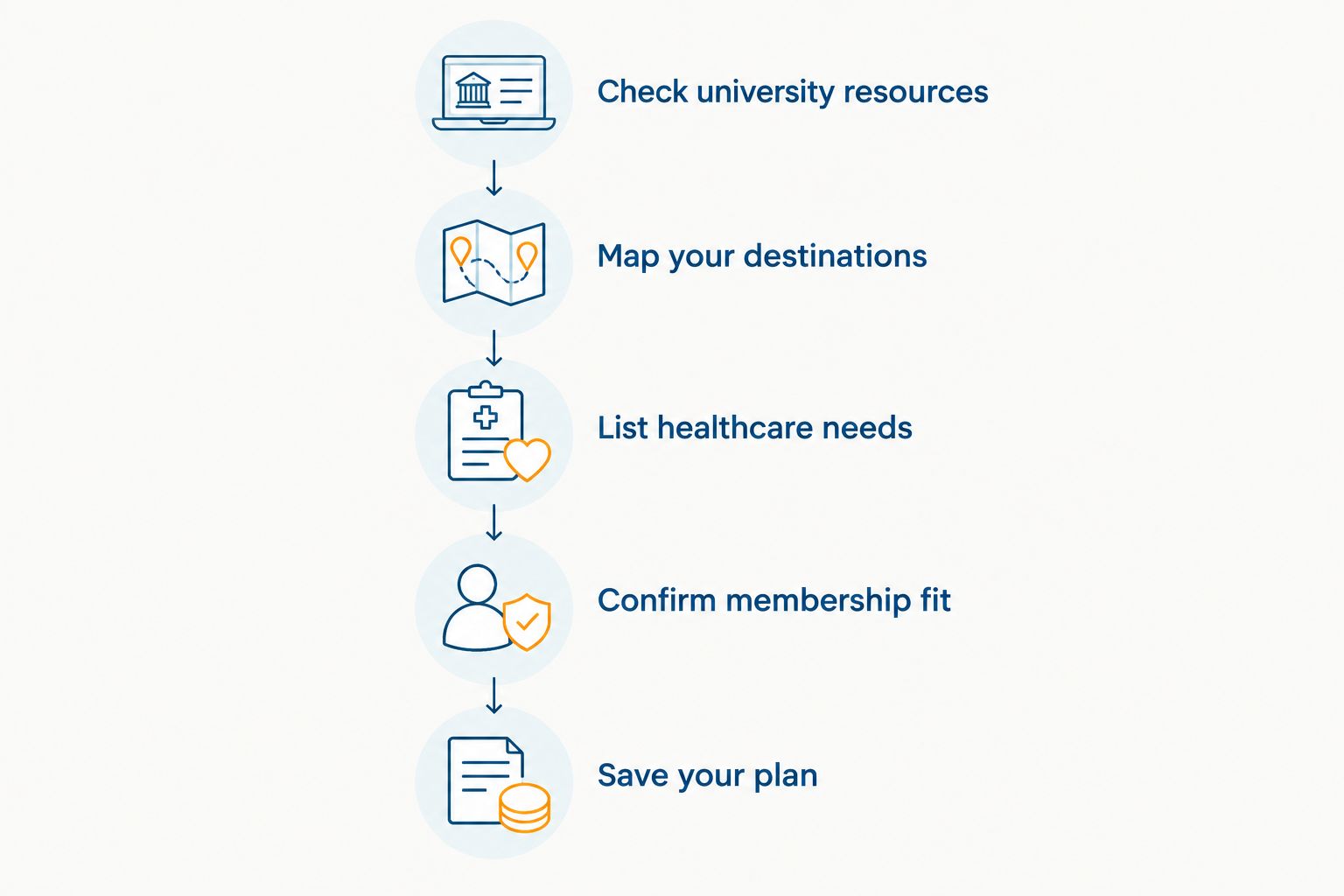
These steps produce a concrete decision. Either you can name the preparation gap the membership fills, or you already have a plan that addresses it. Both are useful outcomes.
What should you not expect from a healthcare directory?
A healthcare directory helps you identify providers; it does not deliver the care itself. You still need to contact a provider, explain your needs, and confirm the arrangements for a consultation.
English-speaking provider information also does not establish that a clinician handles your particular concern. Ask the practice directly about the service you need and what information to bring. Treat the directory as a starting point for that conversation.
Keep financial arrangements separate. Your insurance policy determines its coverage terms; a preparation membership does not change them. Check those terms before departure rather than assuming that identifying a provider establishes how a visit will be paid for.
For your 2026 planning, keep the responsibilities clear: the membership supplies preparation resources, the clinician assesses and treats, and the insurer applies the policy’s terms. Your university has its own program responsibilities. None should be mistaken for another.
Is Student Safe Abroad still useful if my university provides insurance?
Student Safe Abroad serves a different purpose from insurance. Assess it by whether you still need personalized English-speaking healthcare resources after reviewing your university’s arrangements.
An insurance document alone does not tell you what provider guidance your program supplies. Request both. If your university already gives you an appropriate healthcare plan, the membership’s additional value depends on what remains unresolved.
Can Student Safe Abroad replace my study-abroad health requirements?
Student Safe Abroad does not replace your program’s health requirements. Complete the forms, insurance arrangements, and other preparations your institution requires.
Use a healthcare preparation membership alongside those obligations when it fills a separate need. If a requirement is unclear, ask the study-abroad office rather than interpreting a membership description as approval.
FAQ
Is Student Safe Abroad worth it for a semester program?
Student Safe Abroad is worth it when personalized healthcare preparation fills a gap in your semester arrangements. Compare its Personalized Healthcare Itinerary with the resources your university already supplies before enrolling.
Is Student Safe Abroad health insurance?
Student Safe Abroad is not health insurance. It provides healthcare preparation resources, not financial coverage for medical treatment.
Does Student Safe Abroad book doctor appointments for me?
Student Safe Abroad is not a booking service. Use provider information as a starting point, then contact the practice to discuss your needs and appointment arrangements.
What is Student Safe Abroad Plus+ best for?
Student Safe Abroad Plus+ is best for students seeking English-speaking healthcare resources alongside itinerary-based travel-risk alerts. Confirm its current inclusions against your semester plans before choosing it.
Should I buy a membership if my university already gives me a doctor list?
Buy only if the membership adds preparation you still need. Review whether your university’s list and instructions already address your destination and healthcare questions.
Can parents use this membership instead of arranging student insurance?
A healthcare preparation membership does not replace student insurance. Review insurance requirements separately with the university and the insurer.
What should I check before enrolling for a 2026 semester?
Check your destinations, semester dates, existing university resources, and current membership terms before enrolling. Ask how the preparation resources address the specific gaps you have identified.
One last thing
Before buying, ask yourself: If I needed a non-emergency medical visit after arrival, would I know where to start? Write down your answer rather than leaving it as a vague sense that someone will help.
If you can identify an appropriate starting contact, explain how to reach them, and distinguish provider arrangements from insurance arrangements, you have a useful foundation. If you cannot, you have found a preparation task to finish.
MyAbroadMDs healthcare preparation is best for study-abroad students who want a personalized starting point for finding English-speaking providers before departure. Choose it for that job—not for services it does not provide.
Peace of mind before you pack starts with knowing what your plan does, and what remains yours to arrange.