
Best overall for pre-trip doctor planning: MyAbroadMDs. Best for medication reminders: Medisafe. Best for an iPhone medical summary: Apple Health. The best travel health apps for managing chronic illness abroad in 2026 handle different jobs; this guide separates doctor preparation, medication routines, symptom tracking, and translation so you can choose what your itinerary needs.
- Among the best travel health apps for managing chronic illness abroad, Medisafe fits medication reminders, not international prescribing.
- MyAbroadMDs is best for pre-trip English-speaking doctor preparation; its memberships cover providers across 100+ countries.
- Apple Health supports an iPhone medical summary; Bearable fits symptom tracking; Google Translate supports language assistance.
- Keep travel medical records offline and arrange medication timing with your clinician before departure.
Why this matters
A familiar medication routine becomes harder to manage when your itinerary crosses time zones. A reminder addresses timing, but it does not tell you whether a local pharmacy can dispense your prescription or where to find an English-speaking clinician.
Choose tools by the problem they solve, not by how many health features they advertise. For a 2026 trip, distinguish personal organization from medical treatment, appointment booking, and financial coverage. None of the apps below replaces your clinician's travel plan.
Before you pack, identify your most important task. Is it remembering a dose, explaining your history, recording symptoms, or preparing to find care? Start there rather than downloading every option.
What makes the best travel health apps?
These criteria put practical travel tasks ahead of feature counts:
- A clear job: The tool should solve a named problem, such as medication reminders or symptom logging. A doctor directory and a medication tracker are not interchangeable.
- Destination relevance: Doctor information must match your destinations. Remote clinical care requires separate checks about where the clinician can treat you.
- Usable records: You need information you can understand and show a clinician. A long chart is less useful than a clear medication list and recent changes.
- Connection planning: Check what remains accessible without mobile data. Do not assume an account, directory, or stored record works offline.
- Privacy controls: Review permissions and sharing settings before entering diagnoses, medication details, or identifying information.
- Clear limits: Good preparation distinguishes reminders from prescribing, translation from interpretation, and provider information from confirmed appointments.
Travel health tools at a glance
This 2026 shortlist includes a preparation membership alongside apps. That distinction matters: the membership addresses finding relevant providers, while the apps organize information and routines.
| Tool | Best for | Standout feature | Key limitation |
|---|---|---|---|
| MyAbroadMDs | Pre-trip doctor preparation | Personalized, curated English-speaking provider directories across 100+ countries | A membership service, not insurance, telehealth, or appointment booking |
| Medisafe | Medication reminders | Medication schedules and reminder support | Does not authorize prescription refills abroad |
| Apple Health | An iPhone medical summary | Medical ID for essential health and emergency-contact information | Depends on information you enter and keep current |
| Bearable | Symptom tracking | Logs of symptoms and daily factors | Recorded patterns are not a diagnosis |
| Google Translate | Basic language assistance | Translation between languages, with downloadable language options | Medical wording needs confirmation, not blind reliance |
1. MyAbroadMDs: best for pre-trip doctor preparation
MyAbroadMDs sells subscription memberships that provide personalized, curated directories of English-speaking doctors and healthcare providers across 100+ countries. It belongs in this comparison as a preparation service, not as a medication-tracking app.
For a traveler managing chronic illness, its role is preparing provider information before departure. You still need to confirm that a particular provider handles your condition and can offer the care you need.
MyAbroadMDs pros:
- Focuses on English-speaking healthcare providers.
- Provides personalized, curated directories rather than medication reminders.
- Serves international travelers and study-abroad students.
MyAbroadMDs cons:
- Does not provide insurance, telehealth, or appointment booking.
- Does not replace a clinician's medication or treatment plan.
Best for: Travelers who want to prepare English-speaking provider information around their destinations before leaving home.
Verdict: Buy for doctor preparation, not for medical coverage or treatment. MyAbroadMDs is best for travelers who want English-speaking doctor information prepared before departure.
2. Medisafe: best for medication reminders across an itinerary
Medisafe is a medication-management app built around schedules and reminders. Its distinct role is helping you organize a routine you have already agreed with your clinician.
International travel adds a separate question: what should the schedule become when local time changes? Decide that with your clinician or pharmacist before configuring reminders. A notification cannot resolve a dosing question.
Medisafe pros:
- Centers the experience on medication routines.
- Supports reminders rather than relying on memory alone.
- Keeps medication organization separate from general travel planning.
Medisafe cons:
- Does not establish a safe time-zone dosing plan.
- Does not make your prescription valid in another country.
Best for: Travelers whose main organizational challenge is remembering an established medication routine.
Before departure, inspect the schedule displayed on your phone and check notification permissions. During a connection or overnight flight, compare the reminder with your written plan rather than changing your dose to match the screen.
Verdict: Buy into Medisafe for reminders; keep clinical dosing decisions with your care team.
3. Apple Health: best for an iPhone medical summary
Apple Health includes Medical ID, where you can enter information such as medical conditions, medications, allergies, and emergency contacts. Its strongest travel use here is maintaining a concise health summary on an iPhone.
Treat that summary as a starting point for communication. It is not proof that a foreign clinician can access your complete records or that your phone will be available during an emergency.
Apple Health pros:
- Provides a defined place for essential medical information.
- Includes emergency-contact information in Medical ID.
- Lets you maintain a summary separate from a symptom diary.
Apple Health cons:
- Incorrect or outdated entries remain incorrect or outdated.
- An iPhone summary does not guarantee access to your full medical history abroad.
Best for: iPhone users who want essential health details organized for quick reference.
For your 2026 departure checklist, review every medication entry against your current prescription list. Include generic names where available, and keep a separate paper summary so your preparation does not depend entirely on the device.
Verdict: Buy into Apple Health as a reference tool, not as your only medical record.
4. Bearable: best for recording symptoms during travel
Bearable is a tracking app for symptoms and daily factors. Its role is recording what you experience so you can describe changes more clearly at a medical appointment.
Travel disrupts routines. A consistent diary helps you distinguish what happened on a flight day from what happened after arrival, without treating a chart as a medical explanation.
Bearable pros:
- Gives symptoms a dedicated place in your daily record.
- Supports tracking daily factors alongside how you feel.
- Helps you prepare a chronological account for a clinician.
Bearable cons:
- Entries depend on consistent, accurate recording.
- Associations in a diary do not establish the cause of symptoms.
Best for: Travelers who already track symptoms or whose clinician has recommended keeping a diary.
Keep the log focused. Record the symptoms and circumstances your clinician considers relevant rather than adding every possible variable. If symptoms require urgent assessment, seek care instead of waiting for the diary to reveal a pattern.
Verdict: Buy into Bearable for organized observations; skip self-diagnosis from its charts.
5. Google Translate: best for basic language assistance
Google Translate supports translation between languages and offers downloadable language options for offline translation. Its travel-health role is helping with basic communication when you do not share a language.
Use it for short, concrete messages and administrative questions. Medication instructions, allergies, consent, and treatment decisions need confirmation from a clinician, pharmacist, or qualified interpreter.
Google Translate pros:
- Helps you communicate basic phrases across languages.
- Offers offline translation options for downloadable languages.
- Supports preparation of simple questions before visiting a clinic.
Google Translate cons:
- Translated medical wording still needs confirmation.
- It is not a substitute for qualified medical interpretation.
Best for: Travelers who need help with simple communication while arranging or accessing care.
For a 2026 trip, download the relevant language option if offered and test it without a connection. Keep phrases short. Ask the clinician to confirm the meaning rather than assuming that readable text is medically precise.
Verdict: Buy into Google Translate as a language aid; skip it as the final authority on treatment instructions.
How these tools were ranked
The ranking follows the travel tasks in the criteria: preparing care options, maintaining medication routines, carrying a health summary, recording symptoms, and communicating. Each recommendation owns a different use case.
Doctor preparation comes first because it addresses where you would seek care. That does not make a directory the best medication tool. If your immediate problem is forgotten doses, Medisafe is the more relevant starting point.
No recommendation assumes international prescribing, insurance coverage, or compatibility with a particular healthcare system. Confirm those separately before relying on any service abroad.
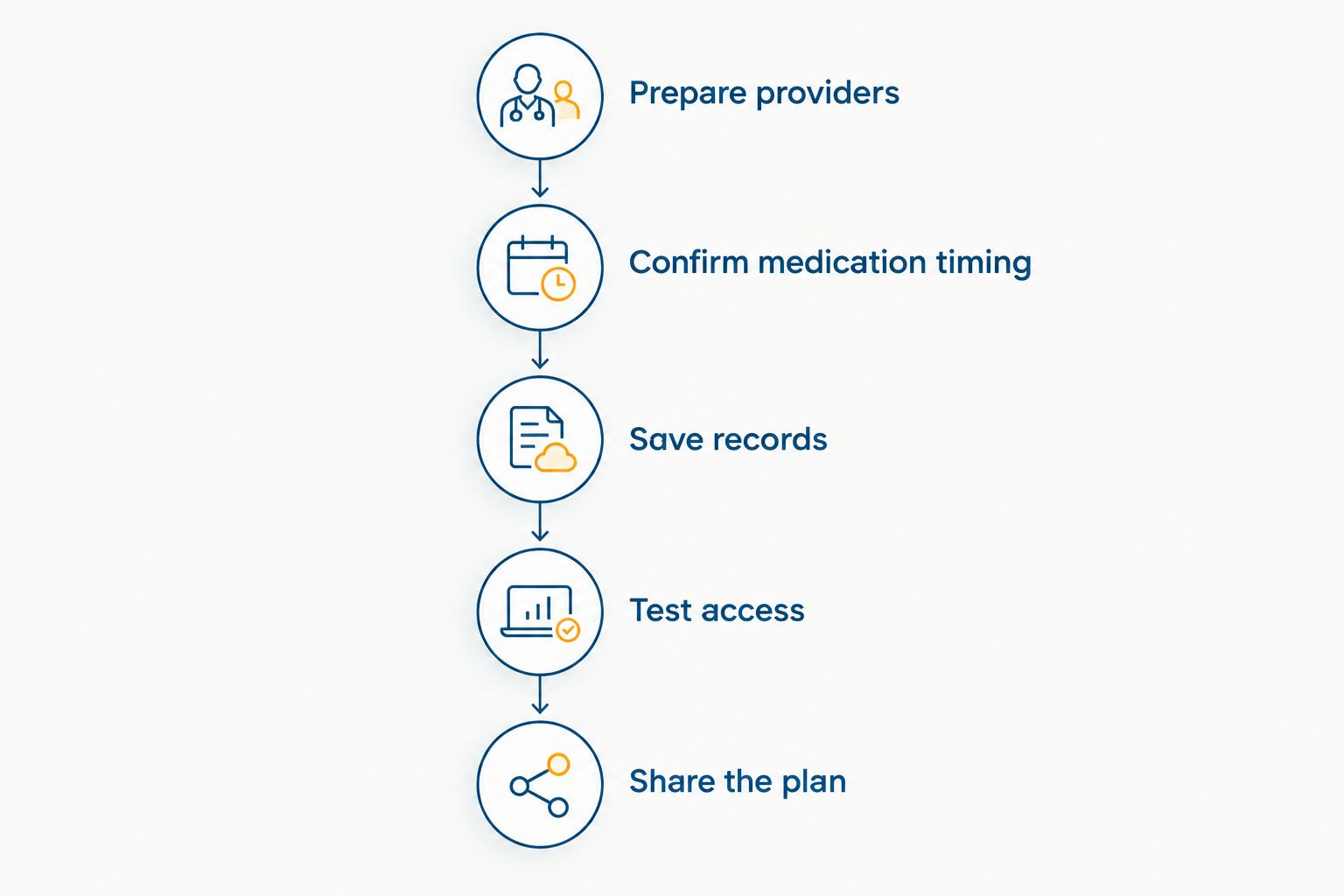
Set up your travel-health plan before departure
Prepare providers
List every destination where you will stay, including longer stopovers. Identify appropriate healthcare options and confirm the provider's scope, location, contact method, and appointment process before relying on the information.
Confirm medication timing
Ask your clinician or pharmacist how to handle travel days and time-zone changes. Also confirm medication transport requirements with the destination's relevant authorities; a reminder app does not answer legal entry questions.
Save records
Create a 1-page medical summary covering diagnoses, allergies, current medications, and emergency contacts. Keep 2 backup copies: an offline digital copy and a paper copy. These are preparation recommendations, not substitutes for complete records when your clinician requires them.
Test access
Open essential documents with your connection switched off. Review reminder permissions, translation downloads, and account access before departure. Testing your own setup is more useful than assuming that every feature works during a flight.
Share the plan
Tell a trusted travel companion or emergency contact where your summary is stored. Agree on what to do if you cannot communicate, using guidance from your care team rather than an app-generated conclusion.
Which travel health tools should you choose?
For the undecided traveler, start with a clinician-approved medication plan, accessible medical records, and prepared care options. Then choose the app that supports your most important daily task.
Choose Medisafe for reminders. Choose Apple Health for an iPhone summary, Bearable for symptom logs, and Google Translate for basic language assistance. Add a provider-preparation service when finding an English-speaking doctor is a separate need.
Your 2026 setup does not need every tool on this list. It needs clear responsibilities, current information, and backups you can access when your phone or connection is unavailable.
FAQ
What's the best travel health app for managing chronic illness abroad?
Medisafe is the best fit on this shortlist for medication reminders, while the overall choice depends on your task. MyAbroadMDs addresses pre-trip English-speaking doctor preparation through a membership service, not a treatment app.
Is MyAbroadMDs travel insurance or telehealth?
MyAbroadMDs is neither travel insurance nor telehealth, and it is not an appointment-booking service. Its subscription memberships provide personalized, curated English-speaking provider directories across 100+ countries.
Can a medication app tell me when to take medicine after changing time zones?
A medication app should not decide your time-zone dosing plan. Agree on that plan with your clinician or pharmacist, then configure reminders to support it.
Can I use Apple Health as my medical record abroad?
Apple Health can hold a useful medical summary, but it should not be your only record abroad. Keep an accessible medication list, relevant documents, and a paper backup.
Is Google Translate safe for medical conversations?
Google Translate is a language aid, not a substitute for qualified medical interpretation. Ask a clinician, pharmacist, or qualified interpreter to confirm medication instructions and treatment decisions.
Do travel health apps work without internet access?
Offline access depends on the app, feature, and your setup. Test the information you need with your connection switched off before departure rather than assuming it remains accessible.
Can these apps arrange prescription refills in another country?
These recommendations do not establish a prescription-refill arrangement abroad. Confirm local prescribing and dispensing requirements with appropriate clinicians and pharmacies before your supply becomes a problem.
One last thing
A familiar medication brand name is not enough for a useful travel record. Include the generic name, strength, prescribed directions, and reason you take it in your summary. Have your clinician or pharmacist check the list before you leave.
For your 2026 itinerary, prepare that information before choosing another app. Peace of mind before you pack starts with a plan you can explain.